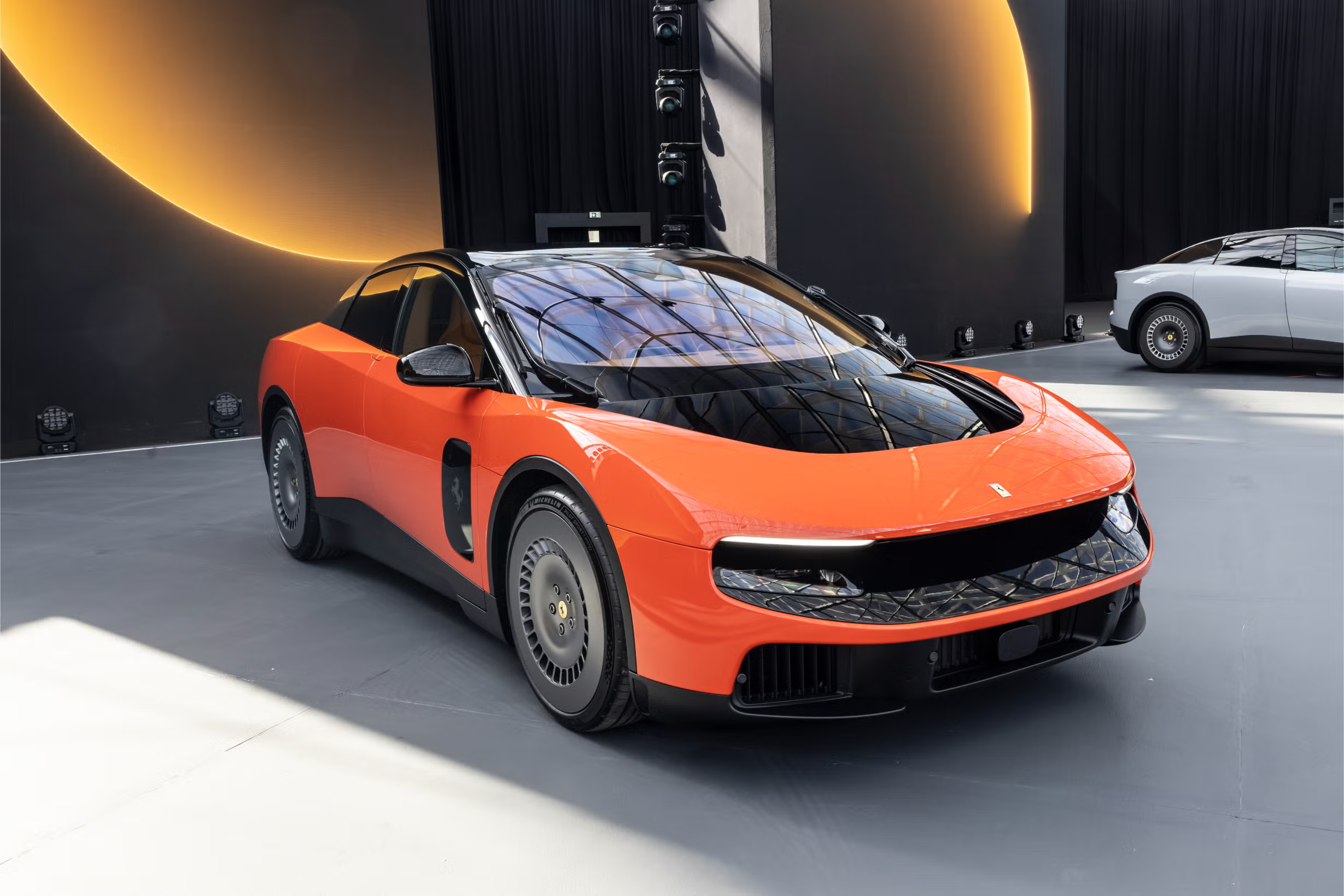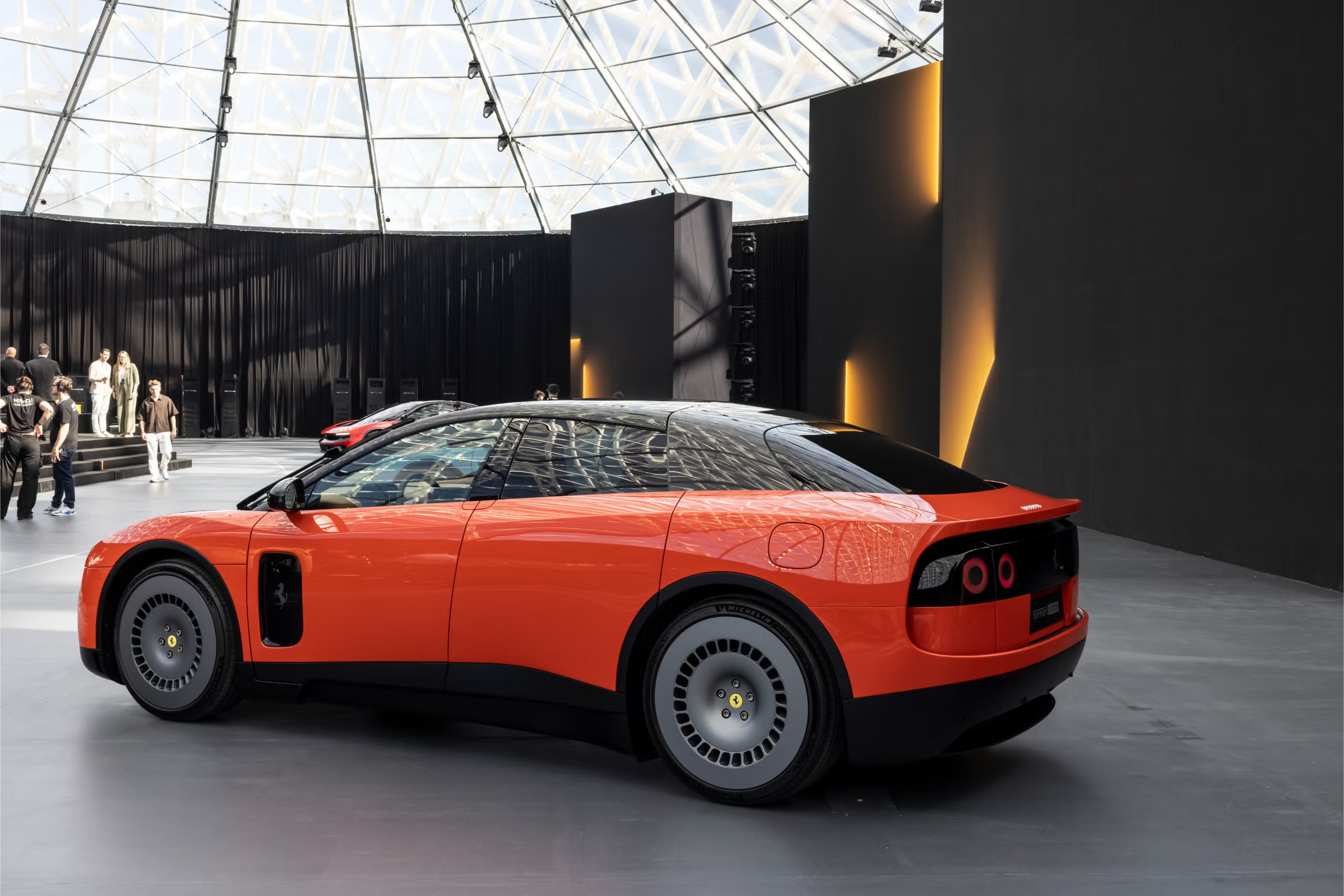
Ferrari has been making internal combustion engines for 78 years. It has won more Formula 1 championships than any other constructor. It has produced the 250 GTO, the F40, the Enzo, and the LaFerrari. On Sunday evening in Rome, it drove five electric cars through a light show and introduced the world to the Luce.
What Is the Ferrari Luce?
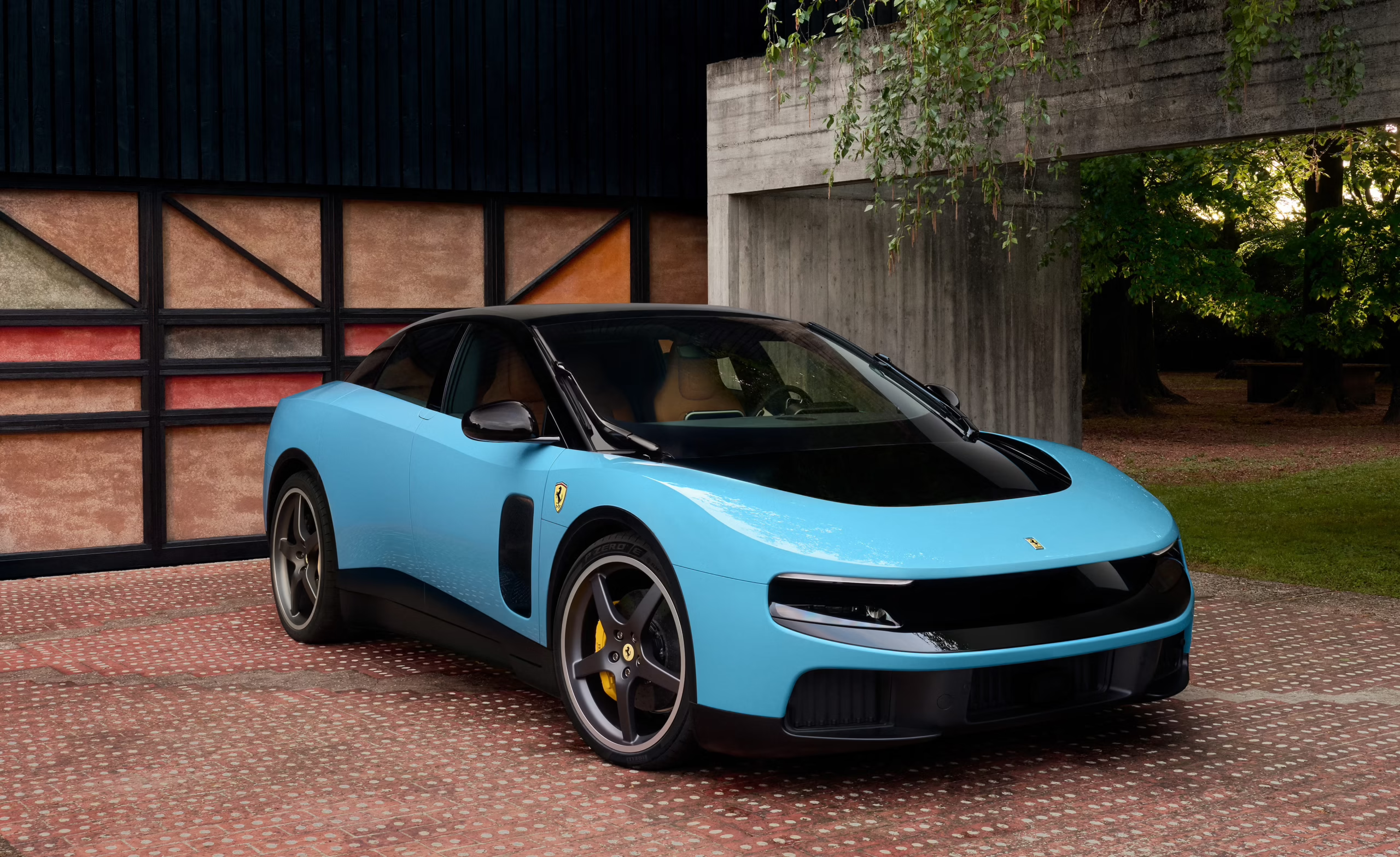
The Luce — the name means “light” in Italian, and the car was known until recently by its working title, Elettrica — is Ferrari’s first fully electric car, and it arrived via the most cautious reveal in the company’s history: the technology in October 2025, the interior in February 2026, and the exterior, finally, in Rome. When a company shows you the best bit first, you are probably working with a committee of people who are worried about the other bits.
It marks a high-stakes shift for the luxury sports car maker at precisely the moment competitors including Porsche and Lamborghini are scaling back their EV ambitions, citing weak demand. With a starting price of €550,000 — approximately $640,000 or £475,000 — the Luce combines a four-motor electric drivetrain with radical new styling. “It’s the result of five years of work,” CEO Benedetto Vigna told more than 200 reporters gathered in Rome. The market’s enthusiasm has been measured: Ferrari’s stock dropped 15% on the day of the original technical reveal in October — the company’s worst trading day since going public in 2016 — and the share price dipped again after Rome. Analysts had wanted stronger long-term electric growth commitments. Ferrari, characteristically, has looked at the prevailing winds and driven directly into them.
Ferrari Luce Specs: Power, Range and Price
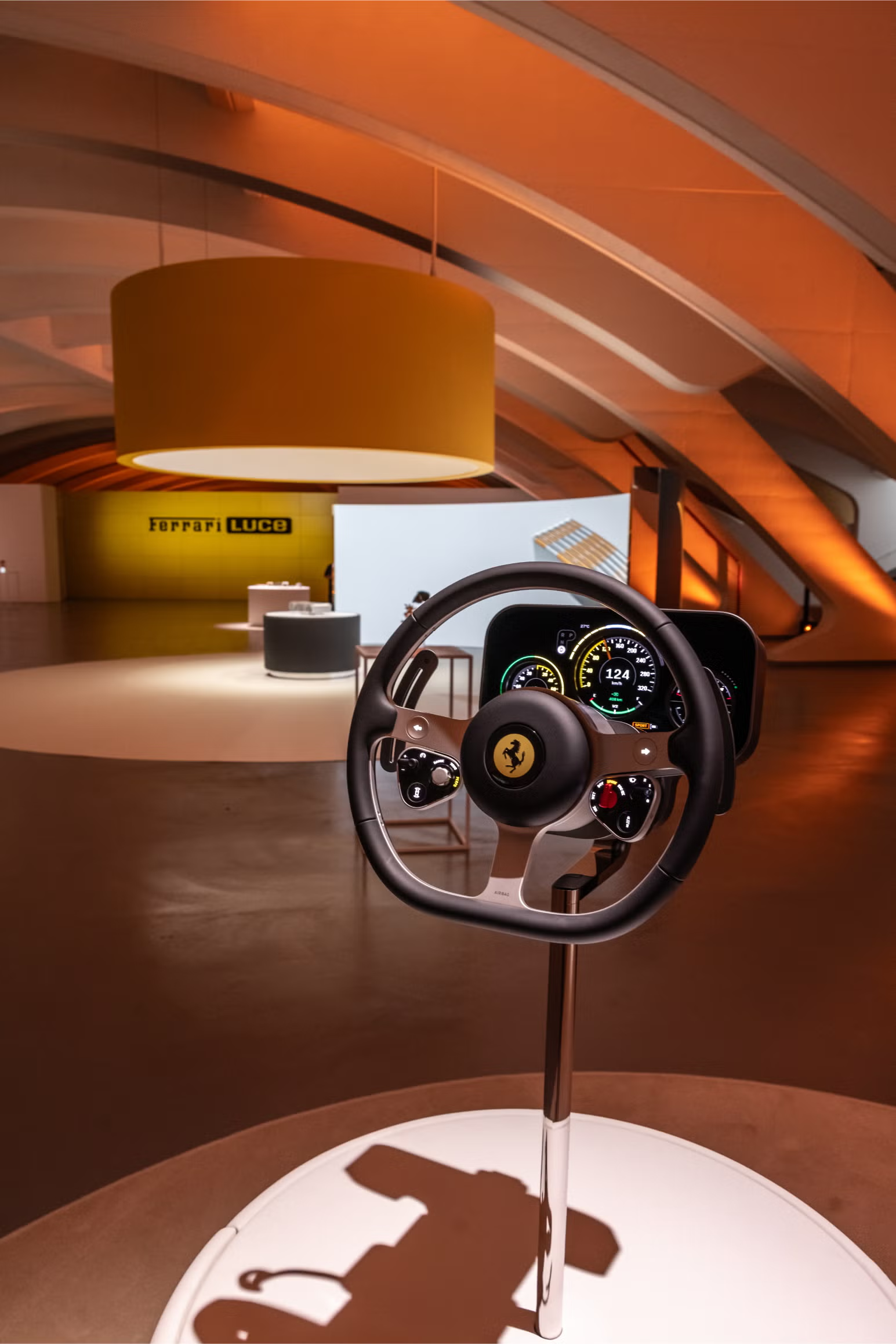
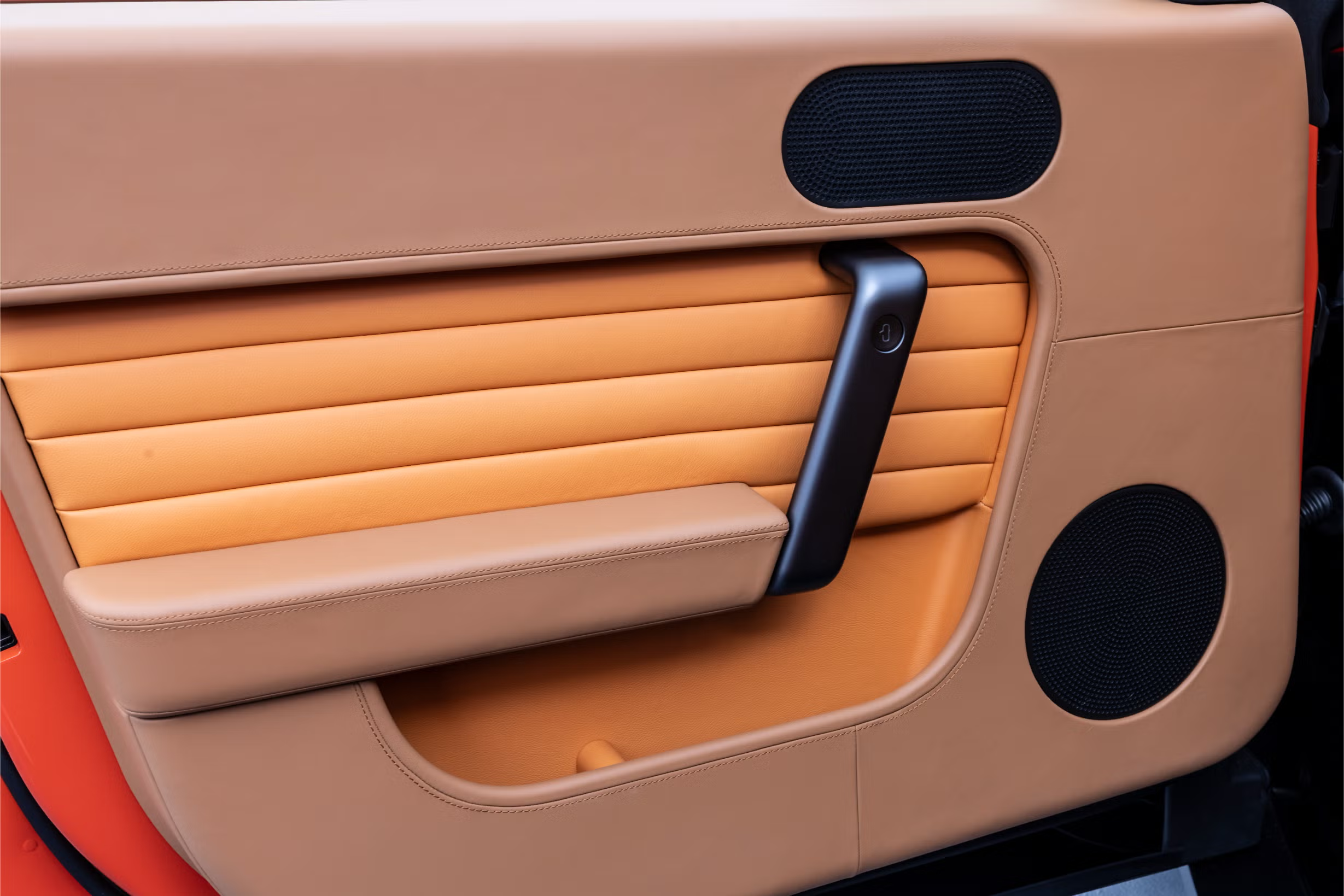
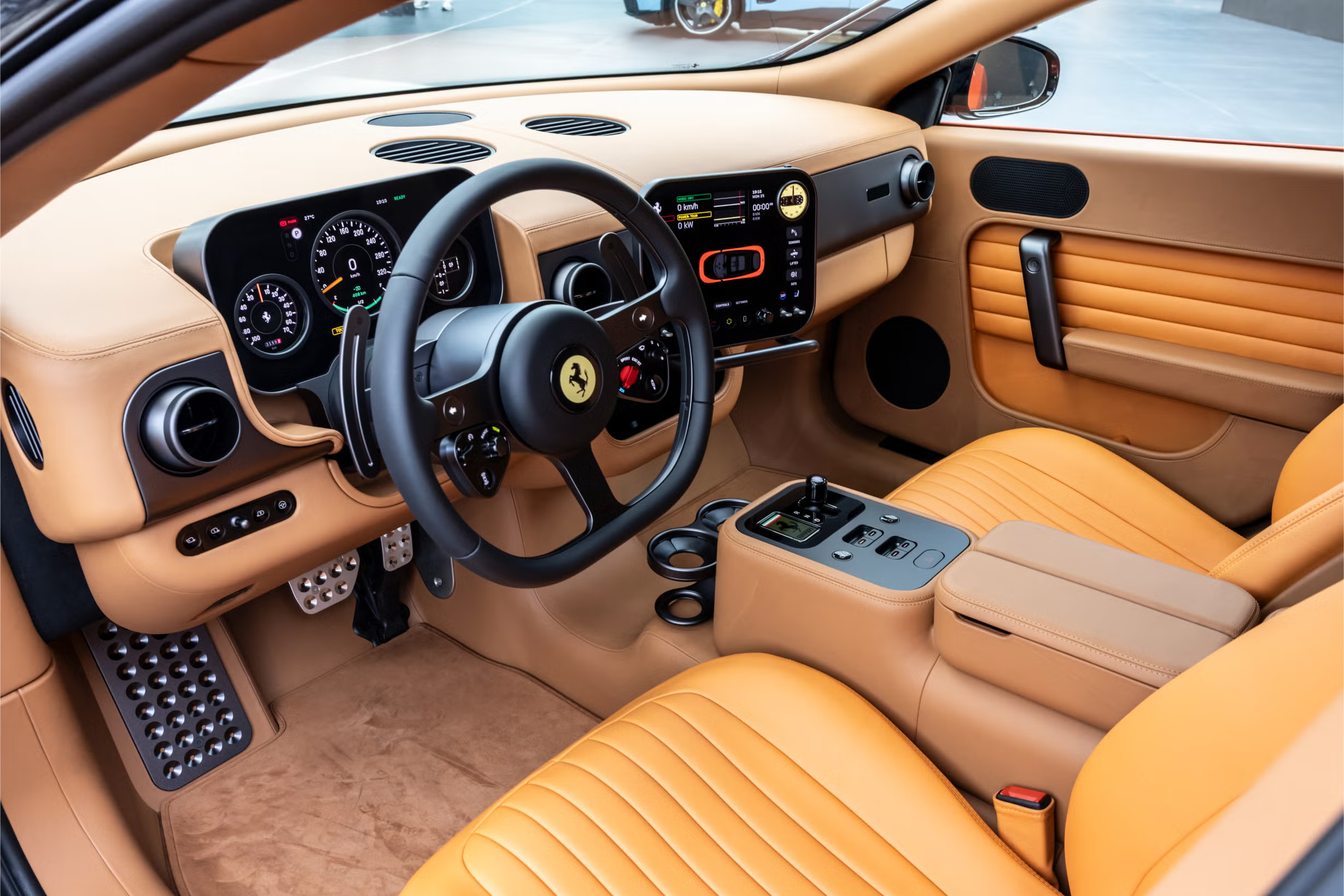
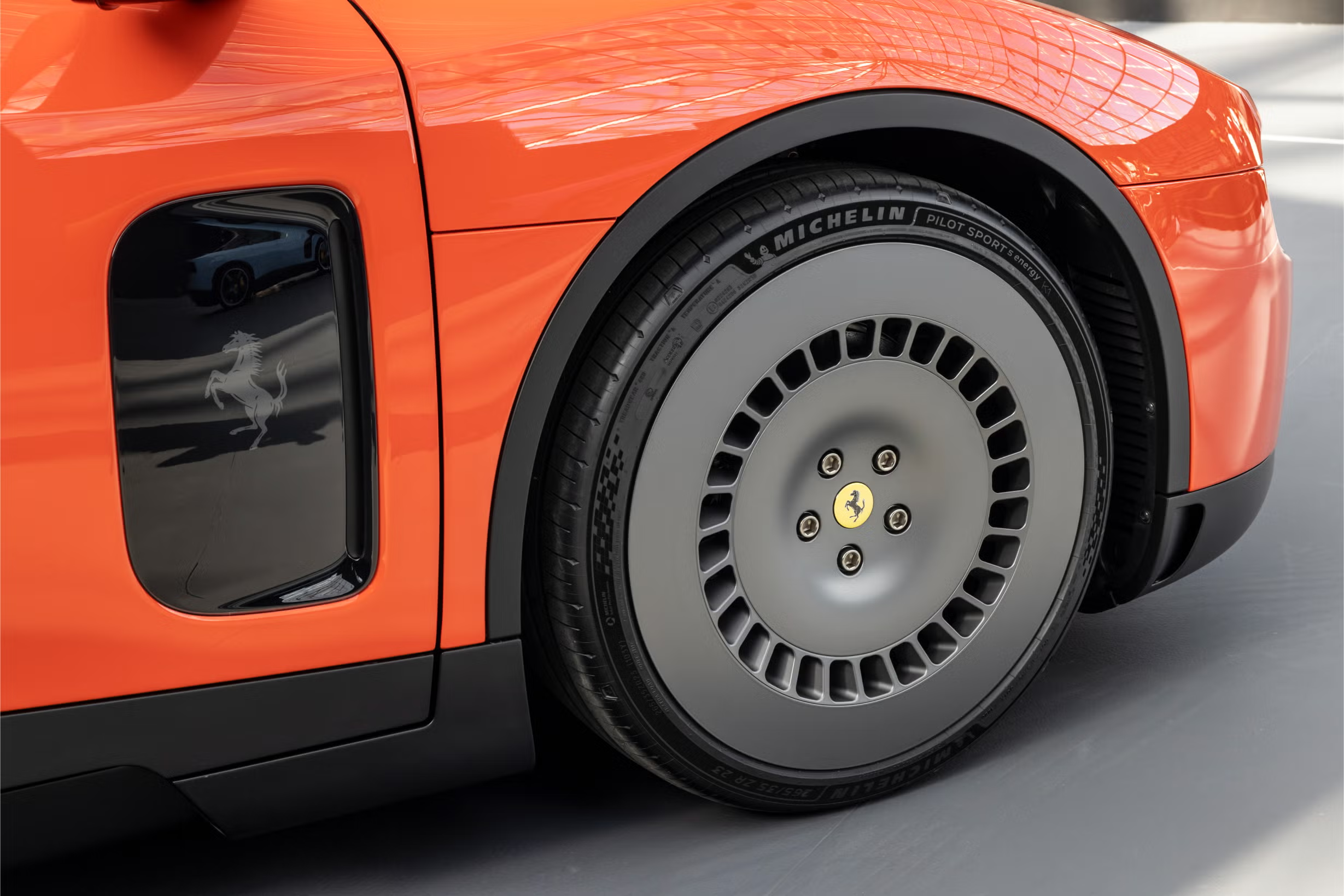
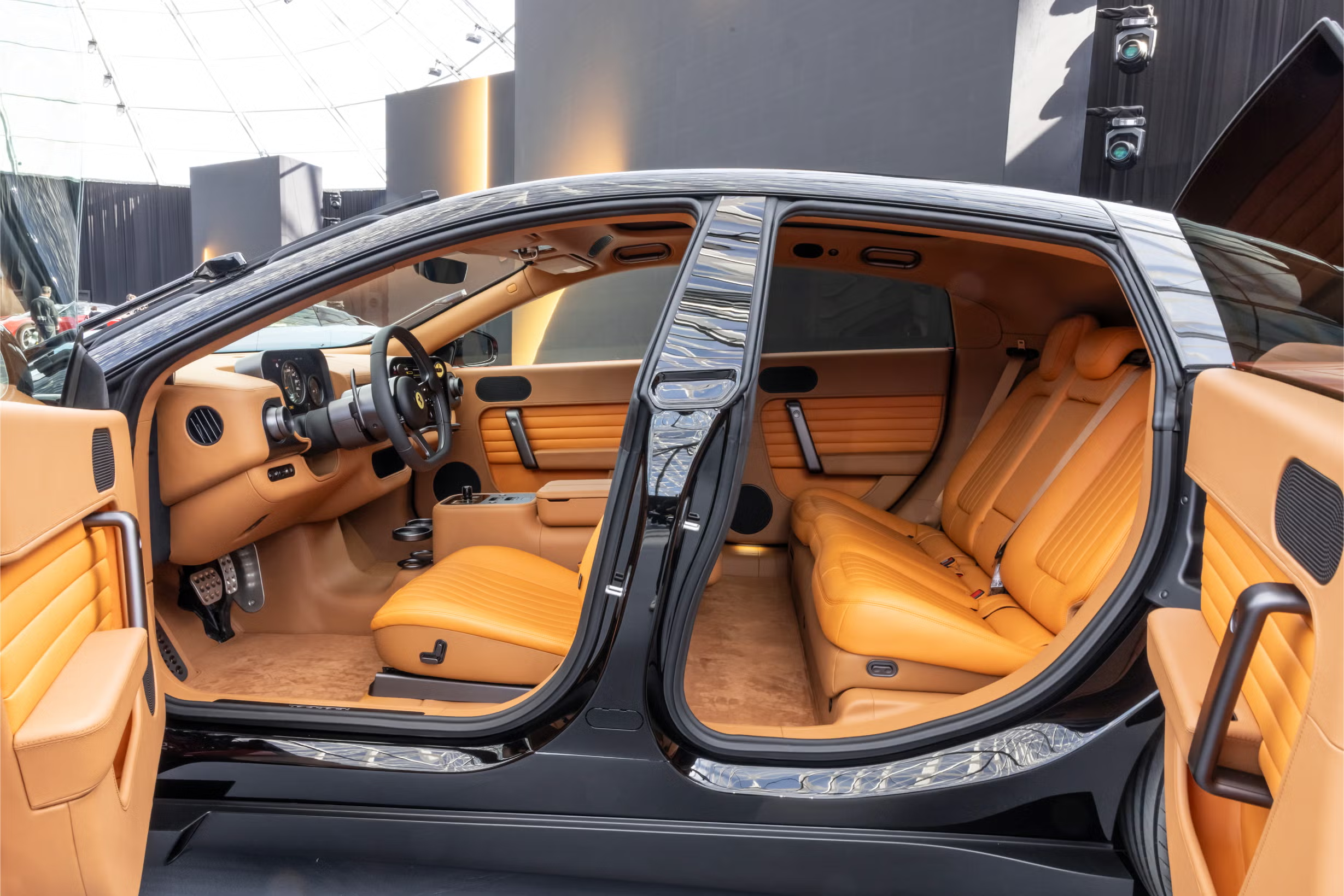
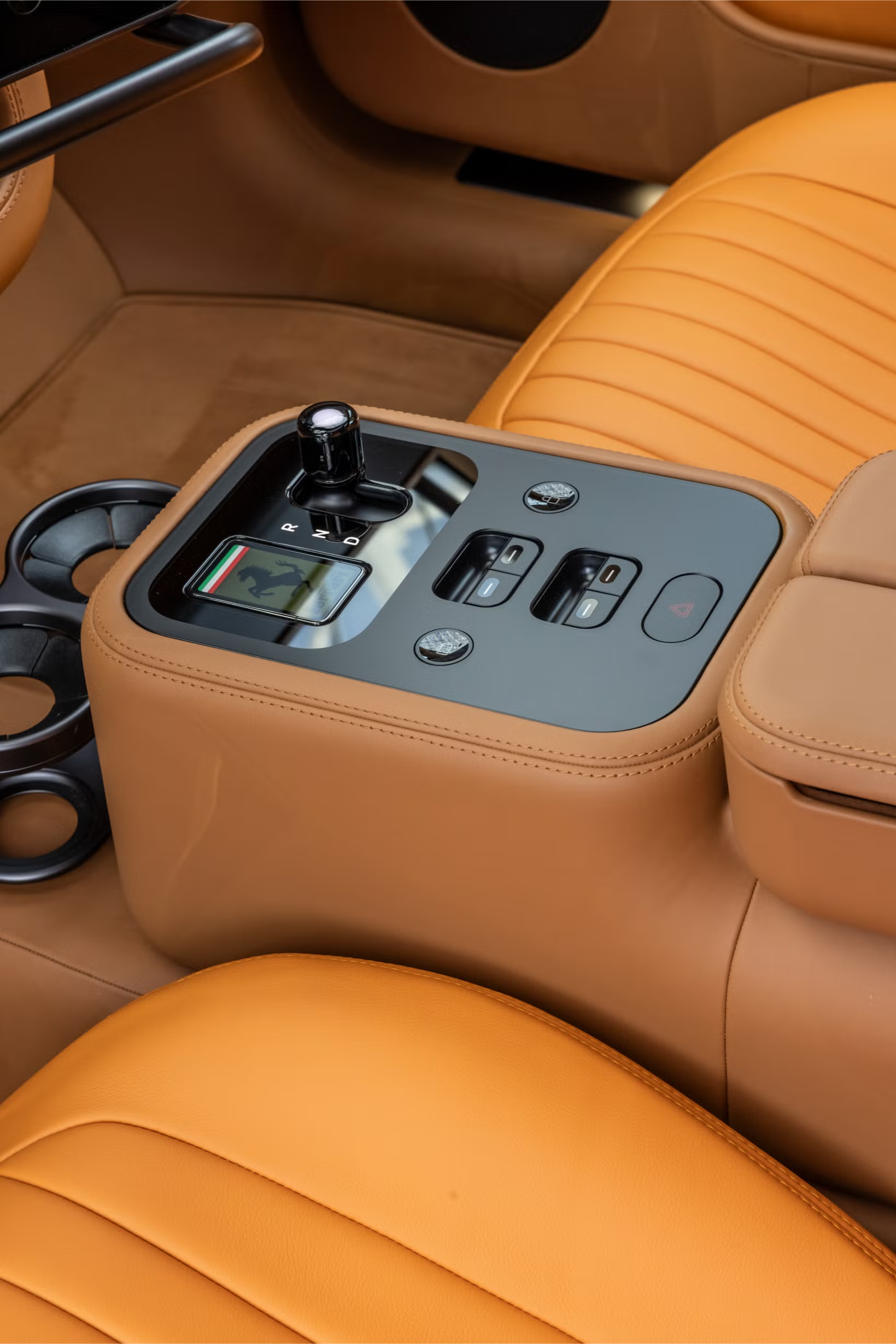
The numbers are genuinely impressive. Four electric motors — one per wheel — delivering up to 1,050 horsepower. Zero to 100 km/h in 2.5 seconds. A top speed above 310 km/h. A 122 kWh battery giving around 500 kilometres of claimed range. A 48V active suspension system sophisticated enough to eliminate anti-roll bars entirely. Rear-hinged doors. Five seats — a Ferrari first — and a 600-litre boot, which is either a bold democratisation of the brand or a very expensive family car depending on how you look at it. The interior defers to traditional Ferrari luxury, with leather, glass, and anodised aluminium surfaces alongside several physical controls — a deliberate choice in an era of minimalist touchscreen interiors that the automotive world has been complaining about for a decade.
There is also an engineering party trick that deserves specific attention. The Luce will not use conventional gears or “shifting” — instead operating through what the company calls “power levels.” The car also amplifies natural vibration sounds from its EV powertrain to maintain the visceral appeal of a traditional Ferrari — an approach that will divide opinion even more cleanly than the design. Artificial engine noise in a Ferrari is either heresy or pragmatism, and the line between those two positions depends almost entirely on whether you have ever driven a V12 with your left foot on the clutch. Ferrari is not alone in wrestling with this — Porsche’s simulated gears and Ferrari’s amplified vibrations are two different attempts at the same underlying problem: how do you make an EV feel like it has a soul when the underlying powertrain is mechanically incapable of providing one? Porsche has chosen fake shifts. Ferrari has chosen synthesised vibration. Both companies are basically conceding that performance buyers want theatre alongside the numbers.
The Jony Ive Design Story
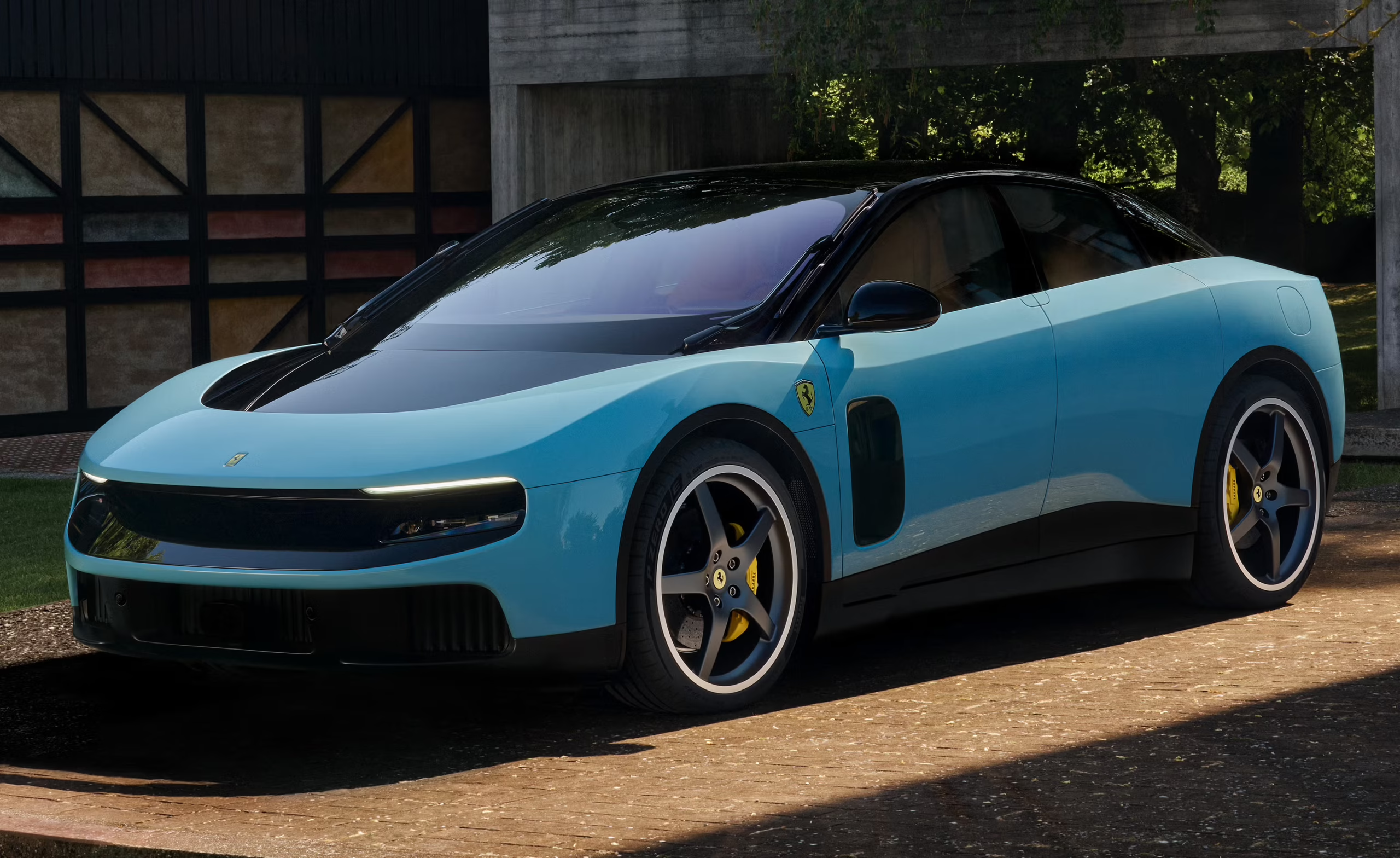
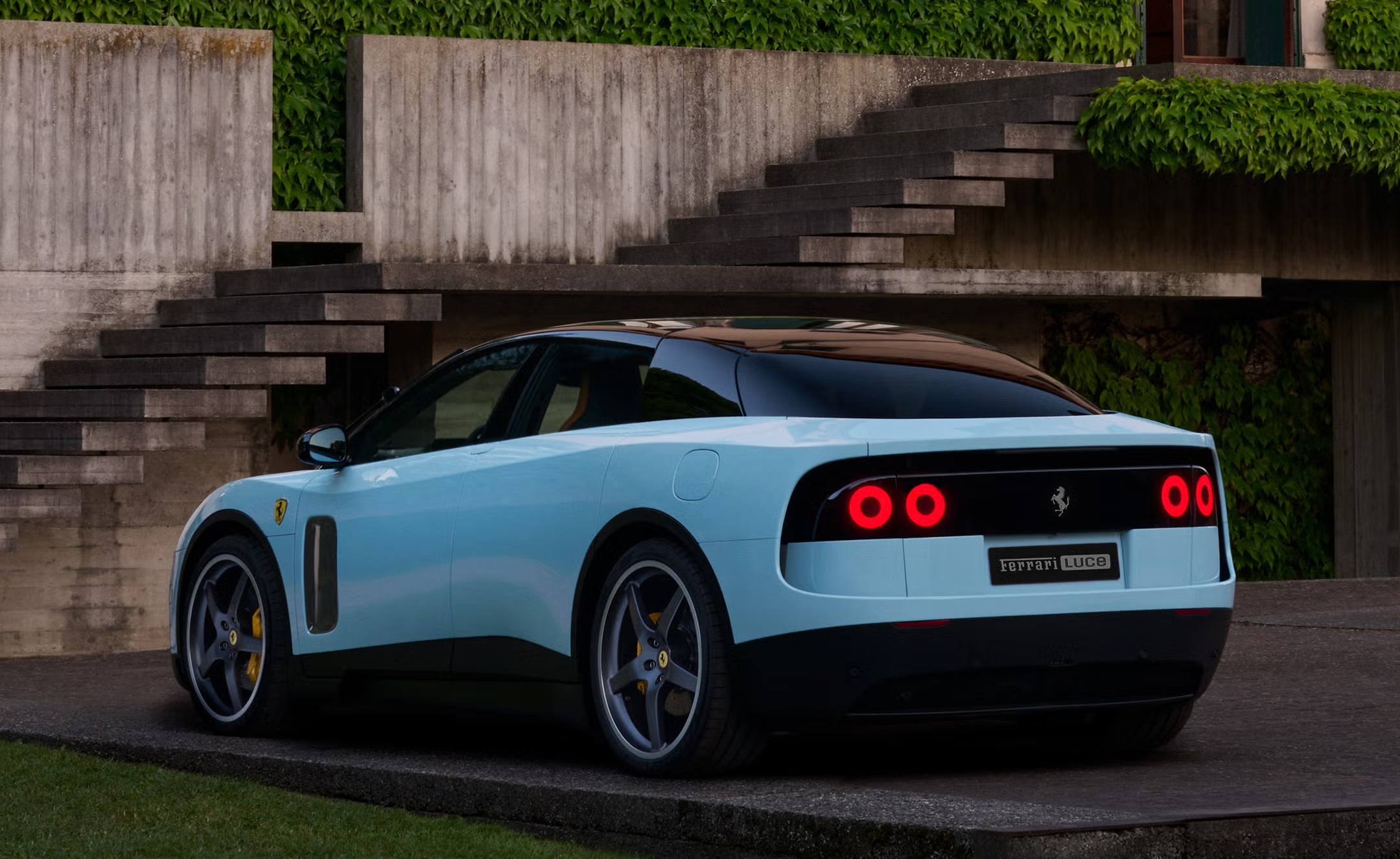
The design is the conversation. The Luce was developed in collaboration with Jony Ive and Marc Newson of LoveFrom — the collective formed after the pair left Apple, where Ive spent 27 years designing the iPhone, the iPod, the iMac, and the Apple Watch. John Elkann, whose family controls Ferrari, reportedly admired how the Apple Watch had turned an analogue device into a digital product and wanted the same sensibility applied to the Prancing Horse’s first electric vehicle. He got what he asked for. The result is, to a startling degree, an iPhone with suicide doors: a shell-like panoramic glasshouse over the entire cabin, aluminium aerodynamic wings front and rear, and toggle switches machined from recycled aluminium that are very clearly related to the things you get on a MacBook keyboard. It is larger, glassier, more architectural than muscular — a car that looks like no Ferrari before it.
Ferrari’s head of product marketing was refreshingly candid about what comes next: “The reaction we’re going to have among our customer base is going to be very much mixed. People will love it, and people will hate it.” One appreciates the honesty.
The Reaction
The Chris Harris podcast convened an emergency episode on the day of the full reveal, and the discussion covered all of this with considerable candour. The consensus, put most directly by Manish, was that the car looks exactly like what you’d expect from people who were asked to make a Ferrari look like an Apple product: it looks like an Apple product. “An iPhone from 2007,” was his precise formulation, which is either an observation about aesthetic evolution or a damning critique of a brand that hasn’t fundamentally changed its visual language in nearly two decades.
Neil, sitting in what appeared to be the actual car, attempted the contrarian position with some sincerity. His argument was essentially correct: Ferrari’s loyal clientele of V8 and V12 GT owners should be delighted, because the Luce makes every combustion Ferrari they own worth more money by comparison. The SF90 owners, previously somewhat déclassé given how quickly the tech moved on, are happy. The Lusso and FF owners, sitting on depreciated assets for years, are happy. And the car, Neil argued, is aimed at a consumer who genuinely doesn’t want to announce their wealth with a loud, visual, threatening Italian sports car — the same consumer buying Loro Piana rather than Versace. This argument has substance. Quiet luxury is real. Understated chic exists. Whether a car with a €550,000 starting price can genuinely claim to be understated is a philosophical question that the market will answer in its own time.
Harris’s contribution was the sharpest. He pointed out two things. First: it doesn’t look like a Ferrari. He challenged anyone to identify it at distance without the Prancing Horse badge, and the podcast agreed this would be difficult. Enzo Ferrari’s most famous instruction to his designers was that a Ferrari should be recognisable anywhere in the world. The Luce, without its shields, could be several things. Second: the launch strategy itself is a confidence indicator. When Porsche built something it believed in, they left the 918 in a garage with a key and a note that said go. The Luce had a phased reveal that took the better part of a year, with carefully managed journalist access at every stage. That is not how you behave when you know you’ve made something brilliant.
Chris Cooper offered perhaps the most useful framing: nobody at Ferrari wanted to make an electric car. The question that keeps arising is whether Ferrari, with its specific brand position and its specific customer base, was ever in a situation where it had a genuine choice. European emissions regulations create compliance obligations that reach even very low-volume manufacturers. The Luce exists because the alternative was worse.
Where the Luce Fits in Ferrari’s Plan
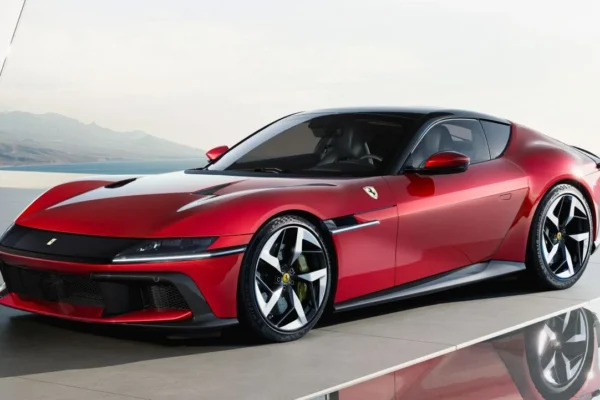
Ferrari’s five-year plan, revised significantly downward from its 2022 ambitions, now calls for 40% internal combustion, 40% hybrid, and 20% fully electric by 2030. The Luce is the 20%. At the other end of the same strategy sits the 12Cilindri, the last naturally aspirated Ferrari — the goodbye to which the Luce is the hello.
The context makes the timing remarkable. The premium EV segment is being aggressively contested by Chinese brands with better technology at lower prices. Lamborghini pulled the plug on its first electric car earlier this year. Porsche and Mercedes have both trimmed their EV ambitions, and the industry’s EV writedowns now run to tens of billions. Ferrari has chosen this exact moment to enter with a €550,000 four-door. Meanwhile, the analogue collector car market is going in the opposite direction and doing rather well — which is either ironic or perfectly logical depending on your disposition.
Whether the Luce succeeds commercially is almost beside the point — Ferrari sells around 14,000 cars a year by design, and the Luce will represent a small fraction of that. What matters is what it says about where electric vehicles are heading at the very top of the market: toward five seats, real range, a boot you can put things in, and a design brief handed to the man who once convinced the world that a phone needed only one button.
What Happens Next
Production will take place at Ferrari’s e-Building in Maranello. European deliveries begin in Q4 2026. American buyers will need to wait until Q2 2027 — assuming they have $640,000 available and can make peace with a Ferrari that took a rather different path to glory than its predecessors. First drives, final specifications and the inevitable options-list arithmetic will land between now and then, and this page will be updated as they do.
Enzo Ferrari spinning in his grave is, as the internet observed, a form of perpetual motion — which would make it the only free-energy source the company has ever produced. His engineers would probably have found a way to harness it.