Cheap, cheerful, increasingly competent — but not a threat to the leather-and-walnut end of the market. That era ended this week in Beijing.
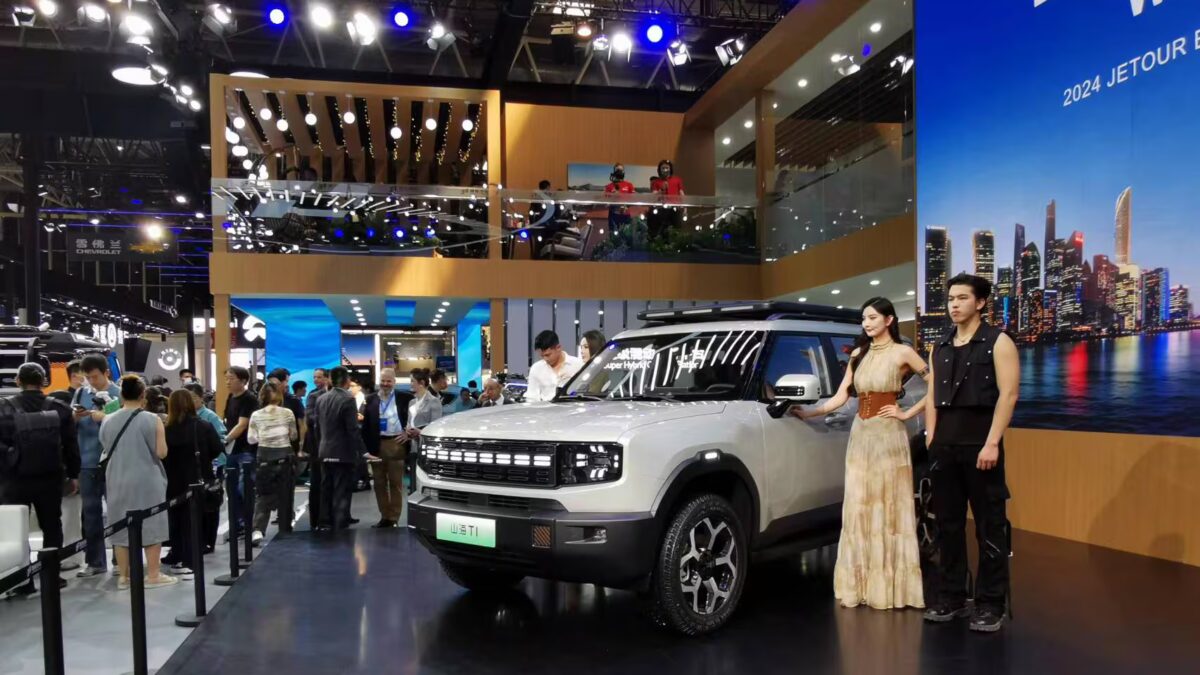
At the 2026 Beijing Auto Show, which opens its media days today, Chinese automakers have a clear message for Germany’s premium brands: we’re coming for your customers. After spending the past three years locked in a brutal domestic price war that compressed margins and exhausted smaller players, China’s EV giants have pivoted. “The price war has turned into a value-for-money war,” said Bo Yu, Greater China country manager at research firm JATO Dynamics. Translation: they’ve stopped competing on cheapness and started competing on capability. Which is considerably more alarming for Stuttgart.
The centrepiece of this shift is a wave of large, premium SUVs — what the industry is calling the “9-series” moment. Virtually every brand, Chinese and foreign, legacy or startup, is unveiling a three-row, six-seat electric SUV. Geely’s Zeekr 8X arrives with a safety system that can tilt the car upward before a side collision to protect passengers, and a party trick whereby the driver can wave at it and it will reverse itself out of a tight parking space. The Nio ES9, the XPeng GX, the Lynk & Co 900. The list is substantial, the spec sheets are extraordinary, and the prices are — deliberately, pointedly — significantly below what BMW or Mercedes charge for equivalent metal. BYD’s £28,000 Great Tang with 950km range is perhaps the single clearest example of what’s actually on offer: a car that, on paper, embarrasses anything in its price bracket and quite a few things well above it.
Chinese companies like Geely and Nio are now unleashing premium models packed with features and priced significantly lower than those offered by German rivals. Stephen Dyer, head of AlixPartners’ automotive practice in Asia, put it plainly: “I expect more Chinese companies to double down on premiumisation. To differentiate themselves at home, but also to prepare for going global.”
The timing is not accidental. Car sales in China fell about 18% year-on-year in the first quarter, with domestic demand flattening for the foreseeable future. Chinese automakers can no longer grow simply by selling more cars at home. They need new markets and higher margins — and the way to achieve both simultaneously is to move upmarket and go international. Premium EVs travel better than budget EVs. They justify the infrastructure investment of entering new markets. And they carry the margins that make the whole exercise worthwhile. The international push is no longer theoretical either, with BYD now eyeing Stellantis’s empty European factories as a way to manufacture inside the tariff wall rather than around it. The commercial evidence is already on the dashboard: Tesla losing share to Chinese brands in Europe as its May registrations collapsed 49% across the EU and UK — with BYD overtaking it in the European EV market for the third time this year — is exactly the kind of result the Beijing strategy was designed to produce.
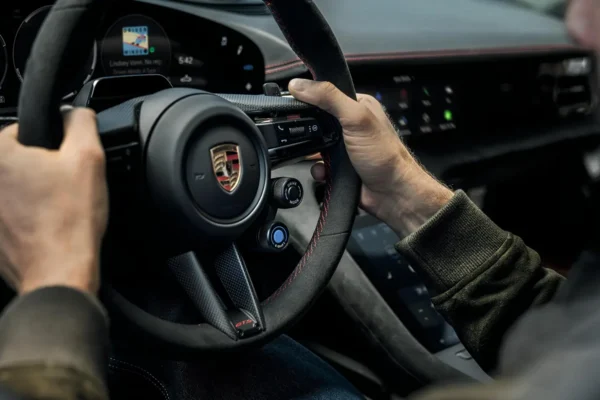
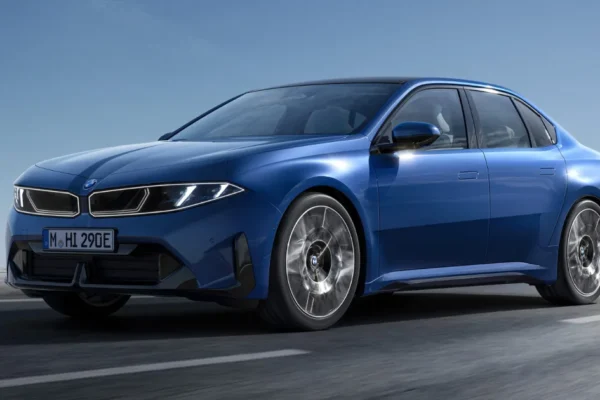
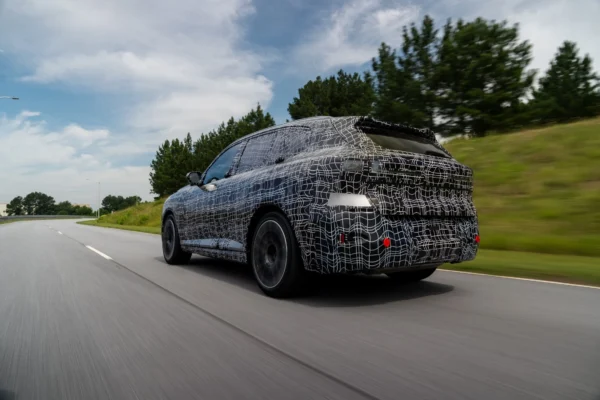
The German response is telling. BMW is launching sixteen new models at Beijing, including an iX3 Long Wheelbase built specifically for China — developed, as BMW now puts it, “in China, for China, and with China.” The i7 has been given a new battery pack developed with Croatian hypercar maker Rimac, with energy density up around 20% and fast-charging capability significantly improved from the current 195kW cap. These are not the incremental updates of a brand that feels comfortable. These are the engineering responses of a company that has looked at its Chinese competitors and decided it needs to move faster. The European front of that response is sharper still: BMW’s i3 response to Chinese competition opened orders months ahead of schedule and is already taking deposits on the strength of a claimed 563-mile real-world range — a number specifically engineered to make the Chinese spec-sheet warfare considerably harder. The urgency is easier to understand when you look at Porsche’s $70 billion EV writedown and recognise that the German premium playbook of the last decade — high prices, slow timelines, brand-equity-as-moat — has just been comprehensively repriced.
BYD has already announced its second-generation Blade Battery and sub-ten-minute flash charging, while CATL is expected to reveal what its senior management called “the densest lineup of new and updated technologies announced at a single event ever” at its 2026 Tech Day. These are not car companies. They are technology companies that happen to also make cars, which is precisely the posture Tesla claimed for itself and is now finding vigorously contested by people who execute on it more reliably.
The context that makes all of this particularly pointed: Chinese EV brands have been able to absorb European Union tariffs on Chinese-made electric cars and keep them priced below similar models from European rivals. They are beating European luxury brands on price even after absorbing a tariff designed specifically to prevent that from happening. Whatever that tells you about the competitive economics of Chinese manufacturing, it should tell you something about the long-term viability of protectionist tariffs as a strategy.
The premium automotive market has long operated on the assumption that heritage, brand mythology, and the mystique of German engineering would insulate it from Chinese competition. Beijing 2026 is the clearest signal yet that this assumption is being stress-tested by people with very good batteries and absolutely no interest in letting the Germans keep their margins.