On Monday evening, following an online summit between the FIA, team principals, power unit manufacturers and Formula One Management, the governing body confirmed a series of regulation tweaks that will come into force at the Miami Grand Prix on 3 May, subject to a rubber-stamp from the World Motor Sport Council. The official line is “refinements.” The unofficial line, if you read between the statements and the rather pointed commentary from several team principals, is that something needed doing before somebody got hurt. Or rather, before somebody *else* got hurt.
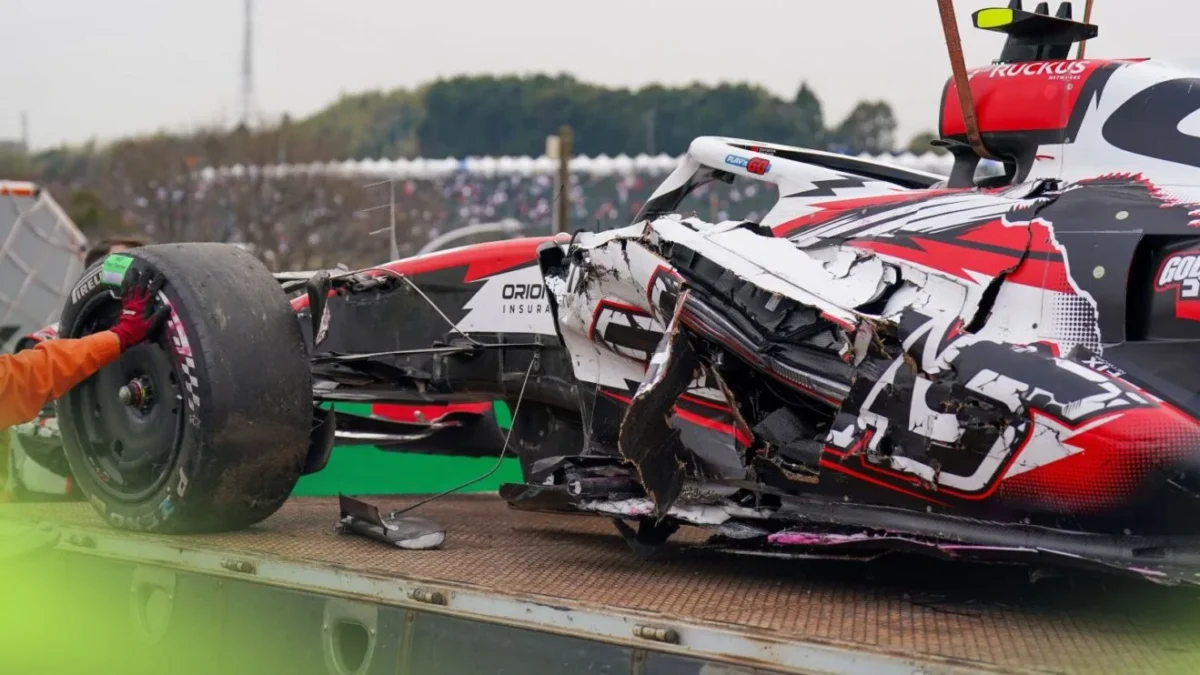
Because that is really what this is about. For all the talk of “super clipping” durations and MGU-K deployment curves and harvest limits, the turning point was a 20-year-old Briton hitting a Suzuka barrier at 50G.
Ollie Bearman’s crash at the Japanese Grand Prix — a 191mph shunt after closing on Franco Colapinto’s recharging Alpine with a 50km/h speed delta — was not a normal F1 accident. It was a symptom. And everyone knew it. The cars, running a 50:50 split of combustion and electric power, were behaving like the world’s most expensive yo-yos: flat-out one moment, harvesting energy and shedding speed the next, while cars behind closed in at speeds normally associated with cruise-control and a packet of biscuits. Bearman himself called it “the first time really in history” that two cars racing for position had such a massive speed delta. He is not wrong, and he is not alone in saying so. Verstappen, Norris, Sainz — all had lobbed grenades into the public discourse before the FIA summoned everyone into a meeting room.
So what, in plain English, is actually changing?
First, qualifying. The maximum permitted battery recharge has been cut from 8MJ to 7MJ per lap. Less energy to deploy means slower lap times, but — crucially — less need for drivers to lift off and coast down the straights to nurse their batteries. The FIA reckons this will cut “super clipping” duration to roughly two to four seconds per lap. For context, at Suzuka drivers were clipping for up to ten seconds; a one-off tweak in Japan trimmed that to six. This makes it structural. Translation: qualifying laps might actually look like qualifying laps again, rather than a hybrid Prius doing economy runs.
Second, deployment. The MGU-K will be allowed its full 350kW of oomph only in “key acceleration zones” — essentially, corner exits — and capped at 250kW elsewhere. Boost Mode gets clipped to a maximum of +150kW. Both of these are direct attempts to reduce the ludicrous closing speeds that made Bearman’s crash possible.
Third, safety. Recharging cars will now sport flashing warning lights — rear *and* lateral — to alert cars behind that a sitting duck with a battery problem is imminent. There’s a reset of the energy counter at the formation lap to fix an inconsistency nobody had noticed until now. And in wet conditions, intermediate tyre blanket temperatures have been increased for better initial grip, while ERS deployment is reduced to improve car control in low-grip conditions. Race start procedures will be trialled in Miami with a view to full adoption later.
It all sounds sensible. It all sounds reasonable. It is also an extraordinary admission that the sport built the 2026 cars, signed them off, launched them with enormous fanfare and three manufacturers making their factory debuts (Audi, Honda as an independent, and Cadillac as a customer), and then discovered in the first race weekend of the year that the thing didn’t quite work as advertised.
Mercedes boss Toto Wolff had spent the lead-up to Monday’s meeting calling for “a scalpel, not a baseball bat” — and on first read, he’s got his scalpel. The more radical proposals, including reports of a wholesale overhaul of the energy regulations, were parked. This is tweak-level intervention, not a rewrite. Wolff, whose Mercedes is currently supplying customer teams Alpine, McLaren and Williams, has also been rather vocal that F1’s squabbles should be aired behind closed doors, not on social media. One suspects he’s relieved the doors can now be closed again.
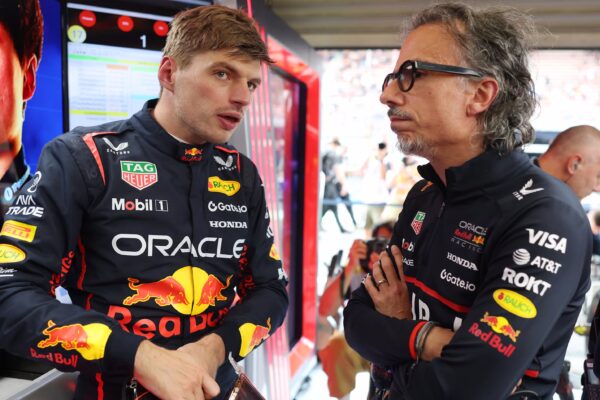
Here’s the thing, though. These changes were unanimous among the teams. Unanimous. In a sport where unanimity usually requires either an act of God or a very large cheque, that tells you everything about how uncomfortable the paddock had become. The FIA, F1 and the power unit manufacturers all signed off on the same document. The last time that happened, dinosaurs roamed Silverstone. The drivers, mind, were rather more publicly impatient than the manufacturers — and at least one of them is now in a position to do something about it: Verstappen’s exit clause from Red Bull activates at the Austrian Grand Prix in five weeks, which means the most vocal critic of the 2026 cars also happens to have the contractual leverage to make his criticism count. Tweaks are easier to push through when the paddock’s biggest name has a legal window to walk.
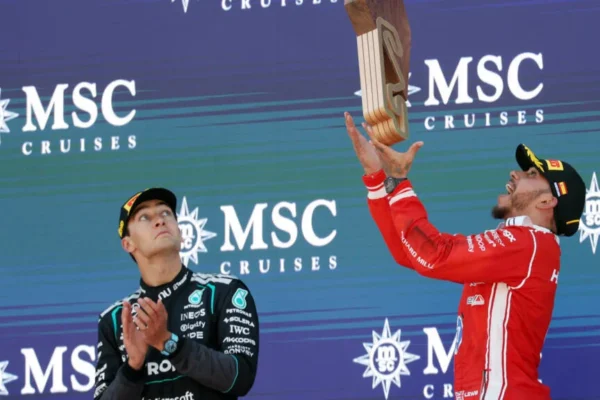
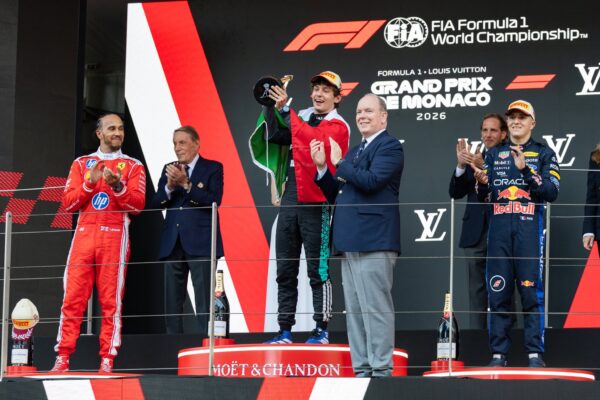
With 19 races still to run — and two already lost to the cancelled Saudi Arabian and Bahrain Grands Prix, scrapped after the outbreak of the Iran war — the 2026 season is down to a 20-race schedule and bruised from the off. Kimi Antonelli’s back-to-back poles at Shanghai and Suzuka have given Mercedes a title fight to chase, and Antonelli’s record-breaking Monaco win a few weeks later — taking the youngest-ever Monaco winner record off Lewis Hamilton — suggests that whatever else the 2026 cars are doing, at least one driver has figured out how to extract a season from them. Reliability remains a wider question, mind: Antonelli’s Mercedes power unit failure in Barcelona handed Hamilton his long-awaited first Ferrari win and cut the championship lead by 27 points in a single afternoon, which is precisely the kind of swing the hybrid-spec engines were supposed to have stopped producing by mid-season. McLaren, with reigning champion Lando Norris and Oscar Piastri, remain the team to beat. Ferrari are Ferrari. Audi are learning. Cadillac are surviving.
And now the cars will be slightly different to the ones that started the year. You can call that iteration, or you can call it the FIA admitting that the first draft needed a copy-edit. Either way, the interesting part is what happens if Miami reveals that the tweaks haven’t worked. What then? A second round of refinements in Barcelona? A third before Silverstone? At some point, “refining” becomes “rebuilding,” and the sport will have to have an honest conversation about whether the 2026 regulations were ever quite the masterpiece everyone said they were.
For now, though, the cars get lighter on the battery management, heavier on the flashing lights, and — with any luck — rather harder to drive into a wall at 191mph. Which really ought to have been the starting point, not the April update.