There is a certain poetry in the situation Europe’s automotive industry now finds itself in. Brussels spent 2024 constructing an elaborate tariff regime — provisional duties of between 17 and 35 percent on Chinese-made EVs — specifically designed to slow BYD’s advance into the European market. It is now May 2026, and BYD’s executive vice-president is sitting at the Financial Times Future of the Car conference in London, calmly announcing that the company is in talks to take over idle European factories.
BYD is negotiating with Stellantis and other European carmakers about taking over underutilised factories across the continent, according to Stella Li, BYD’s executive vice-president for the Americas and Europe. “We are talking to not only Stellantis, we’re talking to other companies too,” Li said. She added, with admirable simplicity, that BYD is “looking for any available plant in Europe, hoping to utilise spare capacity.” One imagines this is not quite the sentence the architects of the EU tariff regime were expecting to read in 2026. It also follows BYD’s Canadian expansion earlier this year, suggesting a coordinated 2026 push into every major Western market that hasn’t quite worked out how to keep the company out.
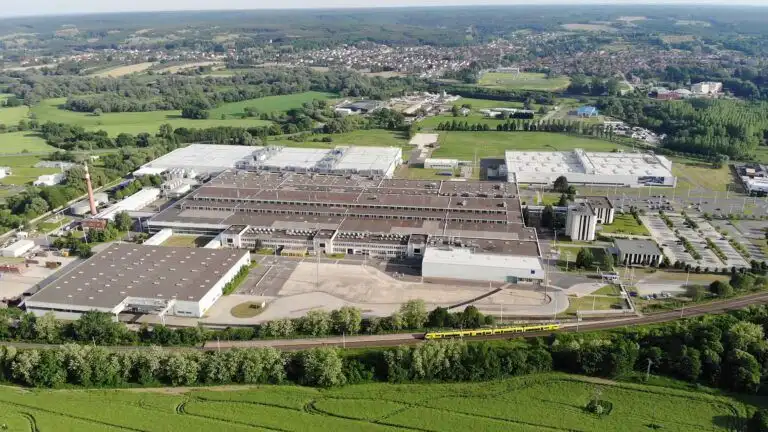
The economics are, as ever, the engine of the story. Stellantis carries roughly 30 percent excess production capacity across its European plant network. Plants in Mirafiori and Pomigliano in Italy, Eisenach in Germany, and Hordain in France have been operating well below break-even. An empty factory costs money whether it builds cars or not. BYD’s strategy of taking over existing facilities rather than building from scratch would let it bypass the EU’s provisional EV tariffs by producing inside the bloc — while simultaneously solving Stellantis’s utilisation problem. For BYD, it is years of infrastructure investment compressed into a single negotiation. For Stellantis, it is the least bad option available.
BYD is not alone in reading this opportunity. Geely is said to be in discussions to acquire Ford’s assembly plant in Spain for its European EV expansion. Leapmotor — in which Stellantis holds a 21 percent stake — is confirming plans to build cars in Europe, with discussions underway to add a new production line at Stellantis’s Figueroelas plant in Spain to manufacture a new Opel electric SUV alongside Leapmotor’s B10. The pattern is becoming clear: the idle factories of Europe’s legacy manufacturers are becoming, plant by plant, the manufacturing base of the Chinese EV industry’s European chapter. The demand side is cooperating too — Europe’s biggest EV month in years arrived in the same window, meaning the factories Chinese brands are now eyeing would not be opening into a sceptical market but a hungry one.
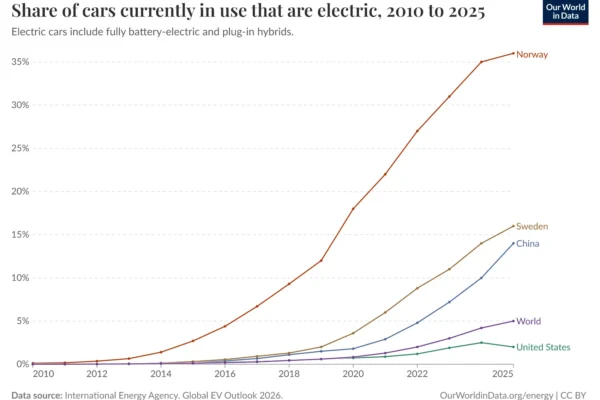
BYD has already committed to a passenger car factory in Hungary, where trial production has begun this year, and a second production base in Manisa, Turkey, expected by the end of 2026. The Stellantis discussions would accelerate that footprint considerably — and in the most symbolically resonant way possible: by manufacturing on the same Italian and German factory floors that once defined European automotive pride. BYD’s record overseas sales in 2026 are what makes that footprint commercially defensible: this is not speculative expansion, it is matching production capacity to a global order book that has, very recently, started arriving faster than the company’s existing factories can serve it. It is also worth setting against what the IEA’s 2026 EV outlook reveals: one in three new cars sold worldwide is now electric, and Chinese manufacturers are the dominant suppliers behind that number. Europe’s factories aren’t being courted because BYD got lucky. They’re being courted because the global EV order book is now structurally Chinese.
Then there is the detail that will make the boardrooms of every Italian luxury brand briefly stop breathing. Asked whether BYD might add European brands to its portfolio, Stella Li called Maserati “very interesting.” Maserati, it should be noted, is currently owned by Stellantis, currently unprofitable, and currently the subject of considerable internal uncertainty about its future. Whether Li’s comment was a genuine statement of intent, a negotiating nudge, or simply an observation delivered with excellent timing is unclear. What is clear is that she said it at a Financial Times conference, on the record, and the room noticed. It also fits a wider pattern: China’s broader move into premium European territory, and a Chinese-owned Maserati would be the most public confirmation of that shift imaginable.
Julia Poliscanova from Transport & Environment articulated the concern that nobody in a European government is quite comfortable saying out loud: “Once they help the Chinese brands get that brand awareness and once people get the car and see that it’s not such a bad car, I think it can be a point of no return.” It is a precise summary of the dilemma. The tariffs were designed to slow Chinese market penetration long enough for European manufacturers to close the technology gap. If those same manufacturers are now opening their factories to Chinese production — because they need the cash and the utilisation rates — then the delay strategy has not worked, and the industry is now at the negotiating table rather than the drawing board.
The European automotive industry finds itself in the position of a homeowner who built a very expensive fence to keep the neighbours out, then quietly rented them the spare bedroom. The fence is still there. The neighbours are inside. And they’ve noticed the Maserati in the garage.
⚡ UPDATE — May 29, 2026: The Tariffs Aren’t Working. The Numbers Confirm It.
What’s changed: New April 2026 data confirms Chinese brands now hold 15% of Europe’s battery-electric market — the first time this threshold has been crossed — while EU tariffs have demonstrably failed to slow the advance.
When this article was published on May 15, BYD’s Stella Li had just told the Financial Times that Chinese manufacturers were actively seeking to take over idle European factories. At the time, that looked like strategic positioning. This week’s data confirms it was also a very rational response to a market reality that is now impossible to ignore.
Chinese automakers accounted for more than 15% of electric-vehicle sales in Europe for the first time in April, with fully electric deliveries from manufacturers including BYD and Chery more than doubling year-on-year to 38,281 vehicles. Fifteen percent. Of the entire European battery-electric market. Chinese brands are now closing in on 10% of the wider European car market overall — a figure that, twelve months ago, would have seemed implausibly ambitious.
The numbers do something specific to the tariff argument. The European Commission imposed definitive countervailing duties on Chinese battery-electric vehicles in October 2024 — duties of between 17 and 35 percent, designed explicitly to slow Chinese penetration of the European market. The market data suggests the barriers have not halted the influx. This is not a subtle finding. The policy intended to protect European manufacturers has, in the period since its implementation, presided over Chinese EV market share in Europe more than doubling.
In Italy, Leapmotor alone accounted for around 30% of BEV sales in Q1 2026, and when combined with other Chinese brands, their share approached 40% of Italy’s battery-electric market. Italy. The home of Ferrari, Alfa Romeo, Fiat, and Maserati. In France, rising petrol prices triggered panic buying and supply disruptions at forecourts, pushing BEV sales up 69% year-on-year in March — and Chinese brands captured a disproportionate share of that surge because they had the affordable product available when French consumers went looking for it.
Chinese carmakers have also been selling more plug-in hybrids in the EU — a way to limit exposure to tariffs on Chinese-made electric cars while keeping momentum with buyers who want lower running costs and fewer range concerns. It is, as tariff workarounds go, rather elegant. Build the EVs, absorb the duty on some of them, sell hybrids to avoid the duty on others, and use the European factories you’re negotiating to take over to manufacture inside the bloc and bypass the tariff entirely. The multi-track strategy is working.
BYD’s rollout of its upmarket Denza brand suggests Chinese manufacturers are no longer focused only on budget-conscious buyers, but are moving into higher-income customer segments. The 15% figure is not a ceiling. It is, by every available indicator, a floor.
The European Commission’s tariffs were designed to give European manufacturers time to close the technology and cost gap with Chinese competitors. The April 2026 EV sales surge data suggests that time is running out faster than the policy intended to allow. Whether the factory negotiations — BYD with Stellantis, Geely with Ford’s Spanish plant, Leapmotor with the Figueroelas facility — accelerate that timeline further rather depends on whether you think manufacturing in Europe makes the Chinese brands European. Most European consumers, apparently, have already decided they don’t particularly care either way.v