There is a quiet, faintly awkward statistic doing the rounds in Detroit board rooms this morning, and nobody wants to talk about it on the record. The number of Americans who say their next vehicle will be a pickup truck has fallen to 7%. Last year it was 9%. The number saying it will be a sedan has gone up from 26% to 29%. Sedans, the segment Detroit officially gave up on a decade ago, are now growing. Trucks, the segment Detroit just spent six billion dollars rebuilding, are not. Welcome to “peak truck.”
The phrase comes from a Dave Cantin Group market outlook report that has been picking up speed all spring, and was reinforced this past week by an Autoweek analysis and a fresh Carfax used-car data drop showing prices spiked 3.1% month-over-month in May across every single vehicle segment Carfax tracks. That is not a year-over-year jump; that is one month. The average increase in used-vehicle asking prices was over $870. Layer on the average new-pickup transaction price of $54,600 — versus $43,600 for an SUV and $37,400 for a car — and you can see why the average American buyer with an average American budget might be having a quiet rethink in the showroom.
The punchline is the timing. Stellantis resurrected the Hemi V8 seven weeks ago to save the company. GM committed $6 billion over twelve months to V8 engines, transmissions and cylinder-head castings, almost all of it earmarked for Silverado and Sierra production. Ford is fighting through a 43% F-150 inventory crash and has cancelled the Lightning to funnel aluminium into combustion trucks. Three of America’s largest automakers, all in roughly the same six-month window, have placed enormous, bet-the-quarter wagers on the assumption that the American consumer will keep buying very large, very combustion-powered, very expensive pickups indefinitely. The buyer survey data, very politely, has just raised its hand at the back of the room.
The SUV piece of the picture is the part Detroit will quietly prefer. Autoblog reported last week that SUVs collectively claimed 48.6% of the US market in 2025, comfortably ahead of trucks. The Toyota RAV4 — a compact, primarily-hybrid, deeply sensible crossover — broke into the top three best-sellers for the first time, dislodging the Ram 1500 after a decade-long stranglehold on third place. The Honda CR-V outsold the Ram. So did the Tesla Model Y. The full-size truck lockout of America’s sales podium ended in 2024 and the survey data suggests 2026 may be when it ends decisively. F-Series will keep its crown, the way Apple keeps the iPhone crown, but the growth is happening underneath. The May 2026 numbers underline the point: Toyota’s hybrid Camry has now overtaken the RAV4 as the brand’s best-seller, which is the kind of sentence that would have read as a typo in 2022 and is simply a fact today.
None of this is great news for Detroit, because the American sedan is, with two or three exceptions, more or less extinct in domestic showrooms. Ford killed the Fusion in 2020. GM killed the Impala, the Cruze, the Sonic, the Malibu (sort of) and the entire Buick sedan range. Stellantis hasn’t sold a Chrysler sedan since the 300 was discontinued. If American buyers swing back toward affordable, fuel-efficient, four-door cars, the brands with product to sell will be Toyota (Camry, Corolla), Honda (Accord, Civic), Hyundai (Sonata, Elantra), Kia (K4, K5) and Nissan (Sentra, Altima). The Camry is hybrid-only and selling 309,000 units a year. The Accord just turned 50, is being held in place until 2030, and is also more than half hybrid. The Asian brands kept building sensible cars while Detroit went all-in on twenty-foot Crew Cabs. The Asian brands are about to be very glad they did. They are also building the enthusiast end of the same playbook — Toyota’s manual-transmission GR cars selling out at $60,000+ demonstrates that the small-car market has not just survived, it has produced one of the most commercially successful performance pipelines in the industry. Detroit, meanwhile, builds the Tremor and the Raptor and the TRX at six-figure prices and wonders why young buyers are looking elsewhere.
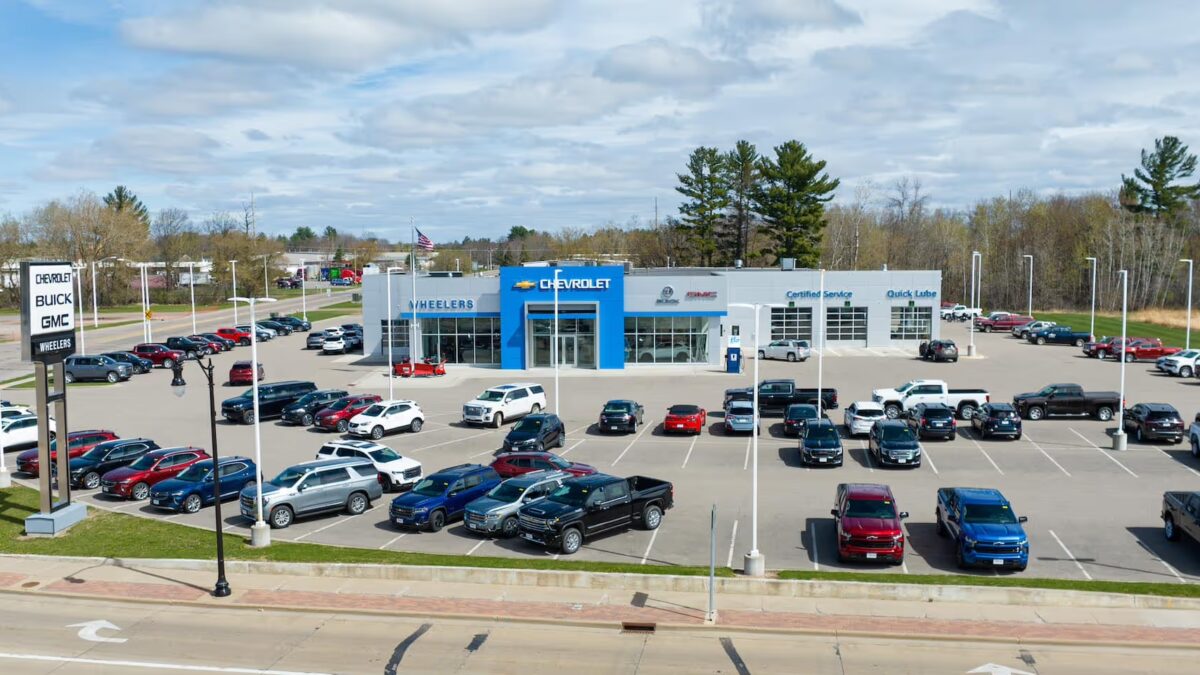
The forward-looking takeaway is that the truck plants are not going to retool. They cannot — GM’s Romulus and Saginaw investments alone are committed through 2030. What will happen instead is that incentives get fatter, lease deals on Silverados and F-150s get more aggressive, and the average dealer lot starts to look slightly less like a parade of tungsten-trimmed luxury barges. The American pickup will be fine. It will just be heavily discounted. And the next time someone in Dearborn announces a billion-dollar investment in a new V8, they might want to glance at the Camry sales chart on the way out of the meeting.
Key Stats Referenced
- US new-vehicle truck-buying intent: 7% in 2024 survey (was 9% in 2023)
- US new-vehicle sedan-buying intent: 29% in 2024 survey (was 26%)
- US SUV/CUV-buying intent: 43% (down from 44%)
- 18–24 demographic truck interest: 12% (up from 8% in 2023) — only growing cohort
- Average new car price: $37,400
- Average new SUV/CUV price: $43,600
- Average new pickup price: $54,600
- Carfax used-car average price increase, May 2026: +3.1% month-over-month, ~$870 average
- SUVs as share of 2025 US sales: 48.6%
- Trucks displaced from #3 best-selling vehicle slot in 2024 by Toyota RAV4
- Top-10 sellers in 2025: Honda CR-V, Tesla Model Y, Toyota Camry all outsold Ram 1500
- F-Series: 49 consecutive years as US best-selling vehicle line (still holding #1)
- Maintenance costs since Dec 2018: +44%
- Insurance costs since Dec 2018: +52%
- Gasoline prices since Dec 2018: +30%
- Camry US sales 2025: ~309,000 units (hybrid-only)
- Ford killed Fusion 2020; GM killed Impala, Cruze, Sonic, Malibu; Stellantis last Chrysler sedan was 300
- GM Romulus + Saginaw + Toledo commitments: extend through 2030