For about five years, the global car industry has held a deeply earnest, often shouty, occasionally tearful debate about whether the future is electric or whether the future is petrol. Hundreds of billions of dollars have been spent, tens of thousands of jobs have been reorganised, multiple CEOs have publicly committed to all-electric pledges and then publicly walked them back. While all of this was happening, an old, slightly boring, deeply pragmatic third option simply ate everyone’s lunch. The May 2026 US sales numbers landed last week, and the answer is in: it was the hybrid.
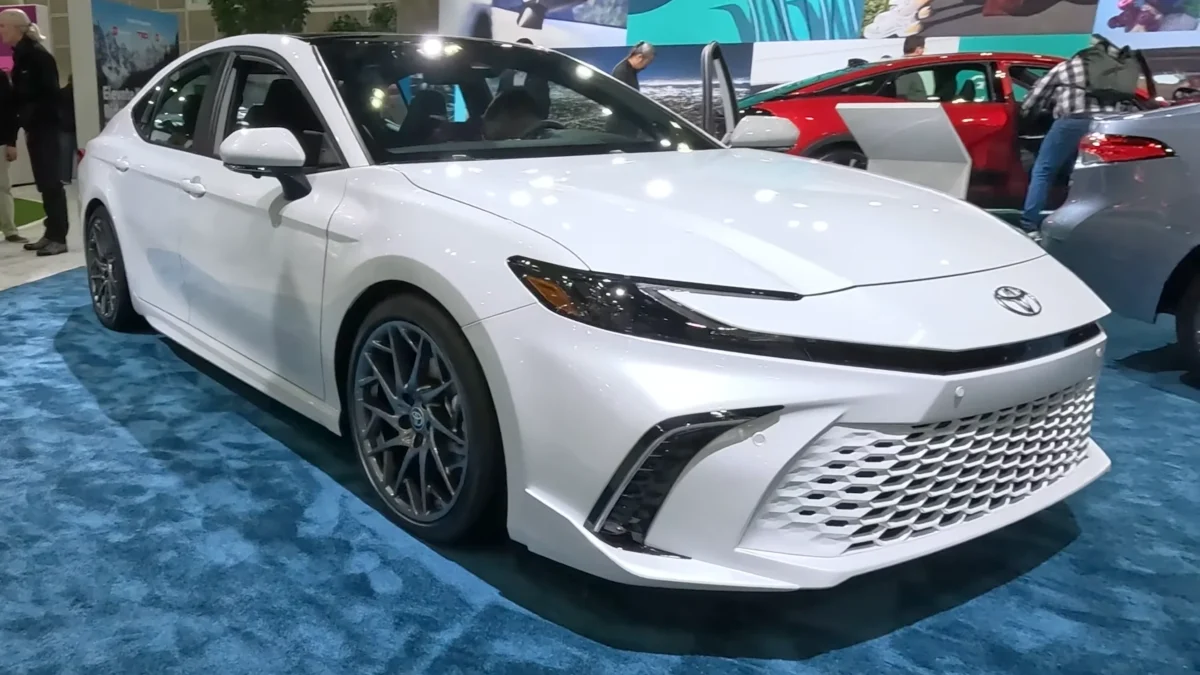
The headline statistic is properly remarkable. Toyota reported May US sales of 238,800 vehicles, essentially flat year-on-year, but 57.4% of that total — 137,031 cars — was electrified, the highest share in the company’s history. Almost all of it was hybrid. Sitting at the top of Toyota’s chart, for the first time in over a decade, is the Camry, with 35,797 units sold in May, up 14.2% year-on-year. The Camry is now outselling the RAV4. It is also outselling every other Toyota passenger car combined. The Camry, you may recall, became a hybrid-only model in 2025. The sedan-is-dead crowd, who confidently buried this car in 2018, will be eating their hats sometime around now.
The surrounding cast is no less startling. Hyundai’s hybrid deliveries in May were up 90% year-on-year. Kia’s were up 179%, which is the sort of number you usually see when a small startup goes from selling four cars to selling eleven. Honda posted record hybrid sales and was up nearly 10% overall. Subaru — a company that spent the last decade explaining to investors that it didn’t really need electrification — reported that hybrids and EVs together now make up 25% of its US demand, and overall sales rose 10.4%. The brands winning May 2026 are, almost without exception, the ones whose hybrid lineups were ready when the EV music slowed down. The brands losing are the ones that committed to pure-electric pivots that didn’t arrive on schedule.
The historical embarrassment is for the EV-only believers. In 2021, Ford committed to going EV-dominant. Honda promised to be 40% EV by 2030. GM said 2035. Volvo Cars said 2030. Lotus, hilariously, said never-again-combustion. Each of those companies has, in 2026, quietly walked back the pledge or written down billions of dollars trying. Meanwhile Toyota, which was called a climate laggard for its insistence that hybrids should be the bridge, sold 4.4 million of them globally in 2025 and is on track to comfortably beat that in 2026. Akio Toyoda did not become wealthier by being right. He became wealthier by being right in a market that took five years to admit it.
The Camry’s particular numbers deserve a moment. In 2024 it sold 205,156 units in the US. In 2025, with the new hybrid-only generation, it sold 316,155 — a 54.1% jump in a year when American sedans are, on paper, supposed to be vanishing. The most efficient Camry Hybrid returns 51 mpg combined, has a real-world range of over 650 miles per tank, starts at $28,700, and — critically — needs no charging infrastructure, no home wallbox, no special tariff and no apology. It is the boring, sensible, family car argument winning a global powertrain war against $60,000 electric SUVs that need 45 minutes at a fast charger to do the same thing the Camry does in four minutes at a Shell station.
There is a wider lesson here that 2026 will be remembered for. The American car market is not, as the pure-EV crowd insisted, dragging its heels on electrification because it is reactionary, oil-funded or Trumpist. It is dragging its heels because the alternative being offered — expensive, range-limited, infrastructure-dependent battery vehicles — is genuinely less convenient than a hybrid for most buyers, most of the time. The 20% combined hybrid-plus-EV share of US new car sales reached in 2024 is now closer to 25% in 2026, and the growth is coming almost entirely from hybrids. EV growth is flat. Pure-petrol growth is flat. Hybrid growth is exponential. Door number three has won.
The forward-looking takeaway is that the rest of 2026 will be a brutal scramble for hybrid production capacity. Honda has delayed every redesign in its non-EV lineup to fund 13 new hybrids. Hyundai is expanding Sonata Hybrid production in Alabama. Kia is doubling K5 hybrid output. Ford has a Maverick Hybrid wait list running past Christmas. Stellantis is, as ever, mostly issuing press releases. The companies that hedged are about to spend the next two years building cars that don’t need a power station to work. Toyota, mercifully, will be insufferable, and it has every right to be. The boring answer was always the right one. Everyone else just needed half a decade and a $40 billion write-down to figure that out.