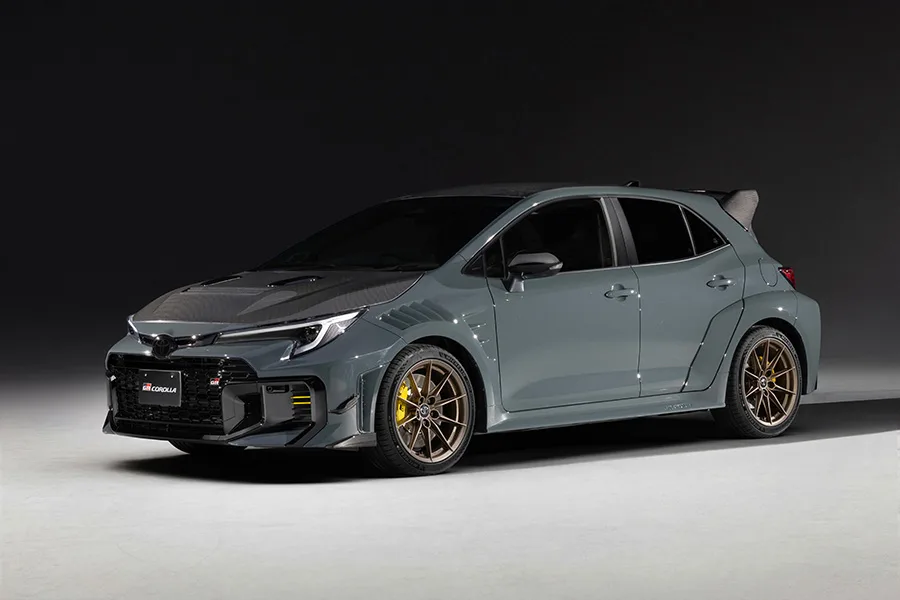
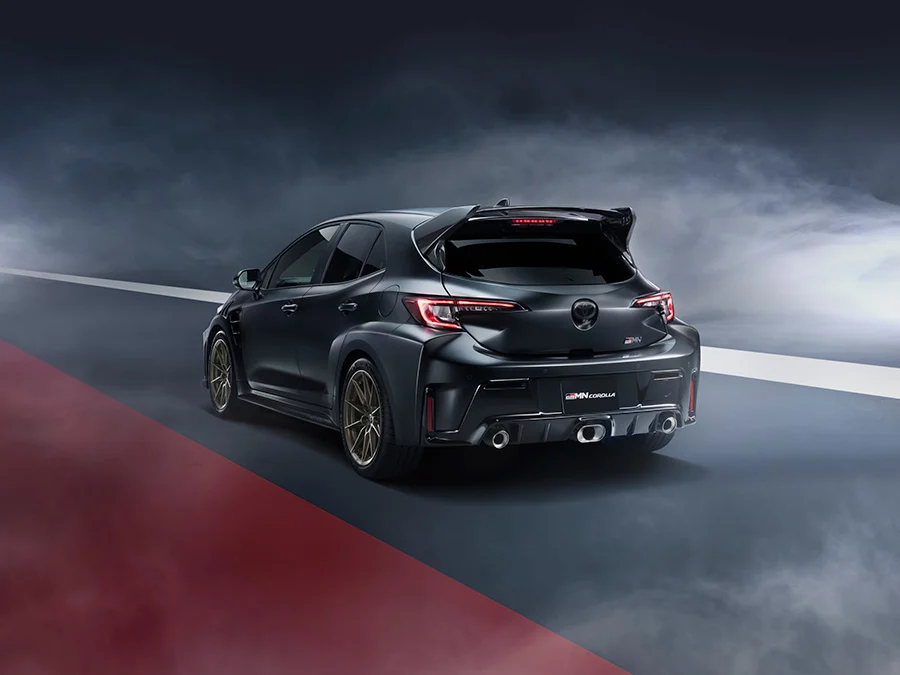
Toyota’s marketing department has spent the last fortnight watching its rivals admit defeat. Lotus said the EV future was “not as good as we expected.” Volvo confessed it had sold off the factories it now needs. Audi, Mercedes and BMW have variously walked back their all-electric pledges with the rueful expressions of executives who’d like a word with their 2021 selves. Then on Monday, while everyone else was issuing carefully worded climate-strategy revisions, Toyota quietly dropped a 300-horsepower, three-cylinder, six-speed-manual, two-seat track hatchback called the GRMN Corolla. It is the smuggest car of 2026, and it has every right to be.
Let’s get the specification out of the way, because it is, frankly, magnificent. The 2026 GRMN Corolla uses an updated version of Toyota’s G16E-GTS — a 1.6-litre, three-cylinder, port-injected, turbocharged, intercooled, 12-valve DOHC unit producing 300 hp at 6,500 rpm and 302 lb-ft of torque between 3,250 and 4,600 rpm. Power goes to all four wheels through GR-FOUR all-wheel drive and a close-ratio six-speed iMT manual gearbox. There is no automatic option. There is no hybrid. There are no rear seats, because Toyota deleted them to reduce weight by about 66 lb. The car wears Michelin Pilot Sport Cup 2 tyres as standard, has a five-step manually adjustable rear wing, and is built at Toyota’s Motomachi plant in Japan, which is the same factory that turns out the LFA’s successor and roughly anything else that fits Akio Toyoda’s personal definition of “interesting.”
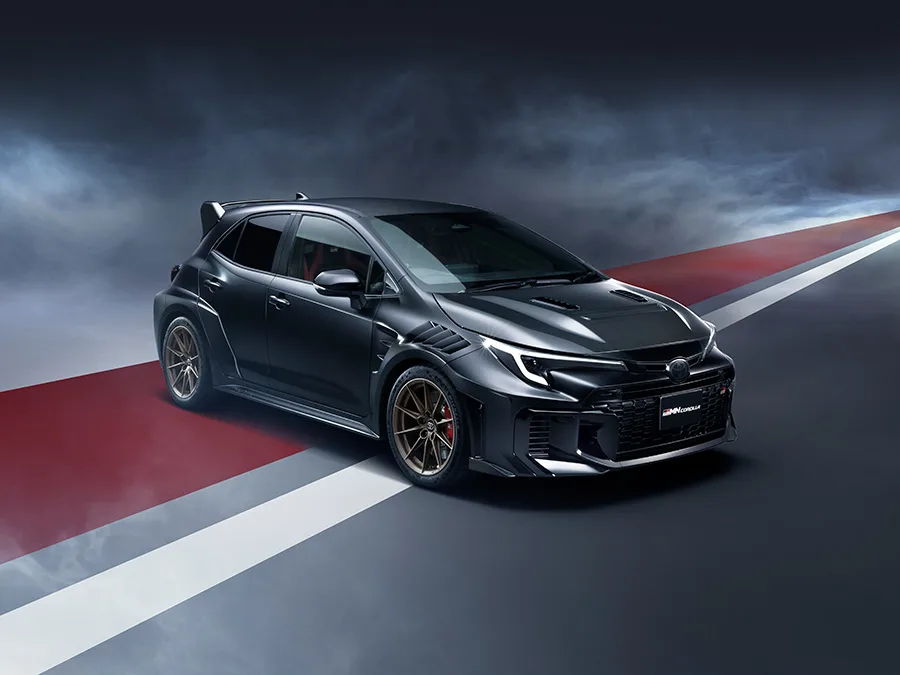
The context is what makes this a non-EV story rather than a press release. Toyota has been vocally heretical about the all-electric timeline for years, to the point where it was actively criticised by climate groups, environmental investors, and at least one Tesla shareholder letter. CEO Koji Sato’s strategy was unfashionable in 2022 and looked ruinous in 2023. By 2026, with Honda swallowing a $15.8 billion EV write-down, Stellantis resurrecting the Hemi, Ford cancelling the Lightning, and GM idling Factory Zero for the second time in a year, it looks rather like the only senior strategy in the global auto industry that didn’t require an emergency revision. Toyota’s hybrid lineup is now generating the profits funding the GRMN Corolla, with May 2026 sales data confirming the company is selling more hybrids in a quarter than most of its rivals sell EVs in a year, and the engineering budget that produces cars like this one is the direct dividend.
There’s a wider story in the launch venue, too. GR — GAZOO Racing — is Toyota’s motorsport-and-fast-car division, which has spent the last six years quietly building a portfolio that the rest of the world is now scrambling to copy. The GR Yaris, GR Corolla and GR86 have given Toyota a credible enthusiast pipeline in a segment Detroit basically abandoned. Honda still sells the Civic Type R, sort of, and Hyundai builds the brilliant N range, but neither has Toyota’s manual-transmission discipline or its motorsport heritage. The GRMN Corolla was developed under Super Taikyu endurance racing and tuned at the Nürburgring with Akio Toyoda himself driving. Toyota’s bench-racing credibility, which used to be a punchline among enthusiasts, is now embarrassingly close to BMW M’s.
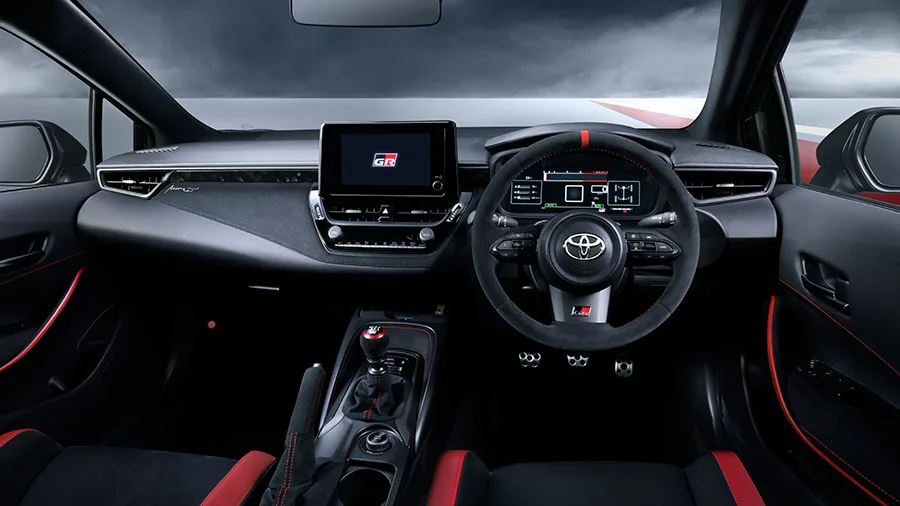
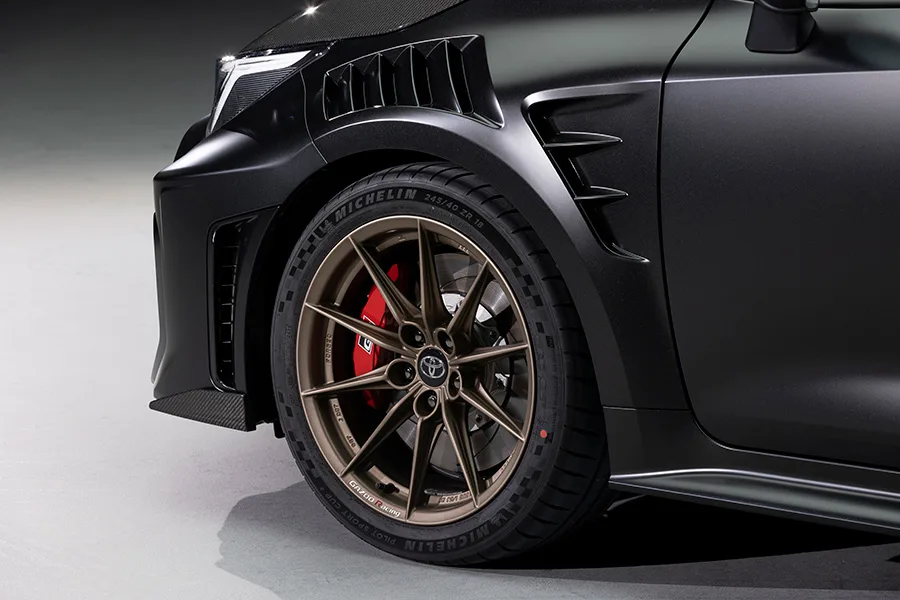
The numbers around this matter. The GR Corolla, launched in 2022, was meant to be a 6,500-unit-a-year niche project. By 2024 Toyota was selling roughly 8,500 a year in North America alone, with waiting lists running past a year at most dealers. The GR86 has been on the market since 2021 and continues to sell out, even as the broader sports car segment has shrunk by 28% over five years. Toyota’s GAZOO Racing division has, against every market-research forecast, become a profit centre. The GRMN Corolla — a stripped-out, two-seat, properly expensive enthusiast machine that will probably retail north of $60,000 — is the moment that profit centre stops being a side hustle and starts being a stated business priority. There is no electric version planned, and there will not be one.
The forward-looking takeaway is that 2027 is shaping up to be the year of the manual transmission. The Lotus Emira V6 is now confirmed past 2030. The Porsche 911 continues to offer one. The new Cadillac CT5-V Blackwing keeps it. Honda has held onto manuals in the Civic Si and Type R. The car the entire EV industry told us was dead in 2021 is, in 2026, the headline-grabbing centrepiece of Toyota’s GR division. It turns out the human urge to operate a clutch pedal while shouting at a three-cylinder engine on the way to apex is more durable than any business plan. Akio Toyoda, the bookies’ last man standing, has won this one fair and square. He’ll be insufferable about it. He’s earned it.