There is a particular kind of stubbornness that masquerades as engineering conviction, and Ferry Porsche had it in abundance. By the mid-1970s, every serious voice inside and outside the company had reached the same conclusion: the 911’s engine was in the wrong place. The physics were inelegant. The handling required management. The liability, if a less experienced driver found the limit at the wrong moment, was not theoretical. Multiple internal studies recommended moving the engine forward. Ferdinand Piëch, Ferry’s own nephew and one of the finest engineering minds of his generation, had already produced the 914 and was pushing harder for a front-engined replacement. The 928 was in development — a proper grand tourer with the engine over the front wheels, exactly where God and Newton intended it to be.
Ferry said no. The 911 would stay rear-engined. That decision, made in the teeth of almost universal internal disagreement, is why there is still a 911 today — and why it remains the most recognisable sports car shape in the world.
Why the Engine Was Wrong, and Why It Was There Anyway
The rear-engined layout of the original 911 was not an act of perversity. It was inherited from the 356, which inherited it from the Volkswagen Beetle, which Ferdinand Porsche Senior had designed in the 1930s. The engine sat behind the rear axle because that was where the engine went in the family’s cars, and the 911’s designer — Butzi Porsche, Ferry’s son — was not in the business of reinventing the platform when there were other, more pressing design problems to solve.
The consequences of that layout were well understood by the time the 911 reached production in 1964. With the engine’s weight hanging beyond the rear axle, the car had a natural tendency toward oversteer. In steady-state cornering it was manageable. At the limit, or when a driver lifted off the throttle mid-corner, the physics became considerably less forgiving. The tail wanted to lead. Porsche’s engineers spent the entire 1960s and 1970s finding ways to slow down that tendency without correcting it entirely, because correcting it entirely would have meant moving the engine.
By 1972, Porsche had hired Helmuth Bott as head of research and development. Bott ran the numbers, ran the simulations, ran the road tests. His conclusion: the rear-engined layout was a fundamental compromise that would become increasingly difficult to manage as power outputs rose and customer expectations of handling safety increased. He recommended transitioning the 911 to a mid-engined layout, or phasing it out in favour of the front-engined 928.
Ferry Porsche, who had founded the company and remained its guiding conscience even as corporate structures shifted around him, considered the recommendation and declined to follow it.
The Case for Keeping It
What Ferry understood that the engineers struggled to quantify was the 911’s identity. The car was not merely a vehicle with certain dynamic properties. It was a thing with a specific character — one that had accumulated meaning through competition results, through ownership communities, through the particular sound of an air-cooled flat-six hung out behind the rear axle. Changing the engine position would have produced a better car by most objective measures and a fundamentally different one by every subjective one.
He also understood the commercial reality more clearly than the internal memos suggested. The 914 had been intended as an accessible, mid-engined Porsche. It had been perceived as a VW-Porsche hybrid and received with indifference. The 928, which Porsche’s product planners had positioned as the 911’s replacement, was a superb machine that nobody — including Porsche’s own customers — particularly wanted to buy instead of a 911. It sold respectably and was eventually discontinued in 1995, never having achieved what it was designed to do. The 911, meanwhile, outsold it every year of its production life.
Ferry’s stubbornness was not engineering naivety. It was an accurate reading of what his customers were actually buying.
What the Engineers Did Instead
Overruled on the fundamental question, Bott and his team did what good engineers do when told they cannot solve a problem the obvious way: they solved it another way.
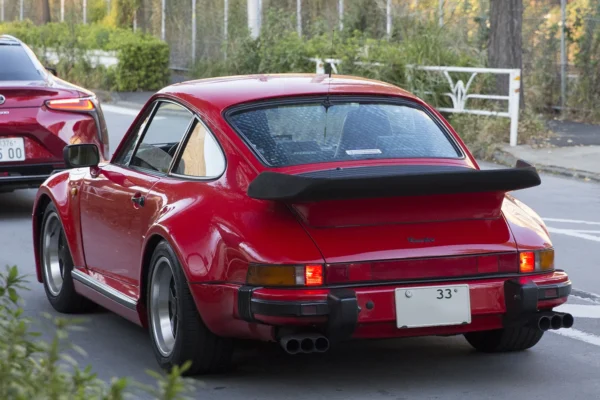
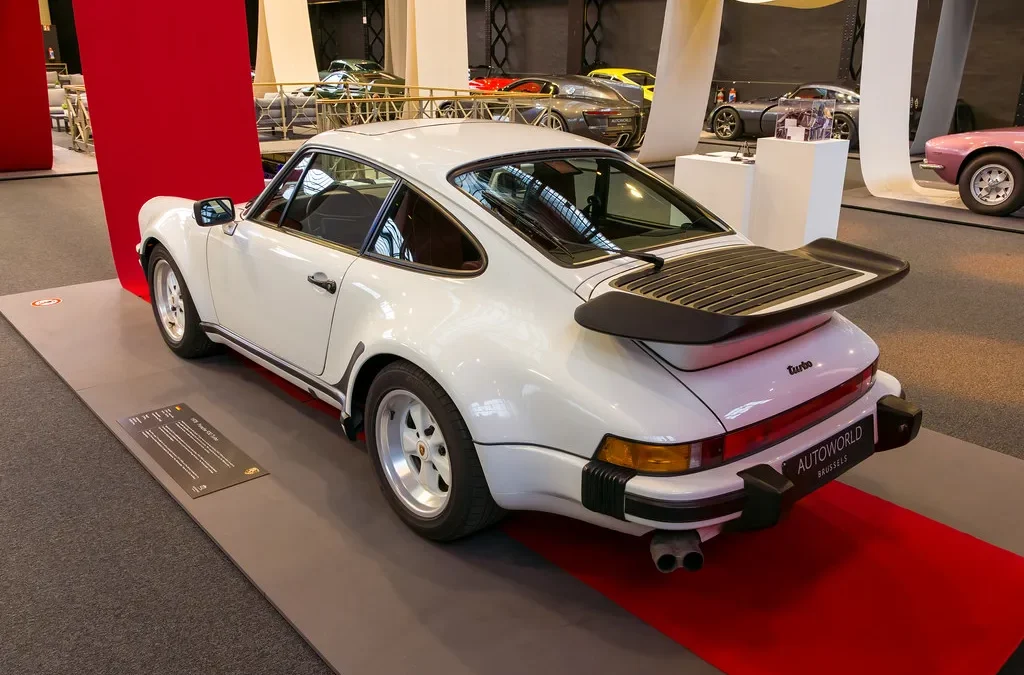
Wider rear tyres became standard from the early 1970s, improving traction and reducing snap oversteer — before they added a turbocharger and made everything considerably more interesting. The Turbo, launched in 1975, added a rear spoiler providing real downforce at speed — and a new kind of terror when its boost arrived all at once mid-corner, but that is a story for another time. The 911 SC of 1978 was, by the standards of its predecessors, genuinely approachable. Then the 964, launched in 1989, introduced all-wheel drive as an option — a direct descendant of the 959’s all-wheel drive system — which transformed the all-conditions confidence of a car whose layout had previously made it genuinely challenging in poor weather.
Each of these developments was an engineering response to the constraints that Ferry’s decision had imposed. The constraints, it turned out, were also the car’s character. The 911’s handling still requires commitment and understanding from its driver in a way that a mid-engined car simply does not. That requirement is not a flaw that survived the development process. It is, at this point, a deliberate feature.
The Decision’s Long Shadow
The rear-engined question was definitively settled in the early 1990s, when Porsche came close to insolvency. Wendelin Wiedeking arrived as CEO in 1992 and oversaw a dramatic restructuring — costs cut, quality improved, product range focused. The 911 was the anchor. It was what Porsche’s customers wanted and what Porsche’s identity depended upon.
By that point, moving the engine had stopped being a live discussion. The layout had been so thoroughly developed, and the 911 so thoroughly defined around it, that the rear-engined configuration was no longer a compromise to be managed — it was a heritage to be stewarded. The water-cooled 996, launched in 1997 and controversial in its own right, updated almost everything about the car that nearly wasn’t called the 911 at all — except the fundamental architecture. The engine stayed where Ferry had insisted it should stay.
Today the 911 GT3 RS laps the Nürburgring in under seven minutes. It is rear-engined. The physics have not changed. The engineering that manages them has become extraordinary.
What It Tells Us
The 911’s story is a useful corrective to the idea that engineering decisions should always be made on engineering grounds. Ferry Porsche’s refusal to move the engine was based as much on intuition about identity and customer psychology as it was on technical reasoning. The engineers who disagreed with him were not wrong about the physics. They were wrong about what the car was for.
The 928 was the objectively better decision. It died. The 911 is still here, rear-engined, still mildly terrifying at the limit, still the benchmark against which every other sports car is measured. It has outlasted the company that nearly replaced it, the nephew who thought it should be retired, and every sensible argument for doing something different.
Sometimes the wrong decision is the only right one.