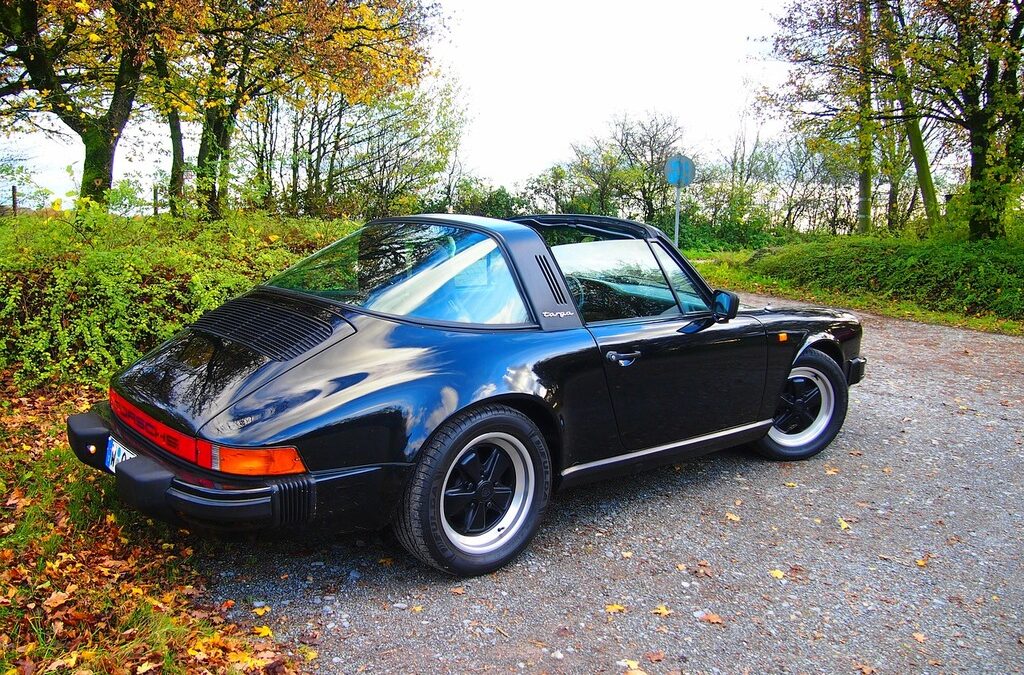
Peter Schutz joined Porsche as chief executive in January 1981. Within his first week, he walked into a product planning meeting and noticed something on the development timeline. The Porsche 911 had been given an end date. Not a retirement date, not a phased transition — an end date. The model that had defined the company for nearly two decades was scheduled for discontinuation, to be replaced entirely by the front-engined 928 and the forthcoming 944.
Schutz asked why the line stopped.
The answer, delivered by product planners who had clearly been through this argument before, was essentially: the 911 is old, the layout is compromised, the 928 is the future, and the decision has already been made.
Schutz picked up a marker and extended the line on the chart to the edge of the paper.
“That’s when the 911 will end,” he said. “When we decide it ends.”
It is one of the more dramatic reversals in automotive corporate history, achieved without a committee, without a consultancy, and without a particularly long meeting. It also happened to save the most important car Porsche had ever made.
The State of Porsche in 1981
To understand why the 911 was being cancelled, you need to understand what Porsche looked like from the inside in the late 1970s. The company was not in crisis — it was profitable, it was respected, and it was producing cars that the automotive press consistently praised. But it was also burdened with a product planning philosophy that had concluded, not unreasonably, that the 911’s rear-engined layout was a liability that would become harder to defend as safety regulations tightened and competitors improved.
The 928, launched in 1978, was the answer the company had produced. Ferdinand Piëch, Porsche’s most formidable engineering mind, had already moved on to Audi. The family that had founded the company had stepped back from day-to-day management. The professional managers who replaced them had looked at the product range with clear eyes and reached a clear conclusion: the 928 was objectively a better car than the 911, and the 911’s days were numbered.
They were not wrong about the 928. It was genuinely excellent — a grand tourer of real sophistication, with a front-mounted V8, proper weight distribution, and a ride quality that the 911 could not match. It won Motor Trend Car of the Year in 1978. Road & Track praised it extensively. The automotive press, broadly speaking, agreed that it was the superior machine.
The problem was that Porsche’s customers didn’t want it instead of a 911. They wanted it alongside one, or they didn’t want it at all. The 928 sold respectably. It never sold the way the 911 sold, and it never carried the emotional freight that the 911 carried. In the showrooms of California and Germany and Japan, people came in asking for a 911. Offering them a 928 as an upgrade was a conversation that dealers reported, consistently, going nowhere. By 1981, the 911 range also included the turbo that had already defined how exciting that development could be — the 930, launched in 1975, had given the 911 a halo product so charismatic and so commercially successful that any plan to cancel the underlying car was always going to struggle against the showroom evidence. The 930 was selling on reputation, on noise, and on the particular thrill of a turbocharged rear-engined car that could surprise even experienced drivers. Cancelling the 911 in 1981 would have meant cancelling that as well, which the product planners had perhaps not fully internalised.
None of this had fully permeated the product planning meetings by the time Schutz arrived.
Who Peter Schutz Was
Schutz was not a car person by background. He was an American-born engineer and businessman who had spent his career in industrial machinery and diesel engines before joining Porsche from Cummins Engine Company. He arrived without the institutional assumptions that had calcified around the 911 question inside the company — without the decades of internal debate, the engineering studies, the meetings where the same arguments had been rehearsed and the same conclusion reached.
He also arrived with a habit of asking the obvious question that insiders had stopped asking.
The obvious question, when he looked at Porsche’s sales data in his first weeks, was: which car are people actually buying? The answer was the 911. By a significant margin. In every major market. From customers who, when surveyed, described their relationship with the car in terms that went considerably beyond rational product evaluation.
Schutz understood something that the product planners had not weighted correctly: the 911 was not a product that happened to have loyal customers. It was a product whose identity and its customers’ identity had become intertwined to the point where they were inseparable. Cancelling it would not redirect those customers to the 928. It would redirect them to competitors, or to the used market, or simply out of the brand entirely.
The extended line on the product planning chart was not sentimentality. It was a reading of the commercial situation that the data supported, once you asked the right question.
What Schutz Did Next
Having saved the 911 from immediate cancellation, Schutz did something that compounded the decision considerably: he invested in it.
Under his tenure, Porsche developed the 911 Carrera 3.2 — a significant evolution of the SC that improved power, reliability, and driver appeal. More importantly, Schutz greenlit the development of a four-wheel drive 911, which would eventually reach production as the Carrera 4 in the 964 generation. He also authorised the 959 programme that would define the decade — a car so advanced it made the arguments for the 911’s obsolescence look quaint by comparison, and which used a four-wheel drive system that would inform 911 development for the next forty years.
The 959 alone demonstrated what Schutz’s decision had made possible. By committing to the 911’s future and investing in its development rather than managing its decline, Porsche had given its engineers the brief to explore what a rear-engined, all-wheel-drive, technologically advanced sports car could be. The answer turned out to be rather extraordinary.
Schutz left Porsche in 1987, his contract not renewed following a period of internal disagreement. By that point, the 911 was firmly re-established as the centre of the company’s product range and its commercial identity. His successor, and every CEO since, has operated in a company where the 911’s continuation is not a question.
The 928’s Coda
The 928 continued in production until 1995, outlasting Schutz’s tenure by eight years. It received successive upgrades — larger engines, improved interiors, enhanced dynamics — and remained genuinely excellent throughout. It is now a cult classic, appreciated by a community of enthusiasts who understand what it was trying to do and value it accordingly.
It never replaced the 911. It never came close.
In the years since its discontinuation, the 928 has been reappraised more warmly than its commercial failure might suggest it deserved. Some argue it was simply too grand touring for a brand associated with sports cars — that its qualities were real but its positioning was wrong. Others maintain that it was competing against a car whose emotional hold on its customers made rational comparison beside the point.
Both readings are probably correct. The 928 lost not because it was worse than the 911, but because no car could have won that particular competition. The 911 had survived a trademark dispute, a near-cancellation, and sixty years of engineers telling it the engine was in the wrong place — it wasn’t going to be displaced by a better product. Identity doesn’t work that way.
What It Tells Us
Peter Schutz’s decision in that January 1981 meeting is a case study in the value of the outsider’s question. The product planners who had scheduled the 911’s end were not incompetent. They had done the analysis, run the comparisons, and reached a conclusion that was defensible on the evidence they were weighing. What they had not done was ask whether the evidence they were weighing was the right evidence.
Schutz asked. The answer changed the company.
The 911 he saved is now the longest-running sports car nameplate in production history. Current examples lap the Nürburgring in under seven minutes. They are bought by people who grew up with posters of the version Schutz protected, and by people who weren’t born when he walked into that meeting. The market for them has never been healthier.
Somewhere, presumably, there is a version of history where the line on that chart stayed where the product planners had drawn it, and the 911 ended in 1983 or 1984, and Porsche became a company that made the 928 and the 944 and eventually something else entirely.
It is very difficult to imagine that company being as interesting as the one that exists.