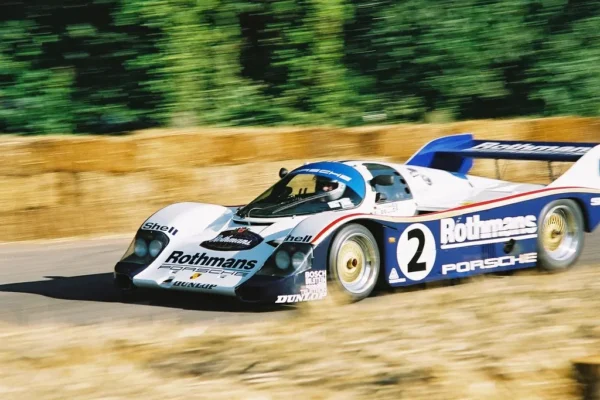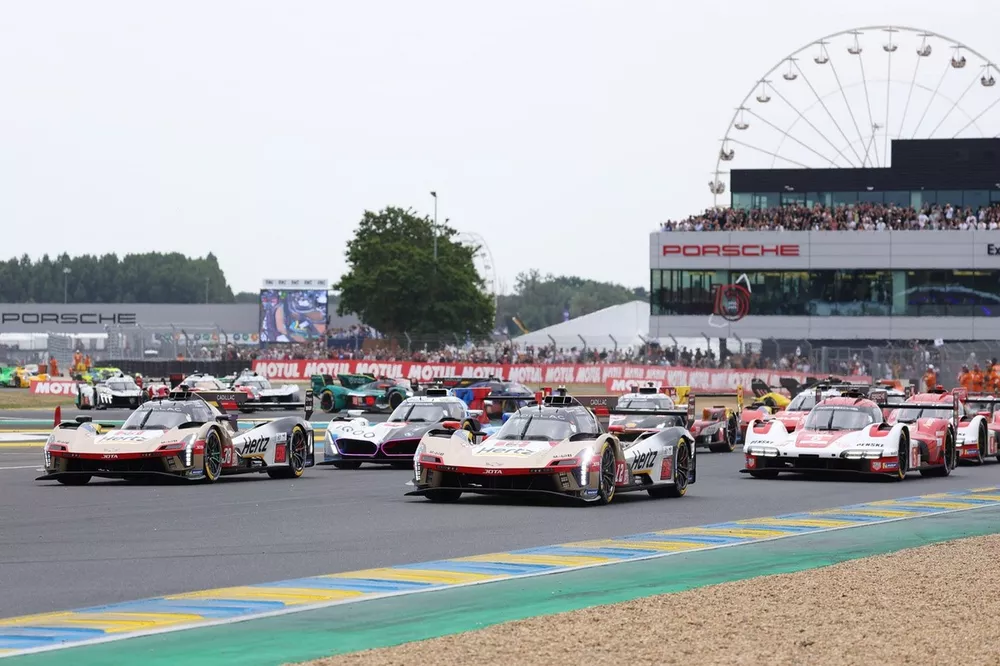
On the morning of Saturday 14 June, at Circuit de la Sarthe, 62 cars will line up for the start of the 94th 24 Hours of Le Mans. Eight of the world’s largest car manufacturers — Aston Martin, Alpine, BMW, Cadillac, Ferrari, Genesis, Peugeot, and Toyota — will be running cars in the Hypercar class. Approximately 332,000 spectators will be watching trackside. A measurable proportion of the current Formula 1 grid will have the television on. And the question hanging over the entire weekend, just to add some piquancy to proceedings, is whether the race that has spent the last three years quietly becoming the most interesting event in international motor racing is about to absorb Formula 1’s biggest stars too.
Let’s start with the numbers, because the numbers tell most of this story by themselves. Eight Hypercar manufacturers is the largest factory entry the top class has seen since the Group C era of the late 1980s. Genesis — yes, the Hyundai luxury brand — makes its debut this year, becoming the ninth manufacturer to commit to the category since the rules were rewritten in 2023. Alpine, however, is making its final Le Mans appearance with the A424 LMDh before Renault mothballs the programme at the end of the season. Mick Schumacher has already left for IndyCar. The whole thing is going to a museum. Renault’s reasoning is that EV growth has slowed and it can no longer justify the spend, which is a slightly polite way of saying that the LMDh programme cost more than expected and produced less than hoped. They are not alone in that calculation.
For everyone else, the calculation has gone the other way. Ferrari arrives as defending champions, having won the last three editions of Le Mans — the first manufacturer to do that since Audi between 2010 and 2014. The 499P, in race trim, is the car to beat. Antonio Giovinazzi, driving the #51, has been saying all week that Ferrari can win again but “it will be even more difficult this time, because the competition is even fiercer.” Toyota will agree. So will Porsche, BMW, and the Cadillac Hertz Team JOTA outfit, which won Hyperpole last year and has been on pace since the WEC opener in Qatar. Aston Martin’s Valkyrie is the most aerodynamically extreme car on the grid and the only one running a Cosworth V12 rather than a hybrid. It will probably not win. It will, however, be the loudest thing in the Sarthe.
Which brings us to the more uncomfortable subplot. Max Verstappen led the Nürburgring 24 Hours for 20 hours last month before a driveshaft failure ended his weekend with three and a half hours to go. He has subsequently said he will return next year. Ford is in active talks with him about a Le Mans entry as early as 2027. Lando Norris confirmed last fortnight that he would “love” to do Le Mans now that McLaren’s MCL-HY hypercar is in testing for a 2027 WEC debut. Zak Brown has previously confirmed conversations with both Norris and Piastri. George Russell wanted to do a Nordschleife lap record attempt; Toto Wolff said no. Kimi Antonelli is taking his Nordschleife A-permit qualification. Oliver Bearman has confirmed he’ll be watching the race on TV.
This is not Le Mans poaching F1 drivers. Not yet. This is Le Mans being treated, by the actual F1 drivers themselves, as the more enjoyable racing of the two. Ben Sulayem’s V8 announcement in Miami and the FIA’s spring rewrite of the 2026 rules have not arrested the basic feeling that something is rather more right at La Sarthe than at Suzuka. The Le Mans organisers, sensibly, are doing nothing to discourage this. The 94th edition of the race is being marketed harder than any in modern history.
Here are the technical specifics, since they matter. The Hypercar class allows two car types: full LMH prototypes (Toyota GR010, Ferrari 499P, Peugeot 9X8, Aston Martin Valkyrie, BMW M Hybrid V8) and LMDh customer-chassis hybrids (Cadillac V-Series.R, Alpine A424, Porsche 963, Genesis GMR-001). All run a 200kW MGU on the rear axle. The internal combustion engines vary wildly — a Cosworth-developed naturally aspirated V12 (Valkyrie), Ferrari’s twin-turbo V6 (499P), Toyota’s 3.5-litre twin-turbo V6 hybrid (GR010), and Porsche’s twin-turbo V8 (963). The Balance of Performance regulations, which adjust weight and power output, do most of the work of keeping the field competitive, which is why nobody is allowed to use the phrase “BoP” in polite company without a pained look.
Lap records will be set this Saturday at the Test Day on June 7. The Mulsanne Straight will deliver speeds in excess of 340 km/h. The race itself starts at 4pm CEST on Saturday June 14, runs through the night, and ends at 4pm Sunday. Watch for the Porsche Curves at dawn. Watch for Indianapolis as the sun comes up. Watch for the moment a driver who has been awake for 26 hours brakes 30 metres late into the Esses at 280 km/h because his eyes have stopped working properly.
For Ford, this is also the year of the rebrand. Ford Performance is now Ford Racing, which is what it was called before 2014 and what it is, apparently, called again. The Mustang GT3 is back in WEC with an EVO update. Mark Rushbrook — the man who has been very publicly courting Verstappen — has been running this side of the operation for years. He is, by some distance, the busiest man in motorsport public relations at the moment.
And what does it all mean? It means that for one weekend a year, the sport that F1 spent thirty years patronising as a quaint endurance event is currently the venue where the manufacturers, the drivers, and increasingly the fans are happiest. The Monaco Grand Prix runs this weekend with Antonelli leading the championship by 43 points. Eight days later, the European leg continues at Barcelona. Six days after that, Le Mans. The F1 calendar has already conceded that the Spanish Grand Prix the same weekend as Le Mans — won, as it turns out, by Lewis Hamilton in his first Ferrari victory after 686 days without a win — suggests Formula 1 still believes it has the leverage to demand attention.
This year, that’s not as obvious as it once was. We will find out, on the morning of June 14, whether the largest manufacturer field in 40 years can deliver a race worthy of the build-up. Eleven days. Set an alarm.