“V8 is coming.”
Three words from Mohammed Ben Sulayem in Miami at the weekend, and the entire premise of Formula 1’s 2026 season — the new manufacturers, the half-electric power units, the years of development, the hundreds of millions of pounds spent — has been quietly dismissed as a temporary inconvenience to be tolerated until the proper engines come back.
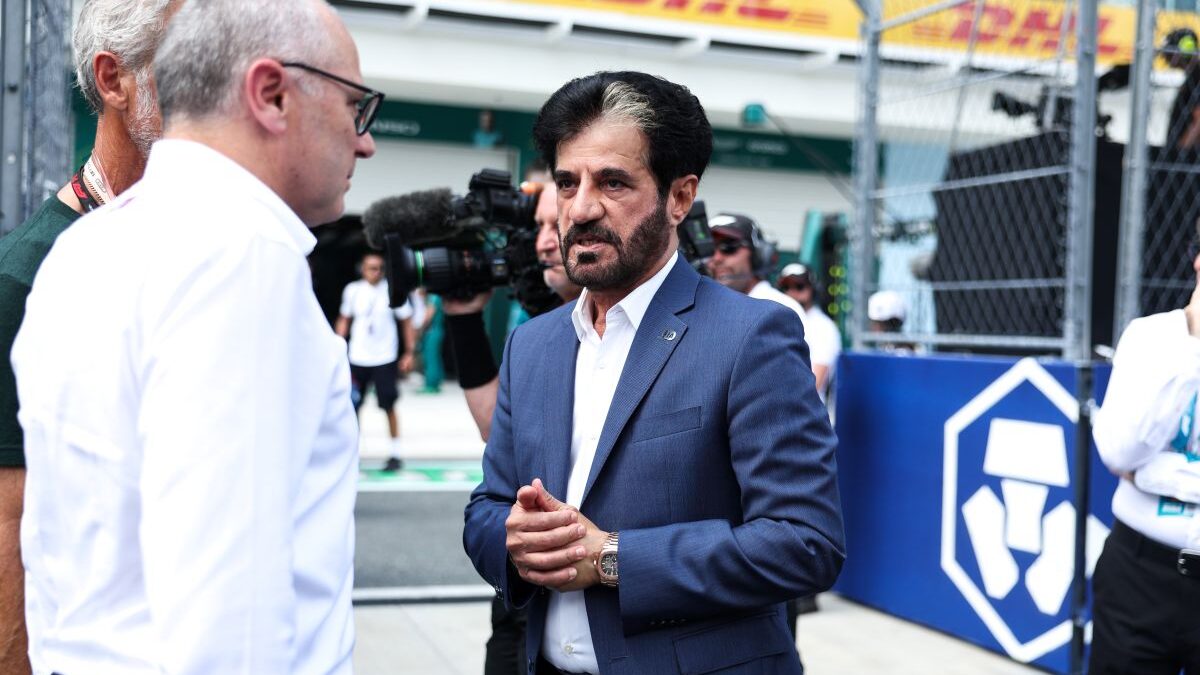
The FIA president told Reuters during the Miami Grand Prix weekend that V8 engines will return to F1 in 2030, or 2031 at the latest, and crucially that the manufacturers’ opinion on the matter is, in his framing, optional. “In 2031, the FIA will have the power to do it, without any votes from the PUMs,” he said. “That’s the regulations. But we want to bring it one year earlier, which everyone now is asking for.” If the four power unit manufacturers required for a 2030 vote don’t oblige? “It will happen the next year. It will be done. V8 is coming.”
This is, to put it mildly, an unusual way to talk about your sport’s brand-new technical regulations four races into their first season.
Let’s recap how we got here, because the timeline is genuinely remarkable. In 2022, the FIA, the teams, and the manufacturers agreed a 2026 power unit formula based on a near-50:50 split between a V6 internal combustion engine and electrical power. The point of the exercise was to keep Mercedes, Ferrari and Renault interested while attracting Audi, who would only join a championship that took electrification seriously. Honda came back as an independent supplier for Aston Martin. Ford partnered with Red Bull. Cadillac signed up as a customer through Ferrari, with its own GM engine due in 2029. Six manufacturers. Three new entrants. The biggest manufacturer commitment to F1 in a generation.
Four races in, the cars work less well than advertised. “Super clipping” — the unfortunately named phenomenon of cars charging their batteries on full throttle while losing top speed — has produced 50km/h closing-speed deltas, one 50G crash for Oliver Bearman at Suzuka, and a unanimous April vote by all teams and PUMs to tweak the regulations from Miami onwards. The maximum permitted recharge has been cut from 8MJ to 7MJ. MGU-K deployment is now zoned. Boost Mode is capped at +150kW. I wrote about this two weeks ago, and at the time the official line from the FIA was “refinements” — a word doing rather a lot of heavy lifting.
Now the same FIA president is openly briefing journalists that the whole project will be replaced four years from now. Earlier if possible.
The technical case for the V8 is genuinely persuasive. “You get the sound, less complexity, lightweight,” Ben Sulayem said. The proposed engine would run on sustainable fuel — F1’s sustainability commitment isn’t going anywhere — with what he called “very, very minor electrification.” Currently the split is 46-54 in favour of electrical power. The new V8 would flip that ratio dramatically, returning the internal combustion engine to its historical role of being, well, the engine. The cars get lighter. The sound returns. Manufacturers’ development costs collapse. Fans, who have variously described the 2026 racing as “Mario Kart” and “Formula E on steroids,” stop sending Toto Wolff angry letters.
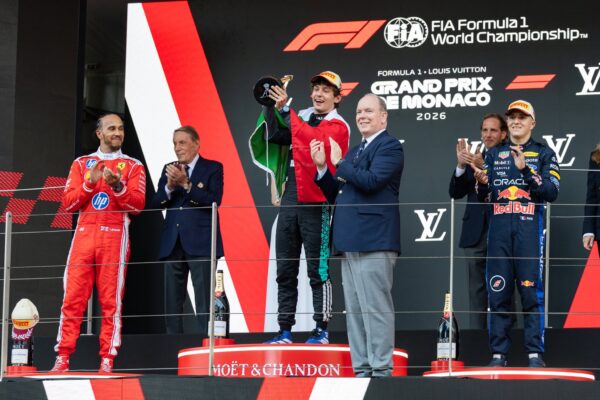
Mercedes, of all teams, has already publicly backed the move. The team that has won the opening four races of 2026 — with Kimi Antonelli now leading the championship after his Miami victory and three wins from four — has effectively endorsed killing the formula it’s currently winning under. That tells you everything about how confident even the dominant manufacturer is in the long-term future of the current rules. It is also worth noting that the current formula, for all its flaws, is producing genuinely historic results — Antonelli has since become the youngest Monaco winner in F1 history, taking the record off Lewis Hamilton in a car everyone is currently planning the funeral for. The 2026 season may turn out to be one of the best of the decade in spite of, rather than because of, the engines being binned.
But here’s where Ben Sulayem’s confidence collides with reality.
General Motors hasn’t even started yet. Cadillac’s bespoke F1 engine isn’t due until 2029. The notion that GM — having spent years and an industrial-grade fortune developing a power unit specifically for the 2026 regulations — will cheerfully agree to throw it away after a single season is, charitably, optimistic. Audi spent the better part of three years and a reported $400 million-plus rebuilding the Sauber operation around the 2026 ruleset. Honda walked away from Red Bull specifically to build a new independent programme tied to these regulations. The idea that all of these manufacturers will simply nod through a 2030 V8 mandate to oblige a president who’s already telling them publicly he’ll force it through in 2031 anyway is the kind of negotiating tactic that tends to work brilliantly in headlines and rather less brilliantly in practice.
Motor Sport Magazine’s analysis this morning called this the “uncomfortable reality” of Ben Sulayem’s promise: the manufacturers signed up to a deal in good faith, spent the money, and are now being told the goalposts are moving as soon as the FIA can muster the political will. There’s also the small matter that Ben Sulayem himself was re-elected unopposed in December 2025 — a result helped along by FIA statute changes that effectively blocked any rival candidacies. He’s not exactly governing from a position of broad institutional consensus. He’s governing from a position of having the rulebook on his side and not much else.
What does this mean for the racing? Probably nothing, in the short term. Antonelli leads the championship. Mercedes are the team to beat. The Spa 6 Hours runs this weekend and Le Mans is five weeks away. The 2026 season will continue, the cars will get marginally faster as teams understand them, and the title fight between Antonelli, Russell, Norris, Piastri and Verstappen will be perfectly entertaining. The driver-market consequences may bite sooner than the engine consequences, mind: Verstappen’s growing F1 disillusionment has an active activation date at the Austrian Grand Prix, and a sport openly briefing that its current power units are temporary is not a sport that makes it easier to keep a four-time world champion in the cockpit. The engine politics and the driver politics are now reading from the same script.
But the politics have changed shape entirely. The current formula now exists on borrowed time. Every conversation about 2027 power unit refinements — a 60-40 split has been mooted as a stepping stone — will happen in the shadow of a 2030 deadline that Ben Sulayem has already declared non-negotiable. Manufacturers planning long-term programmes will hedge accordingly. Drivers asked about the cars will increasingly compare them to whatever’s coming next. And the FIA president, who took office in 2021 and has spent the intervening years variously feuding with F1’s commercial rights holders, drivers, his own staff, and now apparently the engine suppliers, will keep saying “V8 is coming” until somebody either agrees or proves him wrong.
Four races. That’s how long it’s taken Formula 1’s grandest reset in a decade to start being talked about as a transitional formula. The cars on the grid in Spain next weekend will be the most expensively-developed lame ducks in the history of the sport. Listen carefully and you might hear them already wheezing.