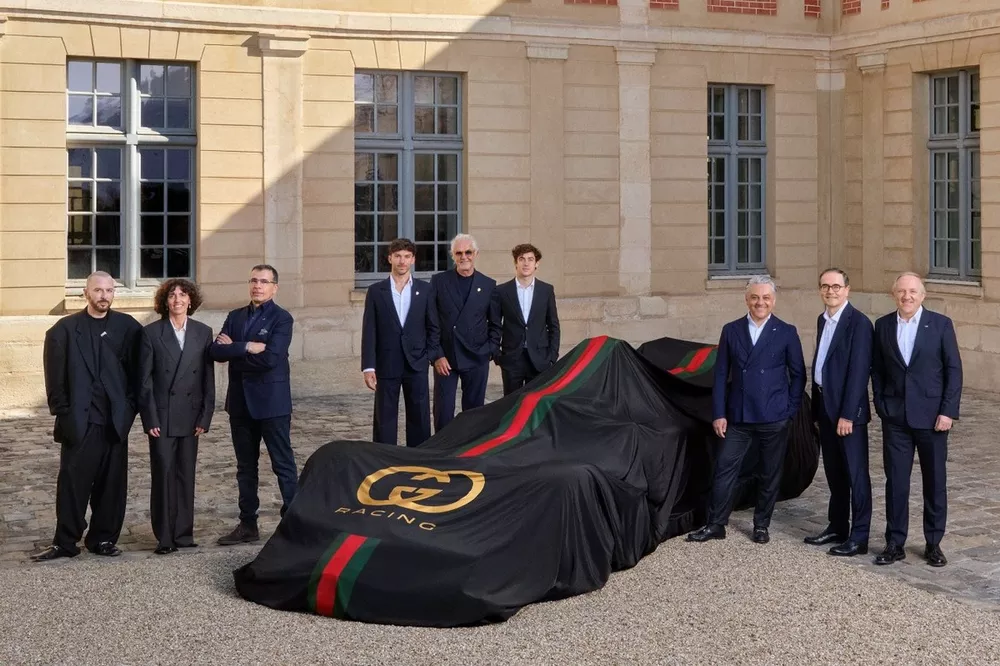
On Wednesday afternoon, in a press release written largely in the language of luxury rather than the language of motorsport, Alpine confirmed that from 2027 the team will be known as Gucci Racing Alpine Formula One Team. Gucci will be the title sponsor. The car will swap the BWT pink for some combination of red, green, black and gold. And Formula 1, for the first time in its 76-year history, will have a luxury fashion house as the headline backer of an entry. The deal is reported by Bleacher Report at $150 million-plus over at least three years.
A few things to unpack here. The first, and most obvious, is the disconnect between what Gucci is buying and what Alpine has been doing on track. The Enstone-based team finished tenth out of ten in the 2025 Constructors’ Championship. Dead last. In 2026 they have crept up to fifth out of eleven, courtesy of the new technical regulations resetting the competitive order, with Pierre Gasly and Franco Colapinto sitting eighth and eleventh in the drivers’ standings after five rounds. They have not been on a podium in 2026. They have not won a race since Esteban Ocon’s freak Hungarian Grand Prix victory in 2021, which lives in the F1 record books with an asterisk that may as well read “the only midfield team to be in the right place when everyone in front crashed.” This is the team Gucci has decided to attach the entire weight of its luxury brand to.
Which tells you something. It tells you that what Gucci is buying is not, primarily, race wins.
What Gucci is buying, by its own account, is access to an audience. Luca de Meo — the former Renault Group CEO who left in mid-2025 to take over Kering, Gucci’s parent company, and who therefore personally engineered both ends of this deal — was unusually direct about it. “Formula One has evolved far beyond sport to become one of the world’s most powerful premium content platforms,” he said, “reaching over 1.5 billion people each season and inspiring a rapidly expanding, younger and increasingly female audience.” Note the phrasing. “Younger.” “Increasingly female.” This is what Drive to Survive did to the sport’s demographics, said out loud by a CEO who used to run an F1 team and now runs a fashion house and has therefore seen the numbers from both sides.
The team will be renamed. Gucci Racing will launch as a standalone Kering business unit, described by Francesca Bellettini, Gucci’s CEO, as “a new business and experiential platform built around the values of performance, precision, discipline and excellence at the intersection of luxury and sport.” That sentence does not contain the word “motorsport.” That is not accidental.
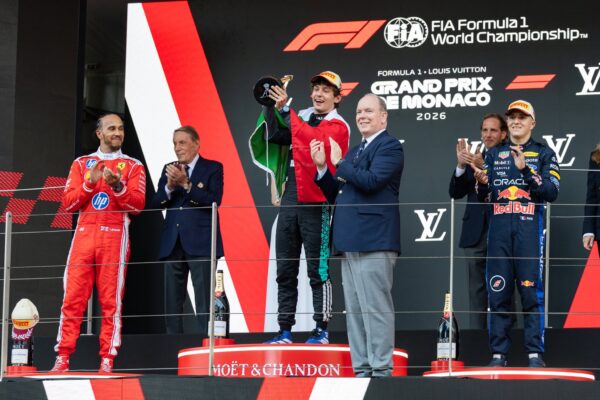
For context, Gucci is not alone here. LVMH signed a 10-year, $1 billion-plus partnership with Formula 1 last year, which is why this weekend’s Monaco Grand Prix is the Formula 1 Louis Vuitton Grand Prix de Monaco. Mastercard took over title sponsorship of McLaren for 2026. The Gulf states are pouring money into F1 ownership. The grid is being recoloured by people whose primary expertise is brand equity rather than aerodynamics.
There is a precedent. Benetton, the Italian clothing brand that took over the Toleman team in 1986 and renamed it, ran the F1 team that won Michael Schumacher his first two world championships in 1994 and 1995. That worked, sort of. It also took eight years, two world titles, and the team eventually being sold to Renault to actually be remembered as anything other than a fashion brand’s vanity project. Gucci will hope its timeline is shorter. Three years is what the deal is reported to run for. Three years is, in modern F1 terms, the gap between a competitive car and a non-competitive one. It is not enough time to win a championship from where Alpine currently sit.
The BWT relationship, incidentally, ends with the 2026 season. BWT — the Austrian water treatment firm that paid for the pink livery and who you have spent the last four years confidently telling friends at parties is “some kind of, like, water company” — may continue to sponsor Alpine in a smaller capacity. The pink, presumably, goes the way of the dodo.
What does this mean for the racing? Probably very little. Alpine is still using customer Mercedes power units from 2026 onwards after Renault exited engine manufacturing. They are still based in Enstone, still operating with a constructors’ budget closer to the bottom of the grid than the top. Gucci’s money, generous though it is, doesn’t change the technical reality. Flavio Briatore — the executive advisor Renault appointed last year, who incidentally ran Benetton during its title-winning years — has spent 2026 trying to stabilize the team’s performance with somewhat mixed results.
What it might mean for the sport is rather more interesting. F1’s commercial model has historically been driven by tobacco, oil, technology, banks, and energy drinks. Luxury fashion is a different proposition. Luxury fashion does not need horsepower. Luxury fashion needs eyeballs, demographics, and a brand environment that flatters its existing customers while drawing in new ones. The fact that Gucci is willing to bet $150 million-plus on Alpine — a team that has, by any sporting measure, been a slow-moving disaster for the past four years — suggests the commercial economics of F1 have decoupled, somewhat, from on-track results.
Which is, depending on your worldview, either deeply concerning or completely fine. A sport where your title sponsorship value isn’t dictated by where you finished last weekend is a sport with healthier middle-pack economics. It is also a sport where the bottom-third teams might be valued for their broadcast time rather than their pace. Both can be true simultaneously.
The Monaco Grand Prix is next weekend, with the Spanish Grand Prix the week after. Antonelli leads the championship by 43 points from Russell. McLaren are second to Mercedes in the constructors’. Ferrari, with their reported “soul-destroying” Miami upgrades, remain a mystery. None of which will be visible on the Alpine cars in 2027, which will be wearing a logo last seen on a £2,800 leather handbag. The first F1 team to be sponsored by a brand that sells handbags is the team currently sitting fifth. Whether they finish there is, in commercial terms, slightly beside the point.