The car is back. Not the crossover with “Sport” in the name, not the EV that looks like a melted soap bar, not the concept that will be politely shelved after eighteen months of press coverage. The actual car. Several of them, simultaneously, from manufacturers who have spent the better part of the last decade telling you they were moving on.
This week delivered two genuinely surprising pieces of news. The first came via a source at a major GM supplier, reported by Automotive News and immediately picked up everywhere: General Motors is planning to build the new Cadillac CT5, a revived Chevrolet Camaro, and Buick’s first sedan since the Regal was discontinued in 2020, all on the same updated Alpha platform, at the same Lansing Grand River plant in Michigan, with production starting in fall 2027. All three. Cars. Not SUVs. ICE-powered, rear-wheel-drive, recognisably descended from the things that people got excited about. The contrast within GM is striking — the same company that just idled Factory Zero for the second time in three months is simultaneously committing factory floor space to three new combustion-powered cars. The internal capital allocation has shifted, and it has shifted in the direction the market actually wants.
The logistics are revealing. GM is discontinuing the smaller CT4 in June, which leaves the Lansing plant producing just one vehicle. A CT5 alone cannot fill a factory. A CT5 and a Camaro together produce an estimated 60,000 to 70,000 units annually but still leave capacity on the table. So a Buick sedan exists, at least in part, because the maths of manufacturing require it. This is not the most romantic origin story for a car, but it is honest, and it has an accidental upside: Buick gets a rear-wheel-drive sedan for the first time in three decades because the numbers worked out. The Buick Regal ended production as a front-wheel-drive affair. Whatever emerges from this programme will be something else entirely.
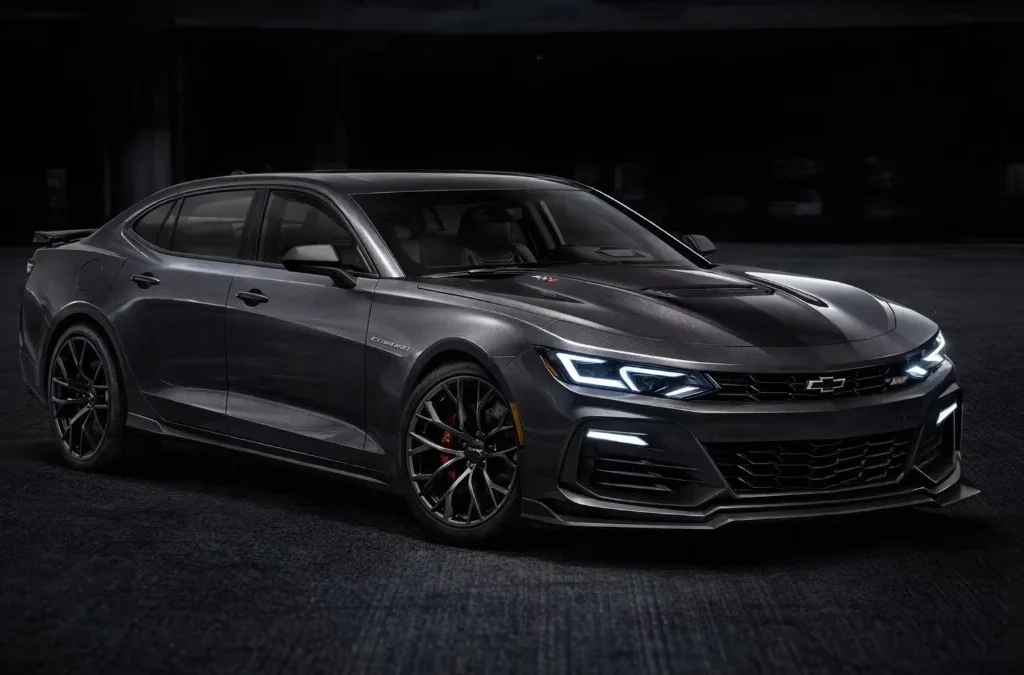
The Camaro is the headline, obviously. Killed after the 2024 model year — the second time the nameplate has been put to sleep, the first having been in 2002 — it is now apparently coming back as a seventh-generation model, likely with a version of the 2027 Corvette’s 6.7-litre V8 making around 500 horsepower in SS specification. The possibility of a ZL1 variant exists. A manual transmission is, one assumes, not entirely out of the question, though GM has not confirmed anything, and the sensible response to any GM confirmation at this stage is cautious optimism followed by at least six months of waiting to see. Stellantis’s similar return to the Hemi V8 is the broader context this Camaro revival sits inside — an American industry that publicly buried its V8s in 2024 is, in 2026, rather conspicuously digging them back up. Customers, it turns out, had not signed off on the burial.
The second surprise of the week was the Hyundai Boulder concept, unveiled at the New York Auto Show and immediately described by every publication that saw it as the most significant Hyundai in years. It is a body-on-frame SUV with 37-inch mud-terrain tyres, a solid rear axle, enormous fender flares, a spare tyre on the liftgate, and a design Hyundai calls “Art of Steel,” which is the kind of name a brand coins when it has decided to stop apologising for being Korean and start making things that Americans actually want to buy. The Boulder previews a production midsize pickup truck due by 2030, to be built in the United States using steel from a new Hyundai plant in Louisiana. Hyundai says it wants 80% of its production localised by 2030. The company appears to have noticed that tariffs exist.
The Boulder is unmistakably a Bronco-adjacent vehicle — boxy, upright, portal windows above the main glasshouse, wraparound rear glass that would not look out of place on an FJ Cruiser — but nobody at Hyundai is pretending otherwise. When you are entering a segment dominated by the Ford Bronco, the Jeep Wrangler, and the Land Rover Defender, wearing their influence on your sleeve is not weakness; it is a positioning strategy. The question, as with all Hyundai entries into segments it has never competed in before, is execution. The brand’s track record on that front is rather better than the sceptics have historically given it credit for.
Taken together, these two stories describe the same thing: an industry course-correction that enthusiasts have been waiting for, delivered not through sentiment but through factory capacity and tariff planning. GM isn’t reviving the Camaro because it loves muscle cars; it is reviving the Camaro because it needs to fill a building in Michigan and the platform already exists. Hyundai isn’t building a Bronco rival because it has suddenly discovered the spiritual value of off-road driving; it is building one because the American truck market is the most profitable on earth and it has factories that need work. The motives are commercial. The results, if history is any guide, could be genuinely interesting.
The Cars and Bids team put it plainly in their latest podcast: it is exciting that GM is committing to three new ICE, rear-wheel-drive platforms. The CT5 V Blackwing, in their view, might be the best modern car made. The last Camaro, at the end of its run, was very good. Whether the new ones will match those heights is unknowable until someone drives them. But the factory is being retooled, the parts quotes are going out to suppliers, and a concept car shaped like a very capable Bronco was the talk of the New York Auto Show.
Cars are back. Whether they should thank enthusiasm or economics for the revival is, at this point, fairly academic.