In a week so on-the-nose it could be a satire, the two companies that share the Volvo name went in precisely opposite directions on combustion power. One unveiled a freshly engineered, in-house, hydrogen-ready 13-litre diesel. The other publicly admitted it doesn’t have the factories anymore.
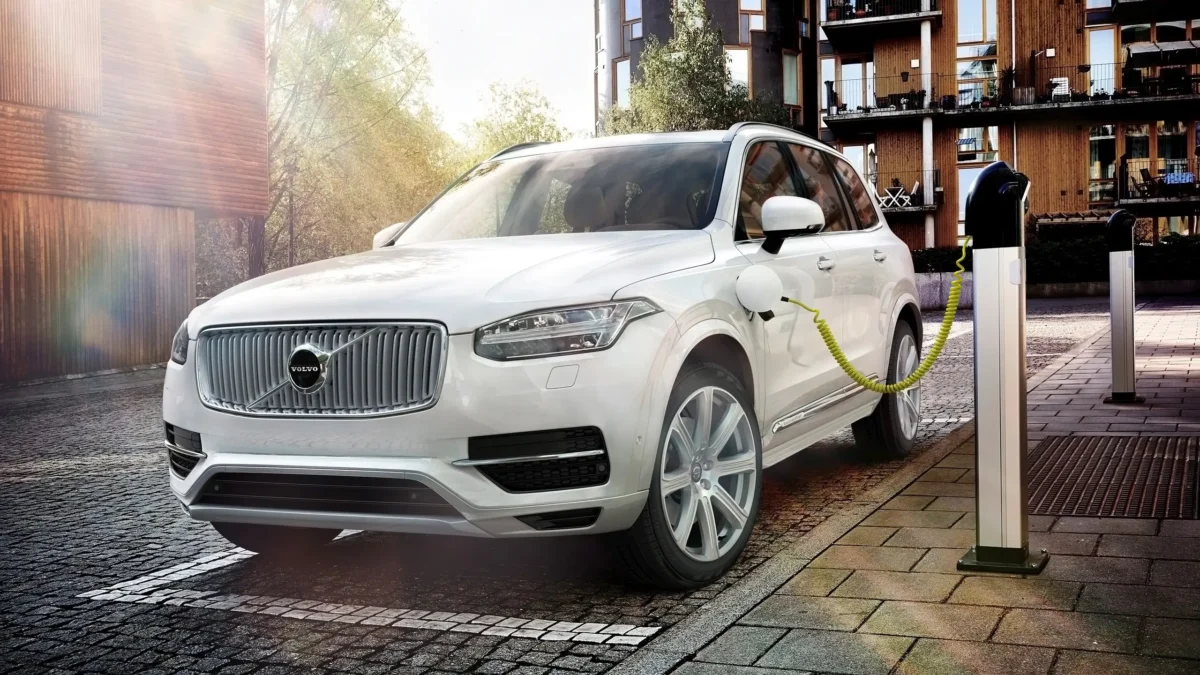
Let’s start with the wreckage. On 14 May, Anders Bell, chief engineering and technology officer at Volvo Cars, told CarBuzz during a test drive of the new all-electric EX60 that “petrol engines or combustion engines are not part of our core technology anymore.” His follow-up line was even sharper: “We don’t have the factories anymore for combustion engines.” The plants in Skövde, Sweden, that once produced Volvo’s in-house engines now make electric motors. Engine development was spun out years ago into Aurobay, a joint venture with parent Geely. Volvo Cars has, in other words, sold the kitchen and now needs to outsource cooking.
This would be fine if the world had cooperated and gone electric on schedule. It hasn’t. More than 92% of the 121,607 Volvos sold in the US in 2025 still had a combustion engine of some sort under the bonnet. US sales were down double digits in Q1 2026. Bell concedes Volvo needs combustion vehicles “for the near future” to keep clearing 100,000 units a year stateside, and that the company is “willing to source that competence from outside partners.” Translation: we will pay someone else to build the engines we promised the world we were done with. That decision becomes easier to understand in the context of the $70 billion in industry-wide EV writedowns — when the entire sector has discovered that the all-in EV bet was made too early and too aggressively, “we’ll buy in the engines we used to build” stops looking like surrender and starts looking like discipline.
Now, meet the other Volvo. On 12 May, two days before Bell’s confession, Volvo Trucks — part of AB Volvo, an entirely separate listed company that shares the name and almost nothing else — launched a brand-new in-house combustion engine platform from Gothenburg. Two fresh 13-litre engines: a D13 diesel offering 380 to 560 hp and up to 4% better fuel economy than the unit it replaces, and a G13 gas engine at 420 to 500 hp. Both are ready for renewable diesel, biogas, and green hydrogen. “Not only are these all-new engines our most fuel-efficient powertrains ever,” said Jan Hjelmgren, Volvo Trucks’ head of product management, “but they will also take our combustion engine into the future.” Tense matters. The future, plural. Volvo Trucks is doubling down on engineering combustion at the exact moment Volvo Cars is admitting it can’t.
The split is not technically embarrassing — the two Volvos have been separate businesses since 1999 — but it is delightfully instructive. AB Volvo looked at a market (heavy haulage, where battery weight is a structural problem and refuelling time matters more than home charging) and concluded combustion has at least another two decades in it. Volvo Cars looked at the same global passenger market and bet, in 2017, that everyone was going electric by 2030. They aren’t. JD Power reckons US customer preference is currently sitting at 62% ICE and 9% EV, with the rest mostly hybrid. Lang Marketing now projects internal combustion will still dominate the US car parc until 2040. The infrastructure has not materialised on the schedule the marketing decks demanded. The lesson hasn’t been lost on Volvo’s German rivals either: BMW’s all-of-the-above X5 G65 is the inverse of Volvo’s all-electric retreat, offering petrol, diesel, plug-in hybrid, full EV and hydrogen variants of the same vehicle, on the theory that the customer rather than the boardroom should pick the powertrain. Volvo committed to one path and is now scrambling. BMW kept all five open and is launching confidently.
Volvo Cars’ answer is a fleet of plug-in hybrids that, in Bell’s words, “will be more of an electric-vehicle experience and less of a combustion-engine experience.” Which is an honest way of saying: we’re going to sell you a car with a borrowed engine in it, and we’d really rather you didn’t notice.
The forward-looking takeaway is that 2026 is shaping up as the year automakers stop pretending and start admitting. Honda’s own retreat from its 2030 timeline has frozen its non-EV roadmap and pushed the next Accord into 2030. Ford is scrambling for aluminium. Stellantis just brought back the Hemi and watched it rescue a quarter’s profit numbers — and last week formalised Stellantis’s 39 new combustion models alongside 29 EVs in a five-year, €60 billion plan that quietly buries the all-electric-by-2030 narrative for good. And now Volvo, the patron saint of the all-electric pledge, is putting its hand up and asking who’s still got a 2.0-litre four-pot it could borrow. The bridge to electrification, it turns out, is being held together by suppliers no one wanted to talk about five years ago. Lovely view, mind the planks.