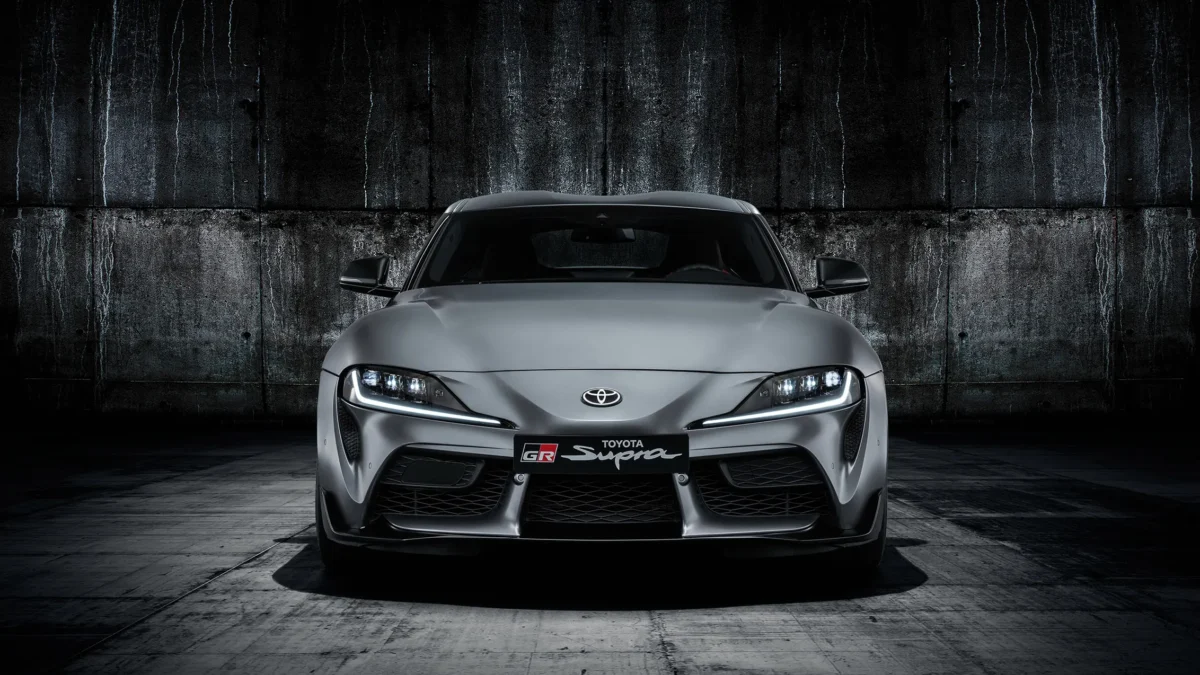
When Toyota revealed the GR Supra in January 2019, seventeen years after the previous generation ended production, the reception was divided. The car looked correct — low, purposeful, clearly descended from the Supra lineage. The performance numbers were strong. The return of the name after nearly two decades felt like the right moment.
Then people read the specification sheet.
The GR Supra’s engine was a BMW B58 3.0-litre turbocharged inline-six. The platform was the same one used by the BMW Z4. The gearbox was BMW’s. The differential was BMW’s. When journalists tore apart the specification to find what Toyota had actually built, the honest answer was: the body, the interior design, and the suspension tuning.
Enthusiasts called it a BMW Z4 in a dress. Some still do. Production ended in March 2026. The argument did not.
Is the Toyota Supra Really a BMW?
Partly, yes — and pretending otherwise insults everyone’s intelligence. The engine, transmission, platform, and most of the electronics are BMW-sourced. The design, the chassis tuning, and the character are Toyota’s. And in the fullest sense, it’s neither: every A90 Supra was assembled by Magna Steyr in Graz, Austria, alongside the Z4 — meaning the most argued-about Japanese car of its era was never built in Japan, by Toyota, or by BMW. The honest label is a joint-venture sports car wearing two different badges and two very different personalities. The interesting question was never whether the Supra is a BMW. It’s how much that turns out to matter.
What Parts of the Supra Are BMW?
The specifics, because this is exactly the topic where vagueness gets punished. The engine is BMW’s B58 — the 3.0-litre single-turbo straight-six that also powers half of Munich’s range — making 335 horsepower at launch and 382 from the 2021 model year. The lower-rung 2.0-litre car sold in the US from 2021 to 2024 used BMW’s B48 four-cylinder at 255 horsepower. The automatic is the ZF 8HP eight-speed in BMW specification. The platform is the structure co-developed with BMW for this car and the G29 Z4, sharing its core architecture with neither company’s mainstream models. The infotainment was BMW iDrive with a Toyota badge on the splash screen, the switchgear came from the same parts bins, and the active differential hardware was shared. If you’ve ever rented a 3 Series, the Supra’s column stalks will feel like a reunion.
What Did Toyota Actually Engineer?
The framing of the Supra as simply a rebadged Z4 understates what Toyota contributed, though it does not entirely misrepresent it.
Toyota’s engineers, led by chief engineer Tetsuya Tada — the same man behind the GR86 — tuned the suspension entirely independently of BMW’s work on the Z4, developing the car on the Nürburgring under the Gazoo Racing programme that Akio Toyoda established precisely to stop Toyota building boring cars. The two cars share a platform and a wheelbase — an identical 2,470mm, for the record, which is about 100mm shorter than a GR86’s, the stat Tada liked to quote at anyone who suggested the Supra was a big soft cruiser. What differs is everything laid on top: the Supra runs stiffer calibration, a more aggressive, oversteer-friendly balance, and a specifically driver-focused brief.
The design was done entirely in-house. The double-bubble roof, the aggressive nose, the proportions descended from the FT-1 concept — none of it owes anything to the Z4, and the two cars look nothing alike. And when the six-speed manual arrived in 2023, it came at the insistence of exactly the audience that had complained loudest — the single most Supra-ish thing that happened in the car’s whole production run.
Why Did Toyota Partner with BMW?
The straightforward answer is cost. Developing a bespoke sports car platform — chassis, powertrain, transmission — requires an investment that is very difficult to justify commercially when the total market for that type of car is small and declining. The Supra’s predecessor sold fewer than 1,000 units in the United States in its final year. Sports cars are image vehicles; they define what a brand stands for but rarely generate the revenue to fund themselves.
BMW faced the same problem with the Z4. Both companies needed a two-seat, rear-wheel drive sports car. Neither could justify the full development cost alone. A joint development programme allowed each to build what they needed at roughly half the cost — right down to outsourcing the assembly to Magna Steyr, because neither company could justify a production line either.
This is the same logic that produced the GR86 and Subaru BRZ, and the original Toyota 2000GT, which existed because of Yamaha — a pattern of partnership that goes back to the very beginning of Toyota’s sports car history. Enthusiasts tend to treat collaborations as compromises. Engineers treat them as the reason the car exists at all.
Supra vs Z4: How Different Are They Really?
Mechanically, they are siblings; experientially, they diverged on purpose. Journalists who drove both cars back-to-back consistently reported them as distinct despite the shared underpinnings — the Z4 characterised as the grand tourer of the pair, the Supra as the more demanding, more engaging sports car. Both assessments reflected the tuning brief each team had been given. Same skeleton, different upbringing.
And the pairing is ending as it began: together. The Z4 also finishes production in 2026, and the platform-sharing arrangement concludes with no shared successor. Whatever comes next for either badge, this particular experiment — one chassis, two national identities — is over.
Why Enthusiasts Were Furious
What made the Supra controversy particularly sharp was the legacy it was carrying. The A80 Supra — the fourth-generation car produced from 1993 to 2002 — had become a genuine icon. Its 2JZ-GTE engine, in turbocharged form, was celebrated for its tunability: with sufficient modification, examples have been documented producing over 1,000 horsepower from the stock block. The car appeared in the original Fast & Furious film and became a cultural touchstone for an entire generation of car enthusiasts — there is one in a museum now, which rather proves the point.
For that generation, the Supra was defined by its Toyota-developed, Toyota-built, bulletproof inline-six. The idea that its successor would use a BMW engine was not just a technical objection. It felt like a betrayal of what the car represented.
Toyota’s position was that they were building the best Supra they could with the resources available, and that a car built on a shared platform but tuned correctly was better than no Supra at all. Given that the alternative was no return of the nameplate — Toyota had previously indicated they had no plans to revive it — the argument had merit.
The Verdict
The GR Supra was, by most independent assessments, a very good sports car. Its performance credentials were genuine, its handling balance praised by drivers who cared about that more than engine provenance, and its production run ended better than it started: the power bump to 382 horsepower, the manual gearbox in 2023, and finally the MkV Final Edition send-off — 429 horsepower in Japanese and European specification, bigger Brembos and sharper suspension everywhere — before the last car left Graz in March 2026.
Whether it was a real Supra depends on what you believe a Supra is. If it is a specifically Japanese car with a Toyota engine, the GR fails that test. If it is a rear-wheel drive inline-six sports car that prioritises driver engagement and carries the Supra’s visual language forward, it passes.
The argument is, ultimately, about identity rather than engineering. And that, perhaps more than anything else, explains why it has outlived the car itself.
What Happens Next
The nameplate isn’t dead. Toyota has confirmed the Supra continues, with a sixth-generation car in development and reports pointing at a possible 2027 arrival — the persistent paddock talk involves a Lexus twin and a non-BMW straight-six, all of which should be treated as talk until Toyota says otherwise. If the next Supra arrives without German hardware, expect the A90 to be retrospectively reappraised, because nothing improves a controversial car’s reputation like its replacement. This section will be updated as the successor becomes real.
Quick Answers
Is a Supra technically a BMW? Technically it’s a joint venture: BMW supplied the engine, gearbox, platform and electronics; Toyota did the design and tuning. Calling it either a Toyota or a BMW alone is half-right.
What BMW engine is in the Supra? The 3.0-litre cars use BMW’s B58 turbocharged inline-six (335hp at launch, 382hp from 2021, 429hp in the JP/EU Final Edition). The 2021–2024 US 2.0-litre used BMW’s B48 four-cylinder with 255hp.
Who makes the Supra? Neither Toyota nor BMW, strictly — every A90 was built by contract manufacturer Magna Steyr in Graz, Austria, on the same line as the BMW Z4. Production ended in March 2026.
Are the Supra and Z4 the same car? Underneath, largely yes — same platform, same 2,470mm wheelbase, shared powertrains. But they were tuned separately to different briefs, and back-to-back drives consistently found the Supra sharper and the Z4 softer.
Will there be another Supra? Toyota says yes: a sixth-generation car is in development, with reports suggesting 2027 and a move away from BMW hardware. Details remain unconfirmed.