There is a particular species of regret that only car enthusiasts understand. It is not the regret of the one you sold — that is simple, everyday grief. It is the regret of the one you looked at, squinted at the price tag of, muttered “maybe next year” at, and then watched, with the slow horror of a man watching his own house float away, as the market ran off without you. The hosts of Cars & Bids recently spent twenty-eight minutes marinating in precisely this feeling, and the resulting inventory of shame is both a useful market document and a communal therapy session for anyone who has ever owned a calculator.
The headliners were predictable in hindsight, because hindsight is the only vantage point from which anything in this hobby makes sense. The 2005 Ford GT leads the parade, a car that used to trade “reliably in the 300s” and now asks, with a straight face, between $525,000 and $640,000 for anything halfway decent on Classic.com’s current listings. Hagerty pegs the average at over $374,000, with delivery-mileage Heritage cars touching $700,000 — and since the original MSRP was about $140,000, anyone who bought one new and kept their hands in their pockets for two decades is now sitting on a roughly 160 percent gain. Which is, for the avoidance of doubt, a better return than most hedge funds, and you got to drive it.
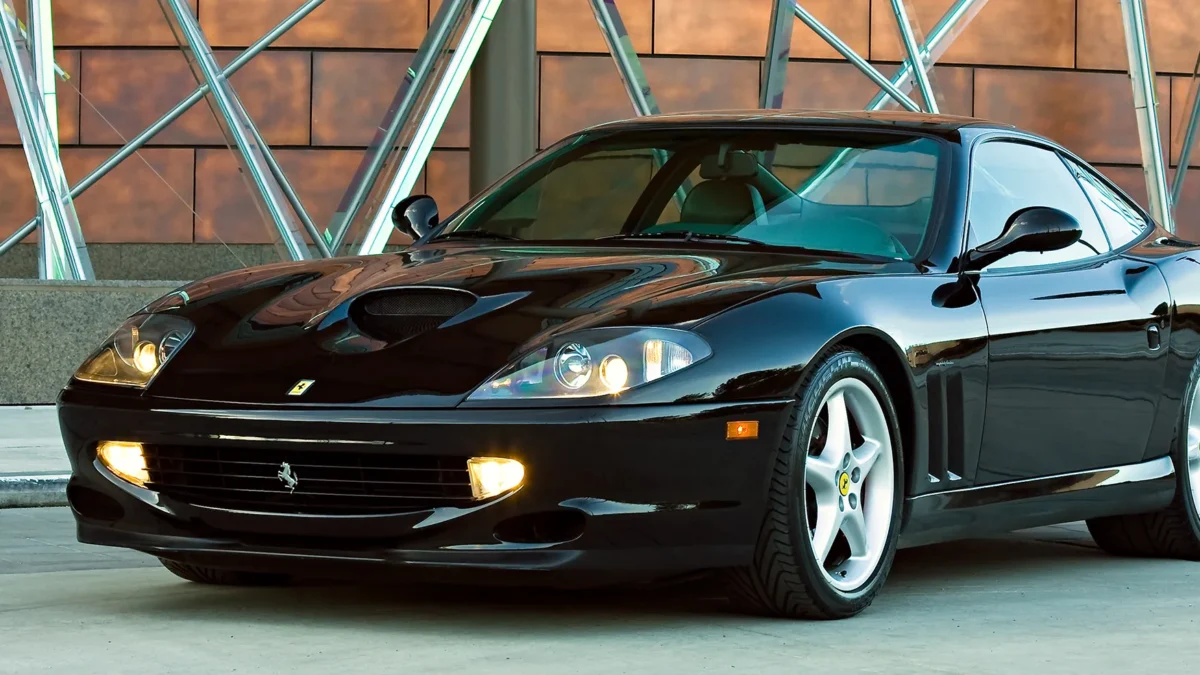
The Ferrari 550 Maranello, that gloriously front-engined V12 with the three-pedal gated shifter that 1990s Ferrari buyers apparently could not give away, is no longer the bargain V12 it once was. Classic.com now places the average transaction at $168,498, with one 2001 example having cleared $417,500 in August 2024. ClassicCarRatings clocked a 13 percent jump in 2023 followed by another 10.1 percent in 2024 — the kind of sustained appreciation that makes the S&P 500 look a bit lethargic. Forecasters at aShareX have manual 575Ms crossing $400,000 by 2027. If you were eyeing one in 2019 and decided to wait for prices to “settle,” congratulations: they settled exactly nowhere you wanted them to.
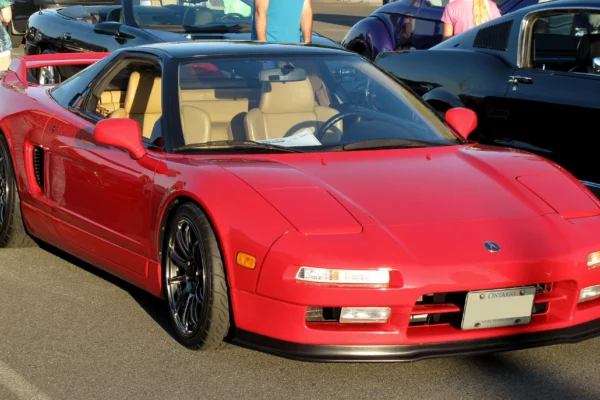
Then there is the first-generation Acura NSX, once the thinking person’s used sports car. Hagerty notes that over the last five years prices have more than doubled; a top 1991 car that fetched around $40,000 in 2020 now clears six figures routinely, and even rough ones have jumped from $15,000 to above $30,000. A 320,000-mile example — yes, three hundred and twenty thousand — sold on Cars & Bids for $80,500. A 2002 NSX-T recently crossed $370,000. The car Acura practically had to bribe people to buy in 1991 is now one of the most sought-after Japanese machines on the planet, because the millennials who had posters of it are finally old enough to have the credit line to match the fantasy.
The pattern is boringly consistent. Manual Porsche Cayennes, which three years ago commanded a cute 50 percent bump over automatics, now trade at a 300 to 400 percent premium — one recent sale cleared $125,500, which is genuinely alarming for a mid-2010s SUV. Air-cooled 993 Carrera 4S coupes, once the quirky also-ran to the 993 Turbo, now frequently eclipse Turbos at auction, trading in the $240,000 range. The 997 GT3 RS with a manual has comfortably moved from the low $200s into the mid-$300s. The Ferrari 360 Challenge Stradale: $275,000 in 2020, roughly $700,000 now. That is not appreciation. That is a heart condition.
What is happening here is not really about cars. It is about a generation aging into its chequebook, a decade of near-zero interest rates pushing capital into alternative assets, and the creeping realisation that modern supercars — bloated, computerised, and obliged to apologise for themselves at every emissions station — will not be replaced by anything resembling their analog predecessors. Regulators have seen to that. Buyers, sensibly, have concluded the supply of manual, naturally aspirated, driver-focused exotica is now finite, and have bid accordingly.
The sobering takeaway, then, is that the next crop of “undervalued” cars is almost certainly already on someone’s watchlist. Low-mileage 992 GT3 Tourings have already appreciated above MSRP despite being effectively new. Diablos — particularly the raw, early rear-wheel-drive cars — average $375,000 and look eminently capable of climbing further. If you have been telling yourself that some attainable modern classic will wait politely for you to get your affairs in order, consider this the last reasonable warning.
The one that got away is, increasingly, all of them. Better to buy the wrong car now than the right one never.