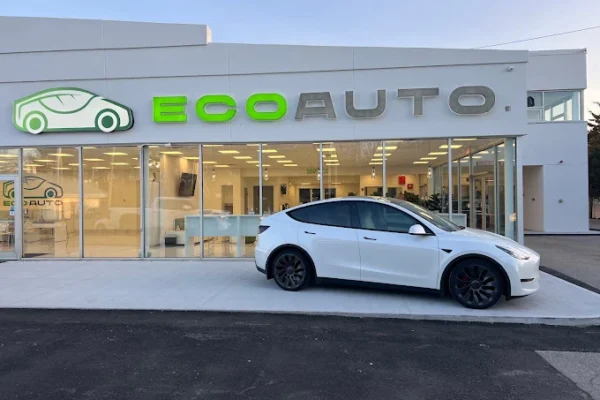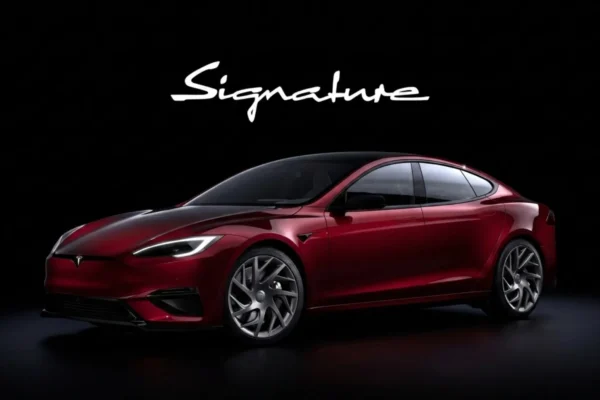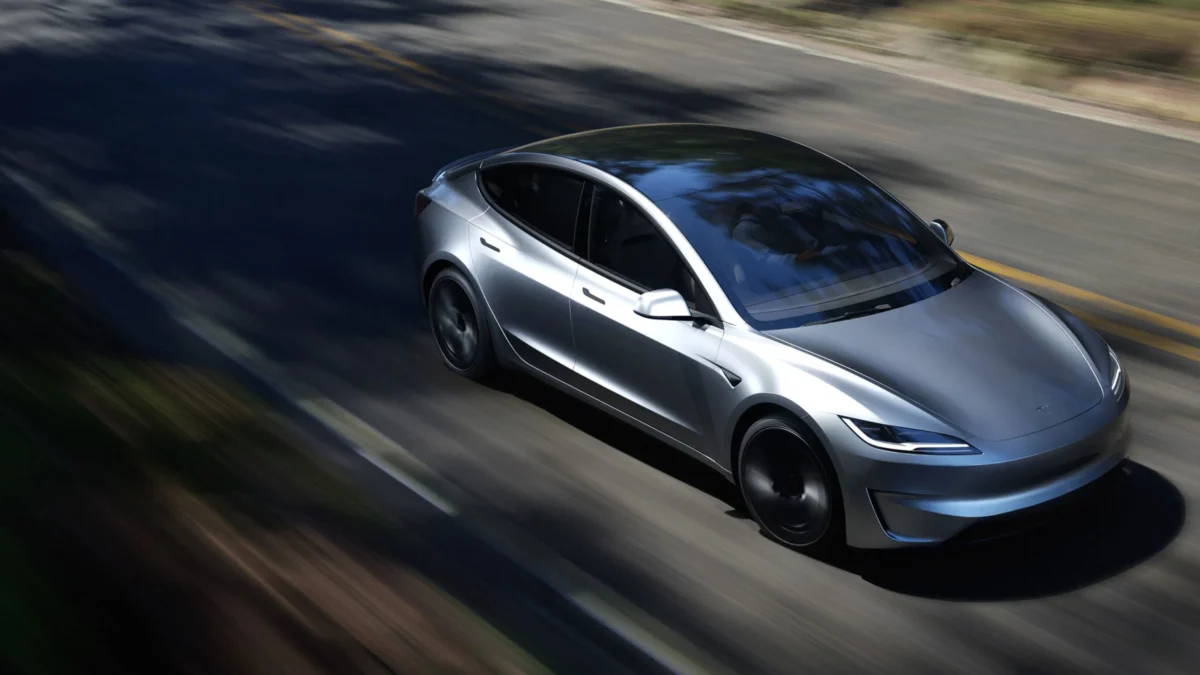
The Tesla Model Y is the best-selling car on the planet. Not the best-selling EV. Not the best-selling SUV. The best-selling car, of any kind, including ones with engines. It outsold the Toyota Corolla globally in 2023 and very nearly did it again in 2024. Wherever you live, there is almost certainly one within eyeshot right now. The updated 2026 version has just arrived, and it is, if anything, even more of a Model Y than before.

This is meant to be reassuring.

Tesla has refreshed the Model Y for 2026, giving it a new front end, redesigned headlights that have become noticeably slimmer, and a full-width LED light bar across the rear — or at least on the higher trims. The entry-level Standard model, which starts at approximately $41,500 and represents something of a new departure for Tesla, gets neither light bar. It does get about 300 miles of range, 300 horsepower, and the knowledge that you have made a highly rational financial decision. The three-tier lineup progresses to the Premium at around $46,500 — 375 horsepower, up to 360 miles of range, and the full light bar treatment — and then to the Performance at just under $60,000, which offers 500 horsepower, 0-60 in the low three-second range, and approximately 300 miles of range, because some of those horses have to come from somewhere.

New for 2026 is a $2,500 optional third row, which has returned to the lineup after being discontinued when insufficient people wanted it. Its reappearance is thought to be connected to Tesla’s decision to cancel the Model X, their larger SUV, which has left a gap in the range that a seven-seater Model Y can partially fill. The third row will be tight. This is well understood. It is there for the people who need it to exist rather than the people who will enjoy using it.

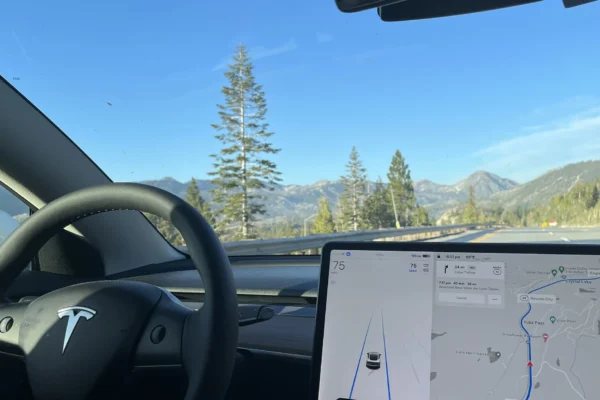
Inside, the changes continue in the same direction Tesla has been heading for a decade: fewer physical controls, more screen, cleaner surfaces, more white plastic. The 15.4-inch central touchscreen now controls the seat positions, the mirror adjustments, the glove box latch, the wiper speed settings, the headlights, and the gear selector, which you operate by swiping your finger up for drive and down for reverse. If you find this intuitive, the Model Y is probably the car for you. If you find this absurd, the Model Y is still probably the car for you, because the alternatives are not nearly as good at doing what it does, which is covering very large distances very quietly and requiring almost no thought.

That, as Doug DeMuro observed in his review of the Standard, is both the Model Y’s greatest virtue and its most honest description. He called it an appliance car. He meant it as analysis, not criticism. You operate it the way you operate a good washing machine: you tell it where you want to go, it takes you there, and the experience in between is calm, efficient, and devoid of sensation. It does not reward engagement. There is nothing to engage with. The steering wheel turns the car. The pedals go and stop. The Autopilot handles the tedious bits. The Long Range AWD carries an EPA-estimated range of 357 miles, which is substantially more than most people will ever need in a single day.

What it is not is luxurious, or particularly well-built — at least not in the Standard trim. DeMuro noted door closing sounds that were not satisfying, a steering wheel with minor noise, exposed sheet metal in the front trunk, and a ride quality that felt less refined than earlier Teslas he had driven. Tesla has addressed some of these concerns at higher trim levels with acoustic glass for a quieter interior, more soft-touch materials, and improved ride tuning. The base car is, in the plainest possible terms, a mainstream product at a mainstream price. The Tesla badge implies something more, and the experience does not always deliver on the implication.

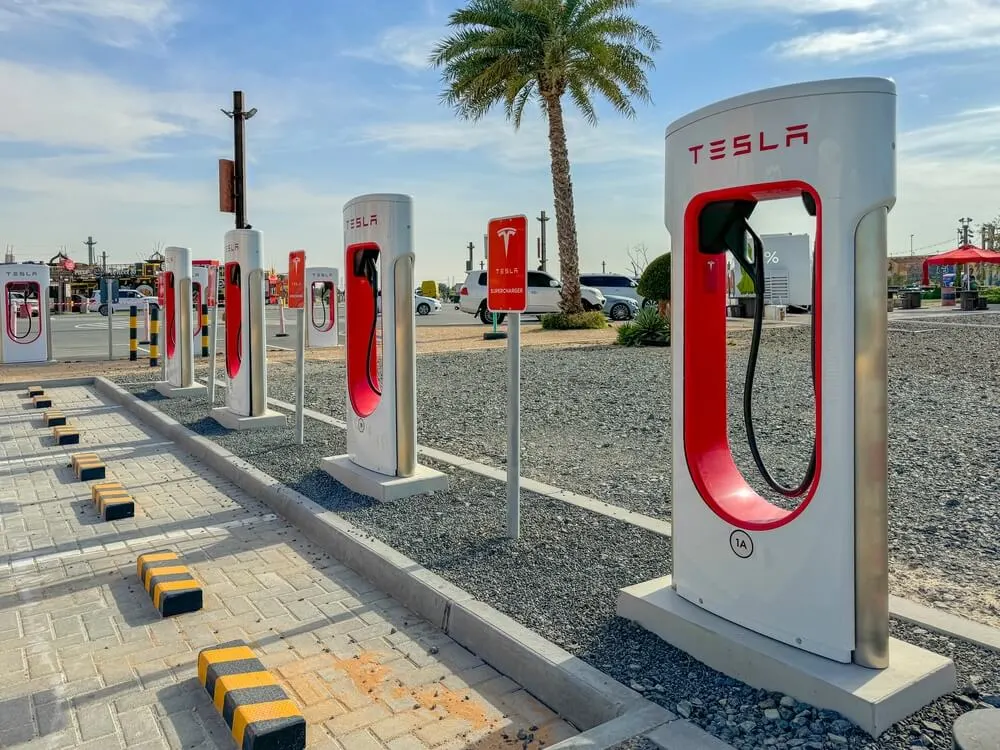
According to Consumer Reports, the updated Model Y is genuinely enjoyable to drive, with thrilling acceleration, low body lean, and quick steering — all characteristics it shares with the Model 3 on which it is based. What neither reviewer disputes is the Supercharger network, which remains the most functional, most widespread, and most reliable public charging infrastructure available to EV drivers anywhere in the world. The Model Y’s excellence as a point-to-point vehicle is inseparable from the infrastructure behind it.

The broader context is worth acknowledging. Tesla’s global position in 2026 is more complicated than it was two years ago. The company’s political associations have created reputational headwinds in several markets — European Tesla sales fell significantly in early 2026 amid boycott calls and showroom protests — but the product itself has, in this update, become genuinely better. Quieter cabin, more comfortable seats, available ventilated fronts, rear passenger screen, smoother ride. The list of improvements is real.

The Model Y will continue to sell in extraordinary numbers because it is excellent at the things most car buyers actually want from a car: predictability, range, ease of charging, and a feeling of having made an intelligent choice. Whether the feeling and the reality perfectly align depends on which trim you choose and how closely you look at the door seals.

For most people, most of the time, the Model Y is the correct answer. It is also, for the enthusiast, approximately the least interesting car currently on sale.

Both of these things are true simultaneously, which is rather the point.

Article inspired by this video