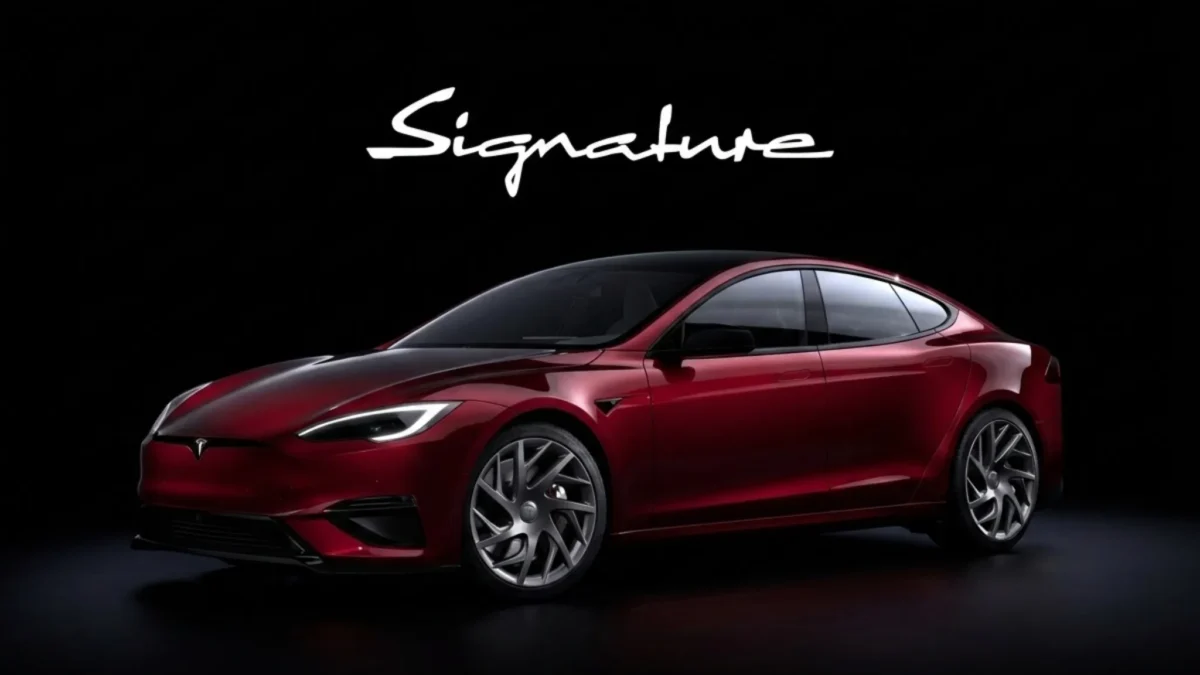
Tesla is this week holding an invite-only Signature Delivery Event at its Fremont factory — the birthplace of the Model S and Model X — to mark the end of an era. Five hundred special-edition cars in Garnet Red, evenly split between 250 Model S and 250 Model X Signature Editions, have all sold out. Tesla marked the occasion in characteristically unusual fashion by raising the price of the remaining Model S and Model X by $15,000 each — the Model S now starts at $111,380, the Model X at $116,380. Most manufacturers discount their departing models to clear the forecourt. Tesla charged a premium for the privilege of being among the last. This is either brilliant brand management or an extraordinary audacity. Quite possibly both.
The decision to end Model S and Model X production was announced by Elon Musk on Tesla’s Q4 2025 earnings call in January, with characteristic directness: “It’s time to basically bring the Model S and X programs to an end with an honorable discharge.” The Fremont factory space, he confirmed, would be repurposed to manufacture Optimus humanoid robots — with a long-term target of one million units per year. So the factory that built the car that convinced the world electric vehicles could be desirable is now being converted to manufacture bipedal robots. Musk added: “Because it is a completely new supply chain, there’s really nothing from the existing supply chain that exists in Optimus.” One imagines the workers found that particular detail quite reassuring.
It is worth pausing, briefly, to consider what the Model S actually did. When it went on sale in 2012, electric vehicles were — to borrow a phrase — not exactly hot sellers. The Nissan Leaf existed. The Ford Focus Electric existed. Neither was causing significant disruption to the automotive establishment’s blood pressure. Then the Model S arrived: a full-size luxury sedan with serious range, remarkable performance, and a design that didn’t look like a punishment for caring about the environment. It was the first Tesla created entirely in-house — the original Roadster had been a modified Lotus Elise — and it demonstrated, with some force, that electric vehicles didn’t have to be slow, ugly, or apologetic. The car industry has not been the same since. This is not a small claim. It is simply accurate.
The Model X followed in 2015 — the SUV with the theatrical falcon-wing doors that engineers apparently advised against and Musk approved anyway. Later came Ludicrous Mode and then Plaid, which allowed a family SUV to accelerate to 60mph in 2.5 seconds — a figure that remains, by most measures, completely unnecessary and rather wonderful. Annual production of the two models, combined with the Cybertruck, totalled roughly 54,000 units in 2025 — a rounding error compared to the 1.59 million Model 3s and Model Ys Tesla delivered the same year. The Model S and X had become symbolic rather than substantial. It was probably time.
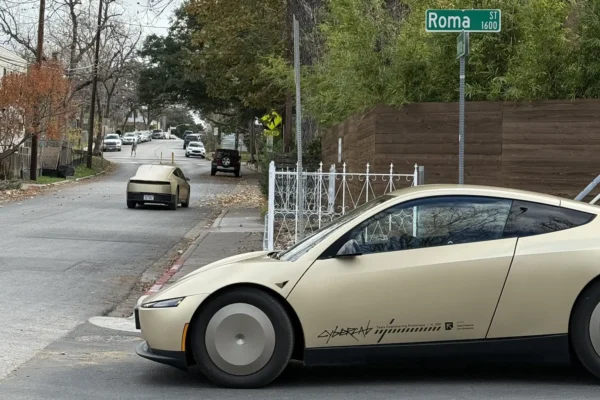
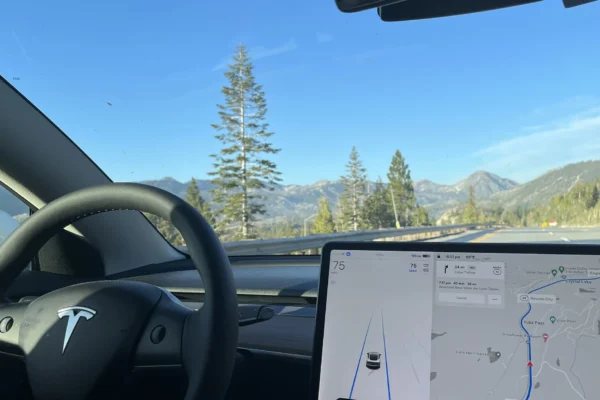
As of this week, around 600 units remain in inventory. After that, Tesla’s passenger car lineup will consist of the Model 3, Model Y, Cybertruck, and — eventually, if Musk’s timelines hold — the Cybercab and the upcoming Roadster (allegedly). A company that once spanned a full alphabet of vehicles now sells, essentially, two variants of the same basic proposition. Whether that is focused portfolio management or an alarming narrowing of ambition rather depends on how much faith you have in the autonomous robotaxi future Musk has been promising for the better part of a decade. That said, the robotaxi software just driven coast-to-coast without a single human intervention is the strongest evidence yet that one of the two pillars of that future — the software pillar — is closer than the perpetual delays elsewhere in Tesla’s product roadmap might suggest. The Fremont conversion makes considerably more sense in that light.
What is indisputable is that the EV industry — the real one, not the industry Tesla alone built but the one it undeniably catalysed — looks nothing like it did when the first Model S was delivered. There are now BYDs doing 950km on a charge, Chinese brands selling premium SUVs at BMW prices, European EV sales at record highs, and a Bezos-backed startup about to deliver a $25,000 electric pickup truck in Indiana. The Model S made all of this imaginable. It is also creating room for the EV luxury segment the i3 is entering — BMW’s new electric sedan, with a 563-mile claimed range and order books opened months ahead of schedule, sits in territory the Model S originally invented and then spent fourteen years defending. The defender is now retiring. The next round will be fought without it. That’s a legacy that no amount of robot manufacturing can diminish.
The refreshments at the Fremont ceremony this week are, one suspects, rather well deserved.