Lithium has had a good run. It powered the electric vehicle revolution, made China’s battery industry the most important on earth, and turned a handful of mining companies in South America and Australia into extremely important places. Now the world’s largest battery manufacturer is quietly suggesting that lithium’s dominance of the energy storage market may be more temporary than anyone expected.
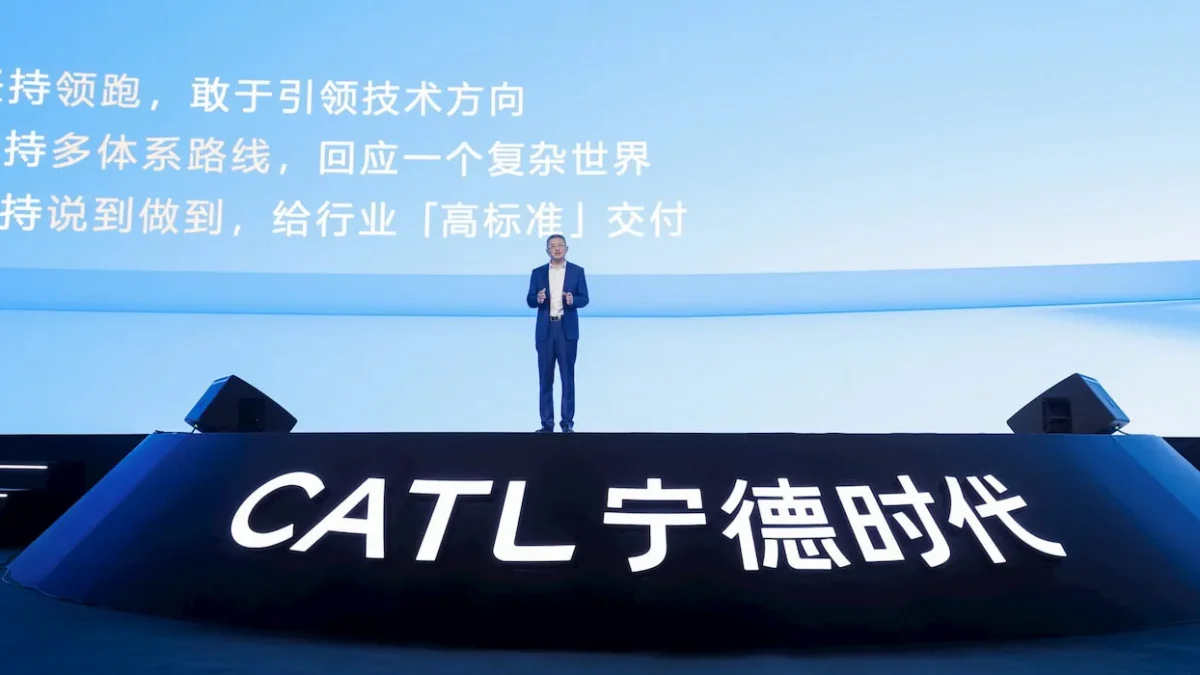
On April 27, CATL signed a 60 GWh sodium-ion battery supply agreement with energy storage integrator HyperStrong — the largest sodium-ion battery order ever placed, anywhere, by anyone. The three-year deal covers technology development, product application, and project implementation. For context, 60 GWh is equivalent to roughly half of all the energy storage batteries CATL shipped in the entire year of 2025. This is not a pilot programme or a research initiative. This is CATL committing to deliver industrial-scale quantities of a battery chemistry that most of the Western energy industry still regards as an emerging technology.
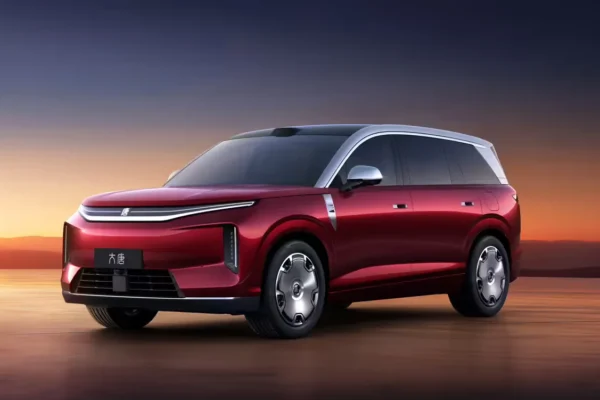
The significance starts with the chemistry. Sodium-ion batteries use sodium — rather than lithium — as the charge-carrying ion. Sodium is roughly 1,000 times more abundant in the Earth’s crust than lithium and far cheaper to source, which makes sodium-ion batteries a compelling alternative for applications where cost matters more than maximum energy density — particularly grid-scale energy storage. The trade-off has always been energy density: sodium-ion cells store less energy per kilogram than lithium-ion, which makes them unsuitable for applications where weight and range matter — like electric vehicles. But for a battery sitting on the ground next to a wind farm or a solar array, energy density per kilogram is largely irrelevant. What matters is cost, longevity, and safety. Lithium chemistry, meanwhile, is doing its own remarkable things on the vehicle side — BYD’s 950km Great Tang is a useful reminder that lithium is not being retired from the EV stack any time soon. The story is one of specialisation, not replacement.
CATL’s new sodium-ion cell for energy storage has an energy density of around 160 Wh/kg, system energy efficiency of 97%, and a cycle life of more than 15,000 cycles at 80% capacity retention. Fifteen thousand cycles. A battery that charges and discharges every day for over 40 years before reaching its stated end-of-life threshold. The cell operates across a temperature range of −40°C to 70°C — a range that covers essentially every climate on earth — and is designed with the same physical dimensions as CATL’s existing lithium storage cells, meaning existing infrastructure can be retrofitted without starting from scratch.
CATL has invested nearly CNY 10 billion — approximately $1.5 billion — in sodium-ion research and development since 2016. The HyperStrong deal is the return on that investment arriving at scale. The deal builds on a broader framework signed in November 2025, under which HyperStrong committed to purchasing 200 GWh of battery cells from CATL between 2026 and 2028. That the sodium-ion allocation alone accounts for 60 GWh of that total suggests HyperStrong — and by extension, the broader energy storage industry — has a significantly higher level of confidence in sodium-ion technology than most public commentary has acknowledged.
Industry observers have reached for the “DeepSeek moment” comparison — the idea that this deal signals the same kind of sudden, credibility-shifting step-change that DeepSeek’s AI model represented for the assumption that cutting-edge AI required Western infrastructure and Western capital. It is a slightly hyperbolic comparison, but the underlying point is valid. The assumption has been that grid-scale energy storage would be dominated by lithium iron phosphate chemistry for the foreseeable future. CATL is now demonstrating, with a commercially binding 60 GWh order, that sodium-ion is ready for the foreseeable future right now. The contrast is sharpened by the wider industry picture: while Western automakers wrote off $70 billion in EV programs in the same window, CATL was quietly placing the largest sodium-ion order ever signed. One side of the global EV economy is retrenching. The other is shipping a new chemistry.
The implications extend well beyond China. Cheap, long-lasting stationary storage is arguably the single biggest bottleneck to scaling renewable energy globally. Wind and solar are now the cheapest forms of new electricity generation in most markets. The problem is intermittency — they produce power when the wind blows and the sun shines, not necessarily when the grid needs it. Affordable storage that can absorb that surplus and release it on demand is what converts renewable generation from a supplement into a foundation. Sodium-ion, at industrial scale, at the prices CATL can deliver it, could move that transition considerably faster than current projections suggest.
The lithium supply chain, the mining companies, and the Western governments that have spent the past five years building industrial policy around lithium battery manufacturing should probably read this announcement carefully. CATL just put 60 GWh of sodium on the table. More will follow.