There is a particular kind of financial pain reserved for the person who almost bought the right thing. The one who looked at a 1993 Porsche 911 in 2008 and thought, “a bit old, a bit scary, I’ll wait.” That person is still waiting, presumably in a darkened room.
The team at Cars and Friends — the YouTube show from Cars and Bids — recently sat down to make the case for a handful of cars they think the market hasn’t fully appreciated yet. And while three people agreeing on anything automotive usually ends in raised voices and wounded pride, what emerged from the conversation was a remarkably coherent thesis: the cars that connected you most directly to the experience of driving are, right now, sitting at or near the bottom of their depreciation curves. The window is open. It will not stay open.
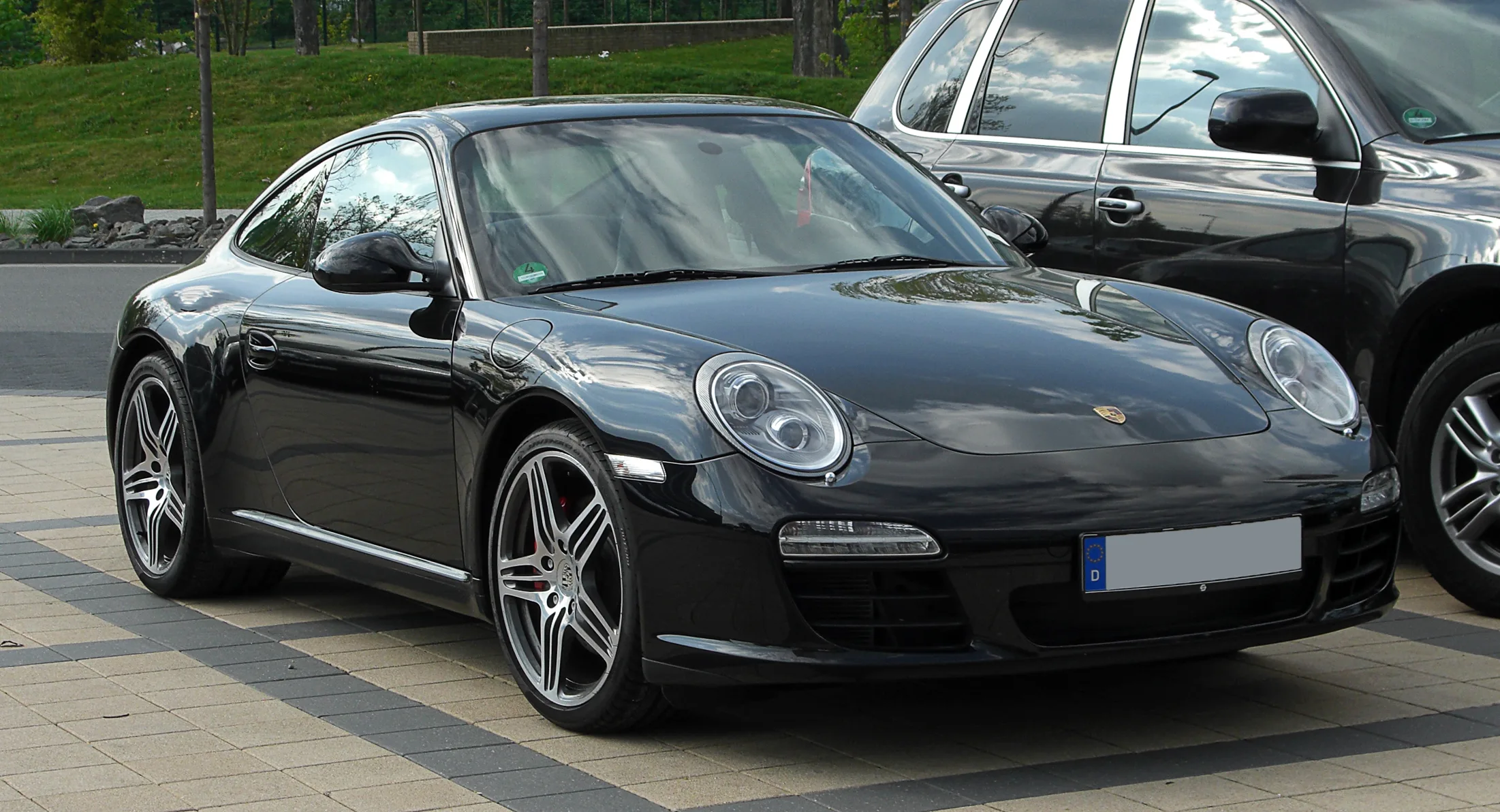
The centrepiece of the discussion was the Porsche 997, and more specifically its second iteration — the 997.2. The argument isn’t difficult to follow. The 997 is widely regarded as the last truly analogue 911 before electronic power steering arrived with the 991 and quietly removed a layer of sensation that enthusiasts are only now fully mourning. Porsche built around 213,000 examples, which is a lot — but the 993, the last air-cooled car, was made in far lower numbers and now commands north of $200,000 for decent examples. The 25-year rule, which maps the moment when nostalgia and disposable income collide, is bearing down on the 997 fast. The oldest examples are nearly 20 years old. Manual coupes in particular — the last naturally aspirated 911s before turbocharging became standard across the range in 2015 — are a product that simply cannot be replaced by anything new.
Market data supports the mood. While the broader collector car market saw global values fall around 10% in 2025, Porsche 911s have proven considerably more resilient. The 997.1 base model appreciated modestly, and GTS variants of the 997 gained over 9% in the same period. The 997.2 manual, meanwhile, has effectively stopped depreciating — a meaningful signal for a 13-year-old car that hasn’t yet reached classic status on paper. For the 991, there’s a slightly more complicated story: values have quietly softened over the past year, with manual base and S models slipping toward the 50s and 60s. But the counterargument — that there’s no new manual 911 you can reasonably buy for that money, and the next rung on the ladder costs roughly double — is a compelling floor for the price. It is also worth acknowledging the alternatives at this price point — the new Rivian R2 sits squarely in the $50–60k bracket and is, by some margin, the most credible non-analogue argument a sensible spouse can deploy against the second-hand 911 conversation. Whether it wins the argument depends entirely on what kind of weekend you want.
If the 997 is the obvious pick for someone with Porsche inclinations and a sense of history, the BMW E60 M5 is the pick for someone who enjoys explaining themselves at dinner parties. It is, depending on your appetite for drama, either the greatest sporting saloon ever made or a very expensive way to become a parts broker. The engine — a 5-litre V10 derived from BMW’s Formula 1 programme — produces a sound that feels genuinely illegal in a road car. For the North American market only, BMW paired this engine with a six-speed manual. It is the only V10 manual transmission saloon ever made. Consider that sentence for a moment. And then consider that nice examples trade for less than equivalent-mileage E39 M5s, which is either a market anomaly or a comment on what it costs to maintain the E60. Probably both. As parts become harder to source and low-mileage survivors grow rarer, the gap between what these cars are worth and what they should be worth in twenty years seems likely to narrow. For a wider survey of the same question — what to actually live with day to day — see our best enthusiast daily drivers for 2026, which works through twelve credible options including manual M3 values and the broader question of whether running an E60 as a daily is a serious proposition or just a story to tell at parties.
For something with fewer cylinders and considerably less anxiety, the Honda S2000 makes a strong case. The AP2 — the second-generation car with revised power delivery and improved ride quality — is a tiny, high-revving, rear-wheel-drive roadster with a naturally aspirated engine that peaks at 8,300rpm. In a world where nearly every sports car has gained weight, size, torque, and a television screen, the S2000 is increasingly strange and increasingly brilliant for being exactly none of those things. The interior, with its digital instrument cluster and absence of distraction, has gone from looking dated to looking purposeful. Values haven’t gone down. They won’t go down. And the gap between what you pay and what you get in terms of driving experience is wider than almost any other car on the market.
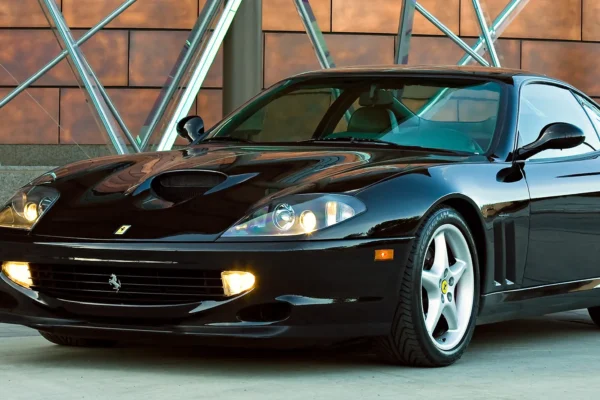
Then there’s the wildcard: the Porsche 944 Turbo S, of which fewer than a thousand examples came to North America. It arrived in 1988 with uprated suspension, firmer springs, an additional 30 horsepower over the standard Turbo, and a torque-tube transaxle layout that gives it the kind of handling balance you don’t typically associate with late-eighties German engineering. Most 944s have been ignored, modified, or quietly disintegrated over the decades. Nice Turbo S examples — and there are very few — exist in a category of their own: genuinely rare, genuinely fast, genuinely Porsche, and currently priced as though they aren’t any of those things. The Vanquish and the AMG GTS round out the group: both grand touring V8s from the early 2000s and mid-2010s respectively, both depreciated to a point that feels like a category error.
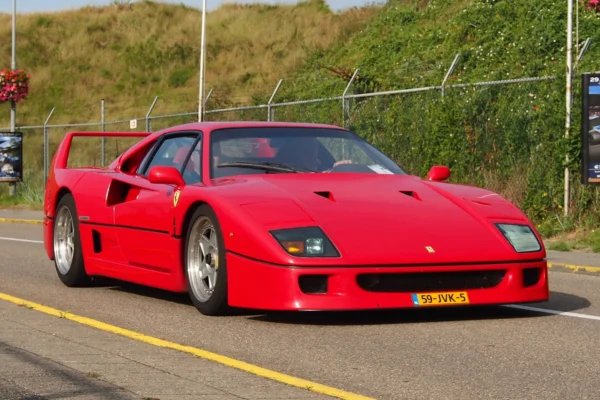
The overall collector car market is healthier than the headline numbers suggest. Auction and online sales climbed 10% in 2025 to $4.8 billion, according to Hagerty, and a new generation of buyers — Gen X, Millennials, and Gen Z — is actively redefining what’s collectible. Analogue, tactile, naturally aspirated, manual-equipped: the characteristics being sought are almost precisely those being removed from new cars. The benchmark for what an uncompromising analogue car looks like is, of course, the F40 — and the decision that made it what it is remains the clearest model of what every car on this list is gesturing toward: no compromise, no comfort, no apology, and a market valuation that rewards exactly those choices.
The 25-year clock is ticking on a lot of very good machinery. Some of it is already gone. Some of it is sitting in a classified listing right now, priced like it hasn’t been noticed yet.
Buy it before someone else does. You already know which one.