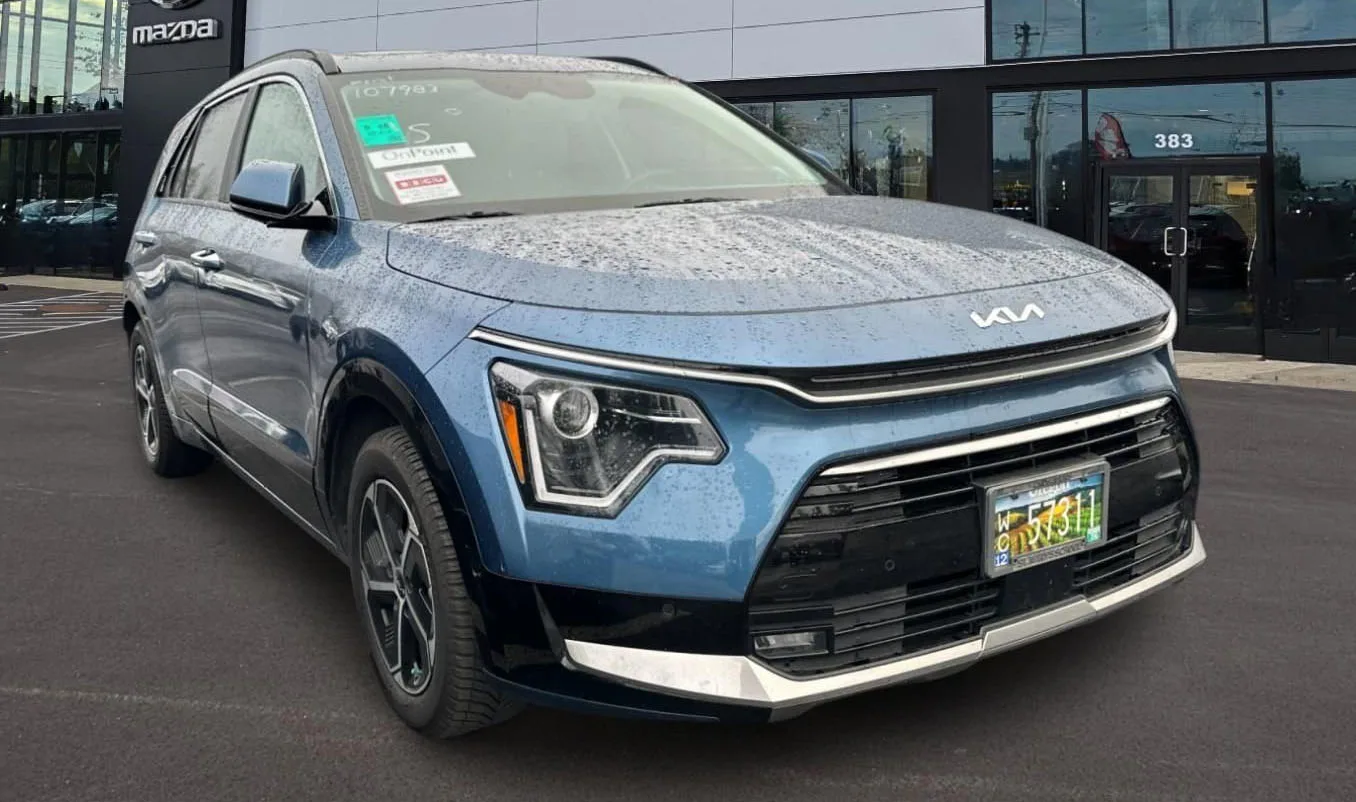
America has apparently decided it still wants electric vehicles — just not new ones, and ideally at a considerable discount.
New EV sales fell 28% year-over-year in Q1 2026 to just 212,600 units, according to fresh data from Cox Automotive. That is, by any measure, a bad number. A number that will be cited in boardrooms, by policy wonks, and by people on the internet who were already quite sure EVs were finished. And yet, buried in the same report, is something rather more interesting: used EV sales surged 12% to 93,500 units, with prices now within just $1,300 of equivalent petrol cars. The market hasn’t given up on electric vehicles. It’s just decided to buy them second-hand, like a sensible person at a car boot sale.
The villain of the new car story is not hard to identify. The $7,500 federal EV tax credit expired on September 30, 2025, and nothing has replaced it. The One Big Beautiful Bill Act — a name that only a certain kind of politician could deliver with a straight face — sunsetted the purchase credit entirely. The immediate effect was predictable to anyone who has ever watched what happens when you remove a subsidy: people stopped buying. EV market share fell to an estimated 5.8% of total new vehicle sales, well below the 7.5% peak reached in Q3 2025.
Meanwhile, new EV inventory has quietly become someone else’s problem. Days’ supply of new EVs has ballooned to 130 days — 46% higher than the 89 days’ supply for combustion vehicles. Dealers are sitting on electric cars like a warehouse full of last season’s fashion. Which, for buyers willing to take that leap, is precisely the point.
Because here’s what the doom-and-gloom narrative keeps glossing over: the used market is functioning exactly as a maturing technology market should. Used EVs now average $34,821 — nearly at parity with the $33,487 average for used petrol cars. That gap was over $10,000 as recently as early 2023. That is a staggering compression in three years, and it matters enormously. The price argument against electric vehicles — long the most powerful one — is dissolving in the used market even as it persists in the new.
There’s a further structural reason this trend will only accelerate. The wave of EVs leased under the IRA’s so-called “leasing loophole” between 2023 and 2025 is now arriving on dealer forecourts as lease returns. These are well-maintained, relatively young electric cars, hitting a market of buyers who are increasingly motivated by petrol prices. Cox Automotive’s consumer data shows the Hybrid and Plug-In Index spiking well above baseline levels in February and March, as Middle East tensions push fuel costs upward. The interest is there. The price is nearly right. The inventory is abundant.
What’s missing, ironically, is the very policy architecture that was supposed to accelerate all of this. The tax credit didn’t just make new EVs cheaper — it made the whole ecosystem feel like it had governmental momentum behind it. Without it, buyers hesitate, manufacturers retreat, and the industry enters the kind of holding pattern that makes long-term planning feel like an act of faith rather than strategy.
The optimists will note, correctly, that none of this is fatal. Used EV days’ supply sits at just 42 — only four days higher than for combustion vehicles, meaning they’re moving off lots at a pace that reflects genuine demand, not desperation pricing. The market is clearing. It’s just doing so one careful used-car buyer at a time, rather than in the gleaming showroom transaction that automakers had planned for.
The electric vehicle transition in America hasn’t stalled. It’s just gone secondhand. Which, given the state of everything else, feels oddly appropriate.
Key Stats Referenced
- New EV sales: 212,600 units in Q1 2026 (down 28% YoY)
- Used EV sales: 93,500 units (up 12% YoY)
- Used EV average price: $34,821 (vs $33,487 for used petrol cars)
- New EV days’ supply: 130 days (vs 89 days for ICE)
- Used EV days’ supply: 42 days (vs 38 days for ICE)
- EV market share: 5.8% (down from 7.5% peak in Q3 2025)