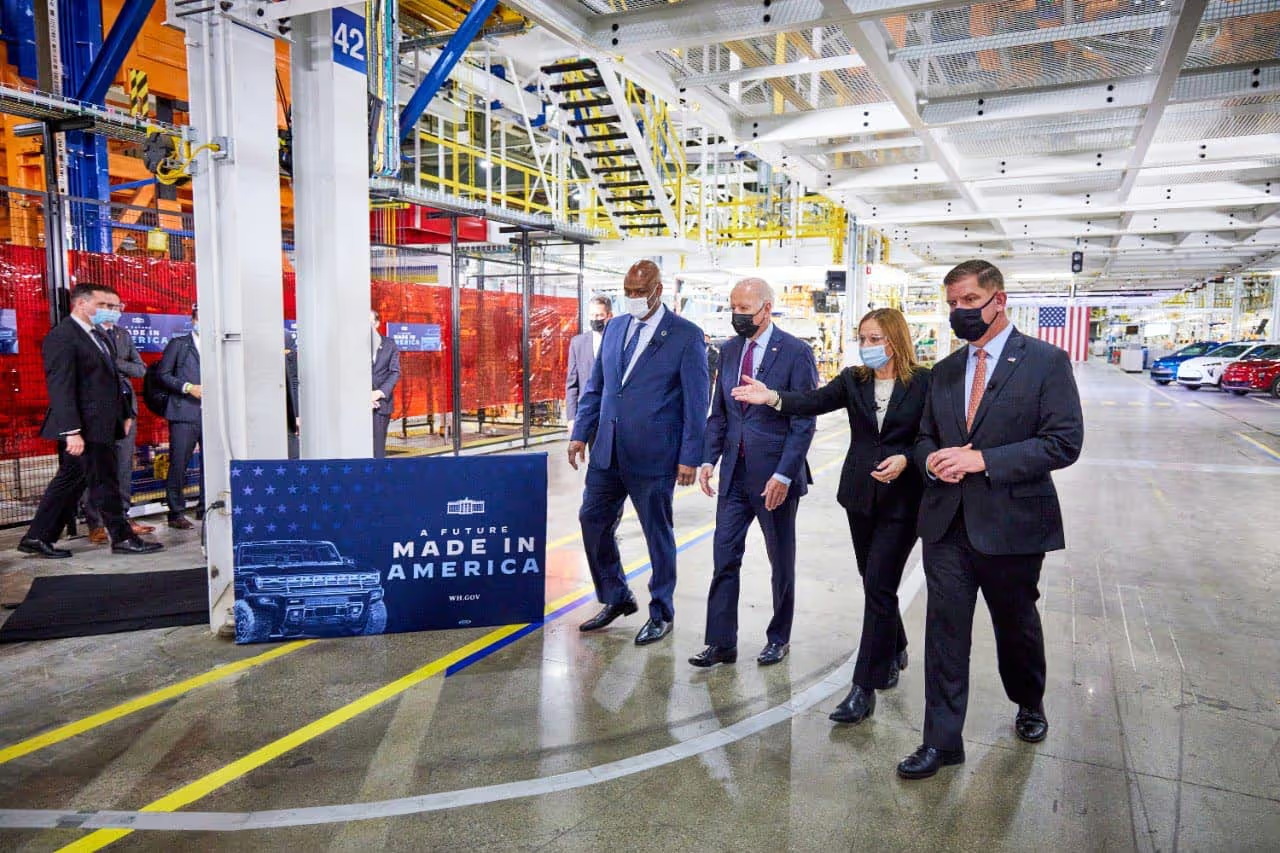
Factory Zero was supposed to be the future. General Motors said so itself when it sank $2.2 billion into the Detroit-Hamtramck plant back in 2021, christened it with a name that practically dared you to doubt it, and promised the world a gleaming electric tomorrow. Today, 1,300 workers are at home. Again.
GM has idled Factory Zero for the second time in three months, laying off 1,300 workers as demand for the Hummer EV and Silverado EV continues to collapse. Workers were told to stay home from March 16, with a return date pencilled in for April 13. A GM spokesperson said the move was intended to “better match output with current market conditions” — which is corporate for “nobody’s buying these things right now.”
The plant produces GM’s most expensive and least popular electric vehicles: the GMC Hummer EV, Chevrolet Silverado EV, GMC Sierra EV, and the Cadillac Escalade IQ. The Hummer EV starts above $80,000. The Escalade IQ above $130,000. In a market where the $7,500 federal tax credit has vanished and consumers are increasingly price-sensitive, these are precisely the wrong vehicles to be sitting on. It’s a bit like opening a caviar restaurant the week after a recession starts and then being surprised by the empty tables.
This is not a one-off adjustment. Factory Zero has been in near-constant turmoil since mid-2025. GM slashed one of two shifts and permanently laid off 1,200 workers in October 2025 as part of a broader 3,300-job cut across its EV operations. The plant then idled from late October through late November 2025, followed by additional downtime through the end of the year. When production restarted in January 2026, it was on a single shift. And now even that has proven too optimistic.
The numbers behind the retreat are stark. GM sold nearly 170,000 EVs in the U.S. in 2025, up 48% from 2024 — but that momentum collapsed in Q4 after the Trump administration ended the $7,500 federal EV tax credit on September 30. Fourth-quarter EV sales plunged 43% to just 25,219 units. The credit didn’t just make EVs cheaper — it was, for many consumers, the deciding vote. Remove it, and the maths stops working. Particularly for a $130,000 electric SUV.
GM recorded $7.6 billion in EV-related charges during 2025, including a $6 billion writedown tied to scrapping EV production plans and cancelling battery supply contracts. The UAW’s Local 22 president, meanwhile, has watched his membership halved by the successive waves of layoffs and remains cautiously defiant — saying simply “EVs are the future,” in the manner of someone trying to convince themselves as much as anyone else.
What makes this episode particularly uncomfortable for GM is the contrast it draws. While Factory Zero sits idle, GM and Ford are actively upping production of gas-powered pickups, which remain far more profitable. The company hasn’t abandoned electrification — it says so regularly and at some length — but it has, with considerable efficiency, abandoned the pretence that the transition was going to be straightforward.
To be fair to GM, it is not alone. Honda just cancelled three EVs. Ford killed its electric F-150 variant. The entire American EV manufacturing landscape is being quietly, expensively reorganised around a market that moved more slowly than anyone’s projections had the courage to admit. The policy whiplash hasn’t helped. Incentives that took years to design were removed in months, and the industry is now absorbing the consequences in real time, one darkened factory floor at a time.
The workers at Factory Zero will return on April 13. Whether there will be meaningful work waiting for them — and for how long — rather depends on whether American consumers decide, at some point soon, that an electric truck is worth buying without a government subsidy to sweeten the deal. At current gas prices, that moment may be approaching. It’s just not here yet.