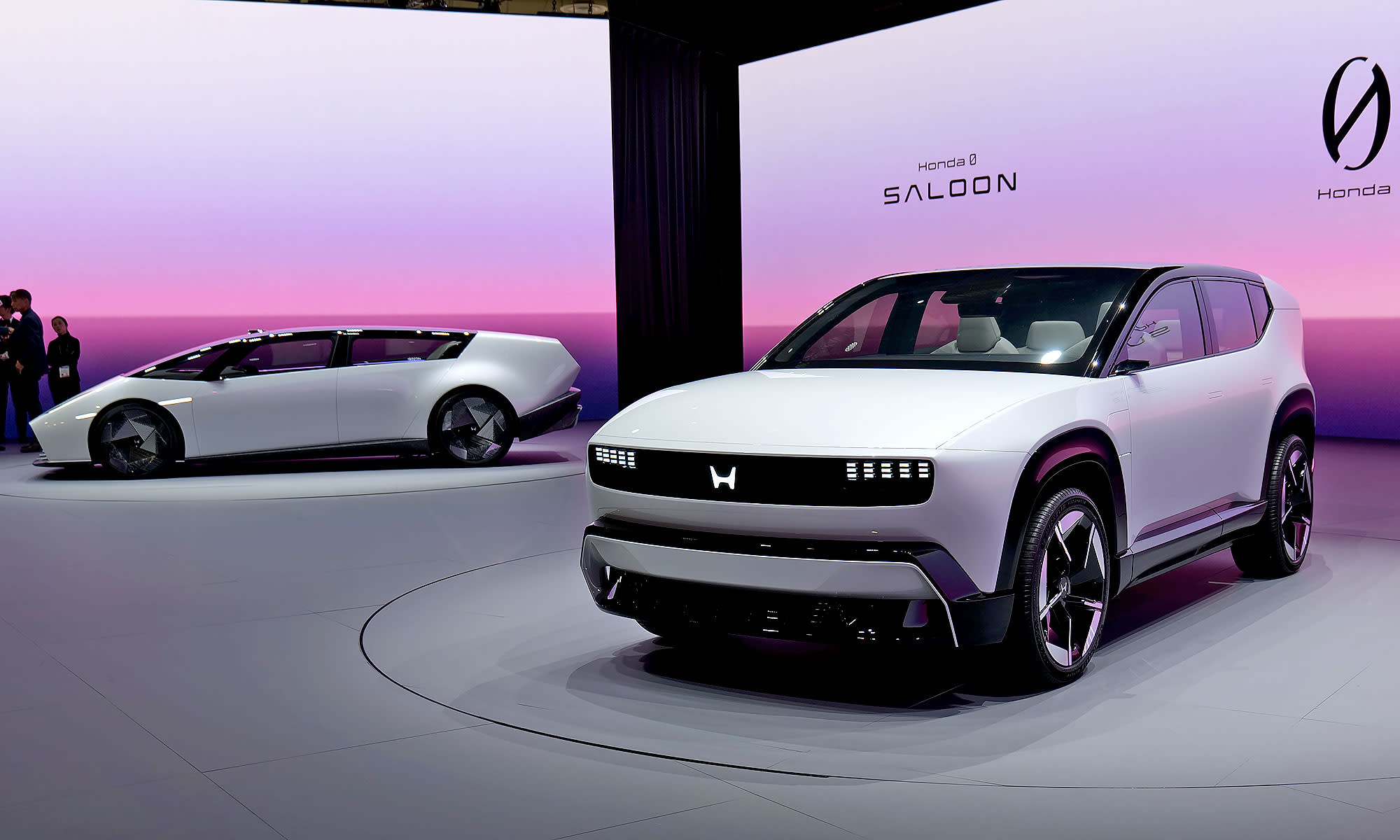
Honda just killed three electric cars that were, quite literally, months from rolling off the production line. Somewhere in Ohio, a very expensive factory floor is staring at the ceiling wondering what it did wrong.
The Honda 0 SUV, the Honda 0 Sedan, and the Acura RSX — all three wound down, all three scrapped, despite the fact that the retooling of Honda’s Ohio facilities was, by March 2026, essentially complete. Honda had shown off all three models at CES 2025 with the kind of confident swagger that tends to precede a very expensive change of heart.
The bill for that change of heart? Up to 2.5 trillion yen — roughly $15.7 billion — making this Honda’s first loss since it went public in 1957. Nearly seventy years of profit, gone. The CEO and his deputy have, with admirable if insufficient contrition, agreed to forgo 30 percent of their compensation for three months. One imagines that stings slightly less when you’re a Japanese automotive executive than it would for most of us, but the symbolism is noted.
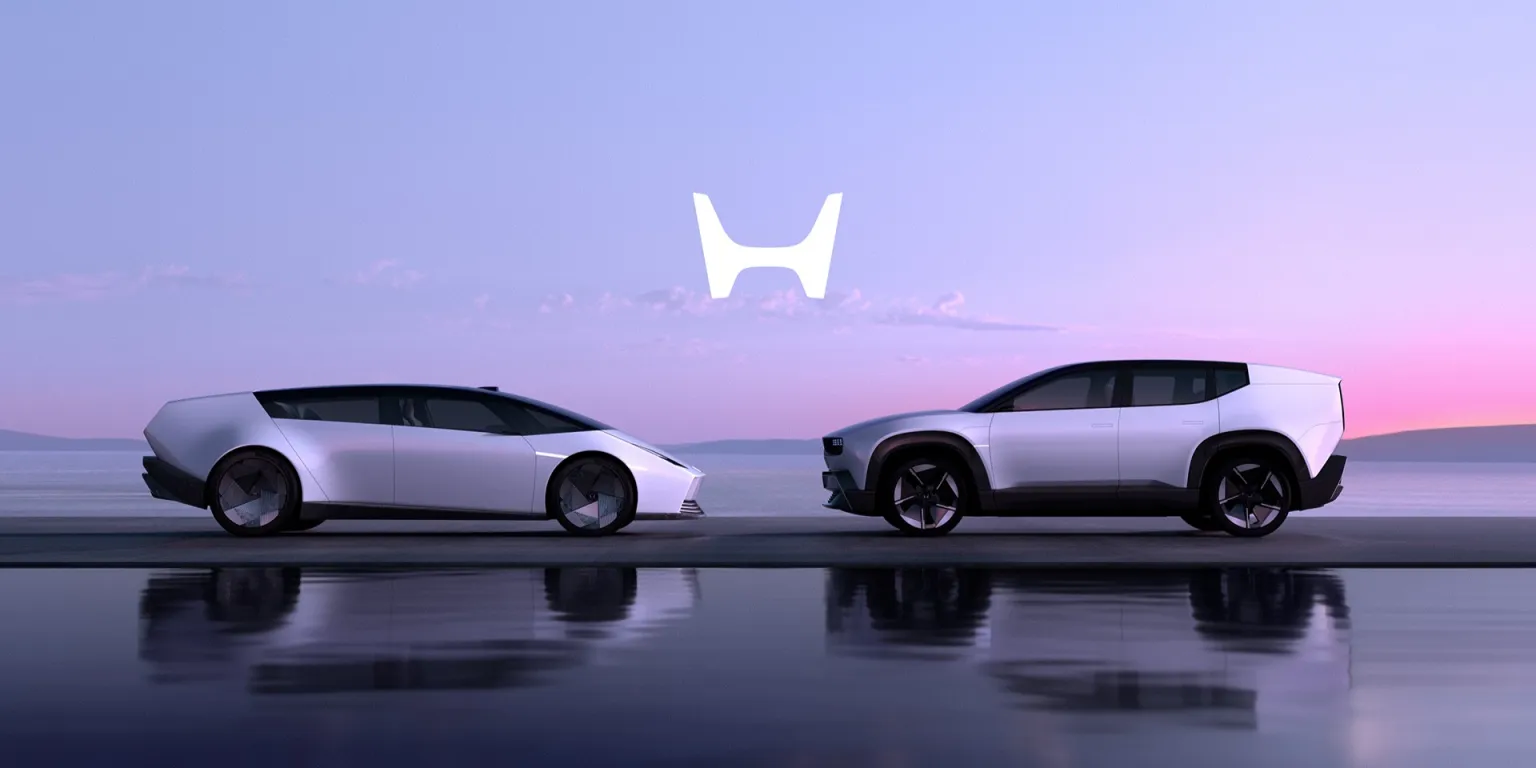
To be clear about what Honda was cancelling: unlike the Honda Prologue and Acura ZDX — which were essentially General Motors cars wearing a Honda badge — the scrapped models were built on Honda’s own Zero platform, and would have been its first fully in-house EVs. These weren’t badge-engineered stopgaps. They were, according to Honda’s own breathless press materials, the future. The 0 SUV drew credible comparisons with Lamborghini silhouettes; the 0 Saloon looked like a Star Wars prop. Provocative, striking, and — as it turns out — entirely theoretical.
So what happened? Honda, to its credit, doesn’t entirely hide behind vague market forces. The company blamed the elimination of federal EV tax credits, eased fossil fuel regulations, and U.S. tariffs for slowing American demand. Honda specifically cited tariffs as a primary factor, noting the “unfavorable impact of changes in U.S. tariff policy on the gasoline and hybrid vehicle business.” There is a certain dark comedy in American tariff policy simultaneously claiming to protect domestic manufacturing while making domestic EV investment economically suicidal — but perhaps that irony is best left to people who enjoy irony.
The Ohio investment that’s now been quietly shelved was not modest. Honda had committed over $4.4 billion to establish the Ohio EV Hub, one of the state’s largest economic projects, intended to create a North American supply chain for electric vehicle production. That included a $700 million retooling of its Marysville and East Liberty assembly plants, and a $3.5 billion battery plant being built near Jeffersonville in partnership with LG Energy Solution. All of that. Gone. Or rather, repurposed — because Honda isn’t leaving Ohio, it’s just going back to making hybrids there instead, which is rather like converting a recording studio into a very well-equipped broom cupboard.
Honda is not alone in its retreat. Ford has cancelled planned variants of its F-150 Lightning and scrapped plans for a new electric van. General Motors absorbed billions in EV-related write-offs. Stellantis has deferred multiple electric launches. The American EV dream of 2022 — all those billions, all those ribbon-cutting ceremonies, all those PowerPoint slides with 2030 targets — is quietly being revised into something more modest and more hybrid.
Meanwhile, China continues its rapid acceleration toward EV adoption, with newer manufacturers building software-defined vehicles on shorter production cycles and at prices that traditional automakers simply cannot match. Honda admitted as much: in China, it could not match the value offered by newer manufacturers. That is a remarkable thing for one of the world’s largest carmakers to say out loud.
The real losers here are American consumers, who will have fewer EV choices, less competitive pricing pressure, and a market increasingly defined by the brands that stayed the course. The winners, for now, are Toyota — whose stubborn devotion to hybrids suddenly looks less like conservatism and more like clairvoyance — and every Chinese EV brand quietly watching the Americans argue about whether electricity is, in fact, the future.
It probably is. Honda knows it too. The company says it will channel its electrification resources into hybrids, with a new hybrid powertrain and automated driving system under development for commercialisation after 2027. So the future is still electric. It’s just been rescheduled. Again.