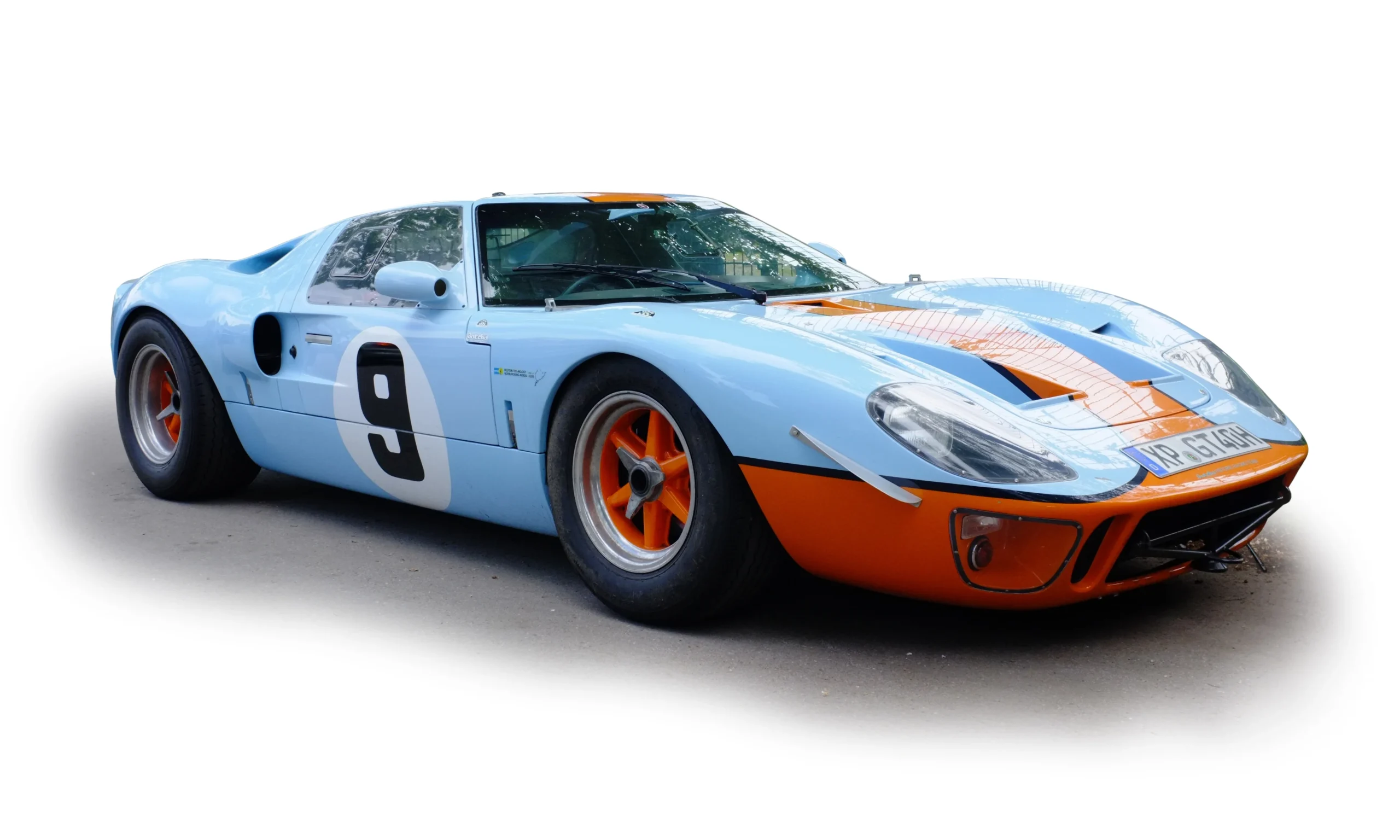
Henry Ford II didn’t build a Le Mans winner. He built a grudge.
In 1963, Henry Ford II made what seemed like a sensible business decision: buy Ferrari. Enzo Ferrari’s racing dominance was unmatched, his road cars were the envy of every manufacturer, and the asking price was reportedly around $18 million. Ford dispatched a team of executives to Maranello to close the deal.
They never did.
At the eleventh hour, Enzo Ferrari walked away. The story varies depending on who tells it, but the core of it is consistent: Enzo refused to give Ford control over Ferrari’s racing programme. He had not spent thirty years building a racing legacy to hand it to a Detroit boardroom. He told Ford’s team, in so many words, to go home.
Henry Ford II took it personally. Famously, furiously personally.
Building a Weapon
The order that came out of Dearborn was unambiguous: build a car that will beat Ferrari at Le Mans. Money was not the constraint. Winning was.
Ford partnered with British racing constructor Lola, acquiring the rights to their recently developed Lola Mk6 GT as the basis for what would become the GT40. The “40” referred to the car’s height in inches — “40 inches tall”, low enough to feel genuinely threatening just sitting still.
The early years were humbling. Ford entered Le Mans in 1964 and 1965 and failed to finish. Ferrari won both years. The machine Ford had built to humiliate Enzo was instead being humiliated itself, spectacularly, in front of a global audience.
This is where most revenge stories would end. Ford’s didn’t.
1966: The Year Everything Changed
For 1966, Ford restructured the programme. Carroll Shelby — already the architect of the Cobra — took operational control of the GT40 effort. The cars were upgraded, the drivers were world-class, and Ford arrived at Le Mans with a fleet of seven GT40s.
What happened on June 19, 1966 is one of the most cinematic moments in motorsport history.
Ford didn’t just win. Ford finished 1st, 2nd, and 3rd. Ferrari was nowhere near the podium.
But the story has one more twist. In an effort to stage a photo finish — a piece of corporate theatre to maximise the PR impact — Ford ordered the leading cars to cross the line together. Due to a quirk in Le Mans scoring rules, this decision actually cost the car in second place the win. The drivers were furious. Ford got their photograph.
They came back and won again in 1967, 1968, and 1969. Four consecutive Le Mans victories, all of them built on a deal that fell apart in a Ferrari conference room.
What It Actually Cost
Ford reportedly spent around $9 million on the GT40 programme over four years. That figure, adjusted for inflation, sits comfortably above $80 million today. The original acquisition price for Ferrari was $18 million. In other words, Ford spent roughly half the cost of buying Ferrari just to beat them at one race track, repeatedly, out of spite.
It is one of the most expensive grudges in automotive history. And it produced one of the most iconic racing cars ever built.
Why This Matters
The GT40 is not just a piece of motorsport history. It is a case study in what happens when emotion overrides economics in the boardroom. Ford didn’t build the GT40 because it made financial sense. They built it because Henry Ford II was embarrassed by a man in Maranello who refused to sell.
The car that resulted — low, aggressive, uncompromising — reflects that energy exactly. There is a reason the GT40 still looks angry. It was built to be.